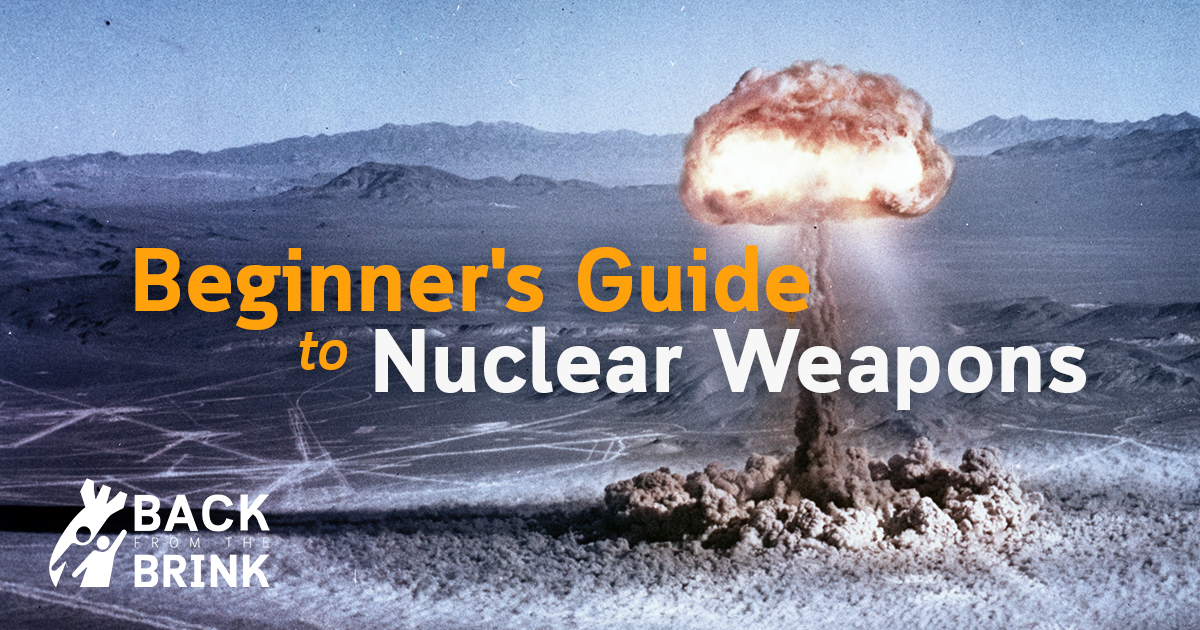
Nuclear weapons are unlike any other threat facing humanity. The detonation of a single nuclear bomb can kill hundreds of thousands, and cause injury and illness for many more. A limited nuclear war could kill up to 2 billion people through climate effects that would cause global famine. A full-scale nuclear war threatens humanity itself.
When the stakes are this high, it’s hard to know where to start. That’s why Back from the Brink created the Beginner’s Guide to Nuclear Weapons — a comprehensive, one-stop resource designed to help you get up to speed on nuclear issues, cut through misconceptions, and discover how you can make a difference.
👉 Explore the Beginner’s Guide to Nuclear Weapons here
What You’ll Find in the Beginner’s Guide
The Beginner’s Guide is organized into key sections to give you both the big picture and the details you need:
One of the most common beliefs is that nuclear weapons keep us safe. But the doctrine of nuclear deterrence is, at its core, a threat to commit mass murder. It assumes leaders will never act irrationally, that technology will never fail, and that accidents will never happen. History has already shown us how dangerously close we’ve come to nuclear war through false alarms and miscalculations.
2. Path to a Nuclear Weapons-Free World
Nuclear abolition is not only possible, it has precedent. From arms reduction treaties to grassroots activism, history shows that adversaries can come together to solve shared problems — and that everyday people can influence change.
3. Numbers, Facts, and Figures
Who has nuclear weapons? How many? How much are we spending on them today? This section breaks down the hard numbers — including the fact that the U.S. is spending billions to modernize its arsenal, even though nuclear weapons can’t solve today’s real challenges like climate change, pandemics, and cyber threats.
4. A Close Look at Nuclear War
What would actually happen if a nuclear bomb went off? How could a nuclear war start in today’s world? This section details the risks and consequences, grounding the issue in reality rather than abstraction.
5. Humanitarian Consequences and Social Justice
The harms of nuclear weapons don’t begin or end with detonation. Uranium mining, nuclear testing, and radioactive contamination have disproportionately harmed Indigenous communities, people of color, and frontline populations worldwide.
New to the issue? No problem. A glossary of nuclear terms makes the guide accessible to all, from curious beginners to seasoned activists.
Why This Guide Matters Now
Today, a new nuclear arms race is underway. The U.S. and other nations are pouring resources into weapons that threaten millions of lives, while real human needs go underfunded. Understanding nuclear weapons isn’t just about history — it’s about today’s political choices and our collective future.
The Beginner’s Guide to Nuclear Weapons equips you with the knowledge you need to understand the risks and the tools you need to get involved.
Take the Next Step
- Read the guide: Beginner’s Guide to Nuclear Weapons
- Share it: Send it to friends, family, colleagues, and neighbors who may be curious about this issue.
- Get involved: Knowledge is the first step toward action. Learn how to get involved with our campaign — and together, we can build a safer, saner, nuclear weapons-free world.
Questions or suggestions for the guide? We’d love your feedback. Write to us at info@preventnuclearwar.org.