We’ve all heard the phrase “talk is cheap.” It’s certainly true that actions often do speak louder than words. But when it comes to international relations and global affairs, talk (e.g. diplomacy, dialogue, negotiation) is invaluable and is what ultimately leads to solutions, solves problems, and ends conflicts.
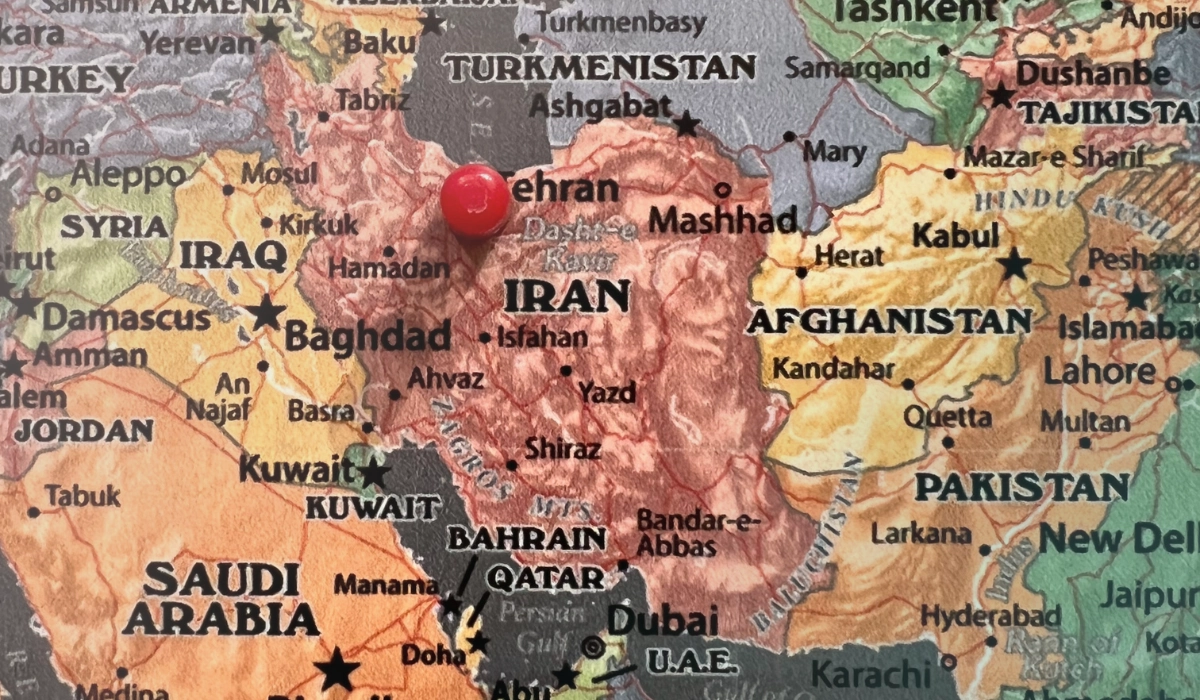
Conversely, economic or military coercion almost never solves problems or leads to permanent solutions, as is being borne out in the Middle East and the Iran war.
Indeed, the Trump administration’s war of choice and shotgun diplomacy – ostensibly intended to prevent Iran from ever being able to develop or possess nuclear weapons – has likely set back global nuclear nonproliferation efforts while offering valuable lessons on managing the growing risks of nuclear weapons, preventing their spread, and ultimately eliminating them from the planet.
What’s more, it’s useful for us nuclear abolition advocates to never lose sight of how important dialogue is to what we do as we engage policy makers, debate our family and friends around the dinner table, and bring the issue to others within our communities.
Together is Better: The Joint Comprehensive Plan of Action (JCPOA)
Any discussion about Iran and nuclear weapons should begin with the fact that Iran is a party to the Nuclear Non-Proliferation Treaty (NPT), as are all but five countries in the entire world, notably Israel, Pakistan, India, South Sudan, and North Korea. Diplomatic efforts to dissuade and prevent Iran from developing nuclear weapons — which Iran’s leaders have repeatedly said they have no intention of doing — have been ongoing for decades, culminating in the historic 2015 Joint Comprehensive Plan of Action (JCPOA).
The United States did not negotiate this deal on its own but rather with many other countries, including Russia, China and the European Union. As with any diplomatic negotiation, the deal required compromise, but for all intents and purposes it had effectively and verifiably curbed Iran’s nuclear activities.
Then, in 2018, Donald Trump withdrew the United States from the JCPOA without consulting key negotiating partners. In withdrawing from the deal, he helped create the very crisis that subsequent U.S. and Israeli actions have unsuccessfully sought to manage — one that has caused thousands of deaths and ongoing global economic instability.
Losing Friends, Losing Trust
Beyond the immediate, horrific human consequences and economic impacts, this war and the actions of the Trump administration over the last year have fundamentally reshaped our country’s relationship with the world and undermined global security. The reasons are straightforward. Our alliances have been shattered, and no country, friend or foe, can trust the United States. Even our closest friends and strongest allies have been threatened (ask Greenland). No country, except Israel, joined the United States in executing this war.
More Countries With Nuclear Weapons?
Today, there are nine countries with nuclear weapons. The latest entry to the nuclear club, North Korea, withdrew from the NPT in 2003 and conducted its first successful nuclear explosive test in 2006. While many countries of the world are feeling threatened and bullied by the United States, Russia, or China — North Korea is not one of them. And unfortunately, there are growing calls within many countries to develop nuclear weapons. Three-quarters of South Korea’s public wants nuclear weapons. France’s president, Emmanuel Macron, has ordered an increase of its nuclear stockpile with a broader role in European security. Indeed, there are a whole host of unsettling conversations within a number of countries about whether they might seek to acquire nuclear weapons.
The Nuclear Deterrence Paradox
The unfortunate lesson and perhaps unintended consequence of the Iran war is that more countries, not fewer, are seeing nuclear weapons as possibly the only thing that might deter a nuclear bully — be it the United States, China, or Russia.
This reflects a deeper feature of the global system: nuclear weapons create an unequal balance of power. Countries that have them operate under very different rules than those that do not. Current nuclear-armed states are often better able to withstand economic sanctions, sustain long military campaigns, and manage the risk of escalation in ways that non-nuclear states simply cannot match. That difference in leverage shapes how conflicts unfold.
We can see this in Russia’s war in Ukraine, where heavy international sanctions have not stopped the fighting. We also see it in tensions over Taiwan, where the risk of nuclear escalation influences how directly outside powers are willing to intervene. In both cases, nuclear weapons don’t prevent coercion — they shape its limits and direction, determining which states can apply pressure, how long they can sustain it, and what costs they are willing to absorb.
But as our colleague Danny Hall has written, a global system that relies on nuclear deterrence — and the threat of mass murder — is morally bankrupt and unsustainable. It has not eliminated war, and it is now being further complicated by emerging technologies like artificial intelligence and cyber capabilities, which introduce new pathways for conflict and escalation that the existing nuclear weapons infrastructure is not designed to manage.
The Only Way is Talking – Together
A “go it alone” world that lacks strong alliances, collective security institutions, and international agreements is a very dangerous one, incapable of effectively addressing shared problems — particularly nuclear weapons.
Next week, diplomats from around the world will begin to gather at the United Nations in New York for the 11th NPT Treaty Review Conference. The stakes couldn’t be higher for this treaty that has served as the bedrock of multilateral nuclear arms control and disarmament since it entered into force in 1970 after decades of international dialogue and negotiations. Nuclear disarmament activists, including members of Back from the Brink, will be in New York making the case that we must eliminate nuclear weapons — and that doing so is possible if we engage in dialogue and act collectively.