
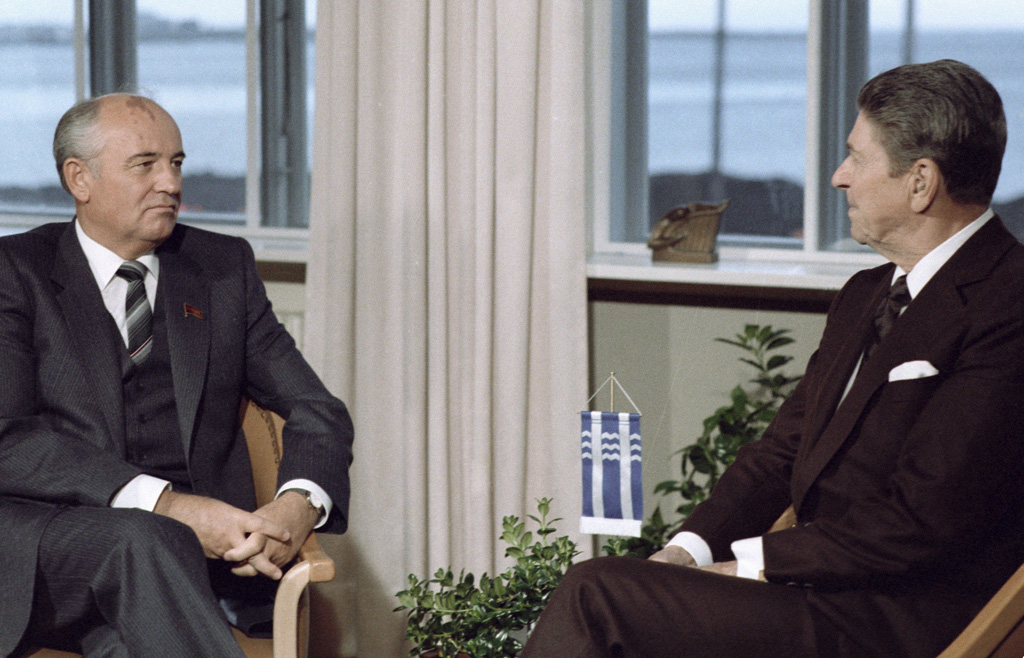
Mikhail Gorbachev and Ronald Reagan in Reykjavik. Photo: Yuryi Abramochkin / RIA Novosti archive, CC BY-SA 3.0
There are no military solutions – dialogue and diplomacy are the only guarantee of lasting peace
— Martin McGuinness, Former Deputy First Minister of Northern Ireland
Between 1945 and 1963, over 500 above ground “atmospheric” nuclear explosive tests were detonated causing death and horrible illness and disease for so many people – unconscionable harm that continues to this day.
What put a stop to this horrific practice? Diplomacy.
Countries talked to each other and negotiated the 1963 Limited Test Ban Treaty – a year after the Cuban Missile Crisis. A few years later, another historic multilateral arms control agreement, the Nuclear Nonproliferation Treaty (NPT), was opened for signature. Over the following decades, the treaty achieved near-universal participation, effectively curtailing the number of nations possessing nuclear weapons.
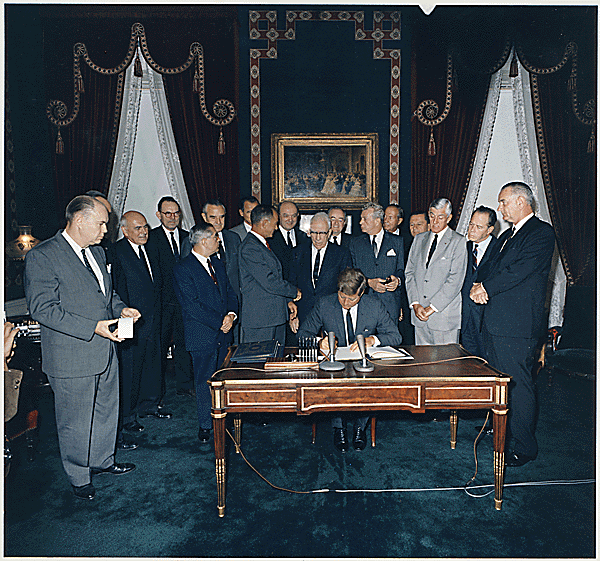
Signing of the Nuclear Test Ban Treaty. Photo: National Archives and Records Administration
Since 1945, more than 128,000 nuclear bombs have been built and at the height of the Cold War there were some 64,000 deployed nuclear weapons. Today, an estimated 12,000 remain. Much of that reduction came about as a result of treaties.
To be sure, 12,000 nuclear weapons is 12,000 too many and that number needs to be zero. The only way we get there is through arms control and dialogue, most notably between the United States and Russia (who today still possess nearly 90% of those 12,000) and China (which while engaged in a build up of its nuclear arsenal has an estimated 600 total nuclear weapons, a small fraction of which are deployed).
Is Arms Control Possible Now?
Right now, it’s reasonable to be skeptical about the prospects for meaningful nuclear arms control involving the United States, Russia, and/or China. We have a president who thinks he can bend and bully any person or country to his will. Most of us know that’s not how the world works – as is being proven with the disastrous war against Iran and his tariff policies which have wreaked havoc on the U.S. and global economy. Russia’s president is learning the same lessons with his cruel war against the people of Ukraine.
History however reminds us that some of the most significant nuclear arms control and reduction steps have occurred at similarly fraught times. In 1983, the Soviet Union shot down a Korean airliner and President Ronald Reagan gave his infamous “evil empire” speech and repeatedly made clear his goal of “defeating” the Soviet Union. It was a truly scary time – much like today.
Three years later in October 1986 – Reagan and Soviet president Mikhail Gorbachev met in Reykjavik, Iceland and came ever so close to a framework agreement by which both countries would have abolished their nuclear weapons by 2000. Ultimately, that did not happen because of Reagan’s insistence on developing the Strategic Defense Initiative (SDI). But Reykjavik built the foundation of dialogue that led to the signing of the historic Intermediate Nuclear Forces (INF) Treaty in 1987 that at the time eliminated an entire class of both conventional and nuclear weapons.
Today, many of the most significant arms control treaties have been abandoned, including the INF Treaty and the 2010 New START Treaty which the Obama administration negotiated with Russia. Meanwhile, President Trump has cooked up his own version of SDI, the so-called Golden Dome, with a similar, multi-trillion dollar fantasy to build an impenetrable shield against missile attacks.
The reality is there’s always going to be excuses and reasons for countries not to talk to each other. Dialogue among the P5 countries (the five permanent members of the UN Security Council) — US, China, Russia, France and the UK — ground to a halt after Russia’s invasion of Ukraine in February 2022. Notably, a month earlier in January 2022, those same countries issued an important statement reaffirming that “a nuclear war cannot be won and must never be fought.”
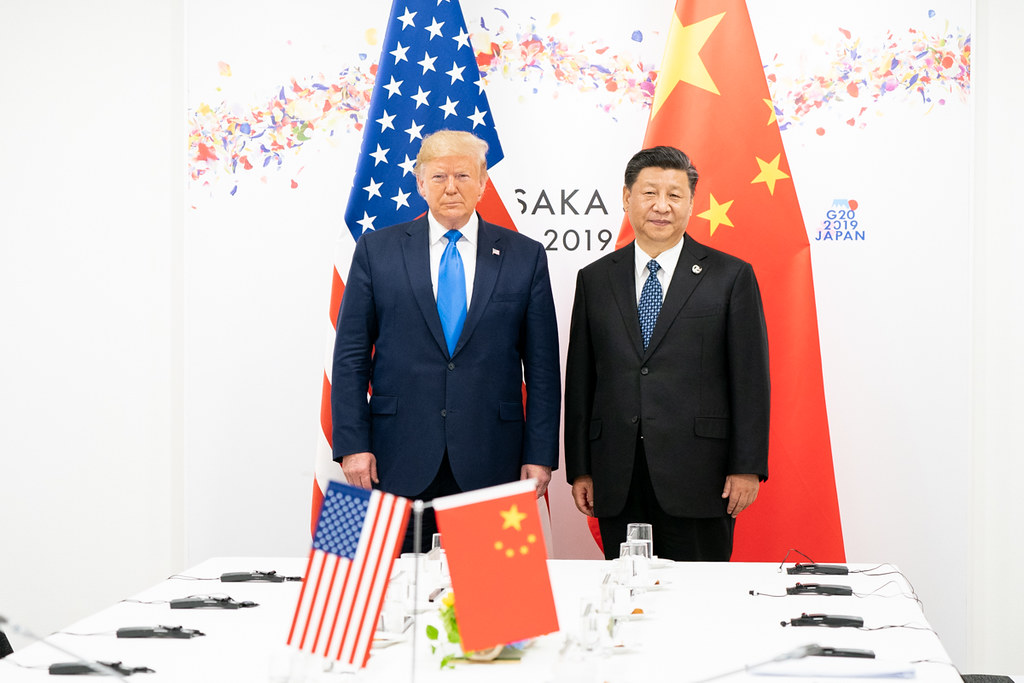
President Donald J. Trump joins Xi Jinping, President of the People’s Republic of China, at the start of their bilateral meeting Saturday, June 29, 2019, at the G20 Japan Summit in Osaka, Japan. (Photo: Official White House Photo by Shealah Craighead
This week, President Trump meets with Chinese president Xi Jinping in Washington. This is a good thing. We don’t know if nuclear weapons will be discussed but every face-to-face meeting between leaders of nuclear weapons states is an opportunity to make progress toward the shared goal of preventing nuclear war.
Leadership, Leadership, Leadership
Back from the Brink is grounded in the simple truth that a world free of nuclear weapons won’t happen without U.S. leadership. Both Republican and Democratic presidents have engaged in successful nuclear arms control diplomacy. President Trump has made many contradictory statements about nuclear weapons over the years, but as recently as this April he said, “A nuclear weapon should never be allowed to be used by anybody.”
We may not be able to influence Trump, but we can and must influence our members of Congress. And we should start making the case publicly: that anyone who is thinking about running for president in 2028 and wants our support needs to have a clear agenda to reduce nuclear risks, engage in disarmament diplomacy with Russia and China, and make clear that the abolition of nuclear weapons is a national security imperative.
We’ll talk more about this at our October 6th Community & Action Hour and what all of us can do to both finish this year strong with more cosponsors on H. Res. 317 and S. Res. 323 — and how we can bring this issue to candidates and voters before and after this November’s elections.
Another thing that history tells us is that successful nuclear arms control diplomacy – going back to the Limited Test Ban Treaty – rarely happens out of thin air. It was spurred on by activism, by culture and public education, and by people, experts, and artists demanding it. As we look to 2027, let’s keep that in mind and never lose sight of the fact that we are making progress — and that the abolition of nuclear weapons is both necessary and possible.