Ingrained into the Back from the Brink campaign are two core principles:
- The abolition of nuclear weapons is both necessary and possible
- Nuclear weapons are a local issue
Words we repeat quite often. Think of them as our campaign’s mantras.
But it’s not always easy to believe or understand these words. In these dark times it’s often easy and understandable to feel overwhelmed by the world in which we live – by the wars, the cruelty, the malicious policies, and the pain and suffering of so many.
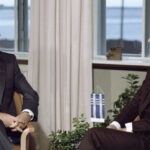
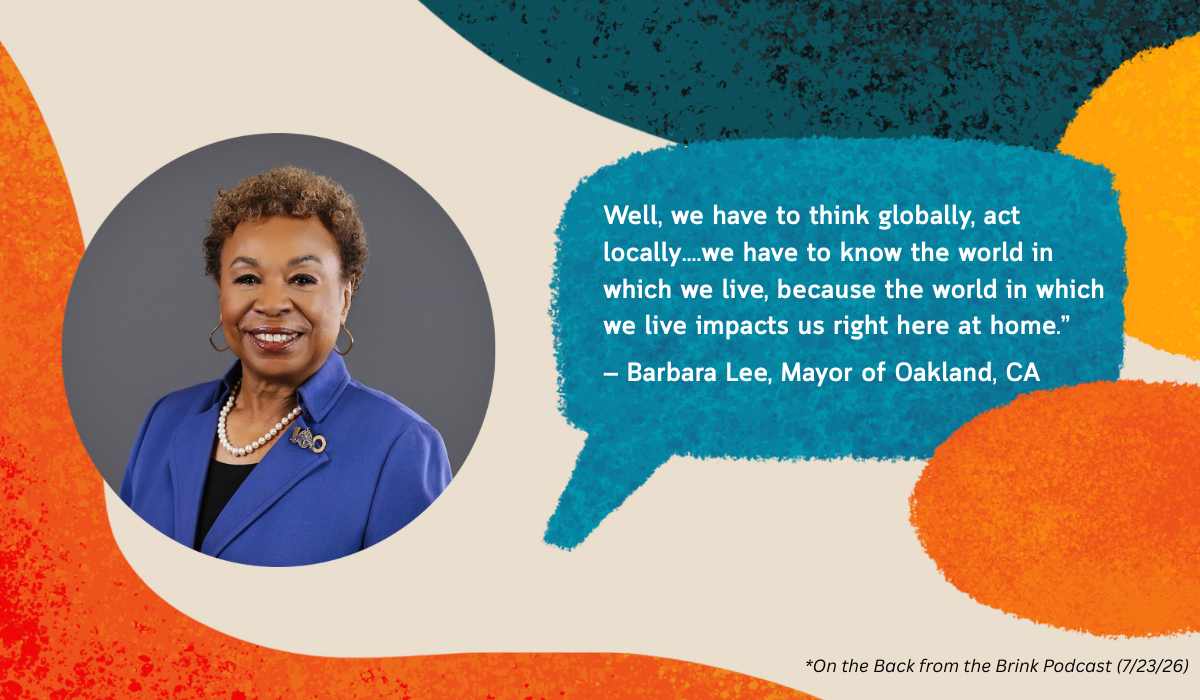
Oakland Mayor and former Congresswoman Barbara Lee, one of our guests on the final episode of the limited series Back from the Brink podcast, knows a thing or two about what it takes to keep moving forward, and staying in the struggle for a better world in the darkest of times. A legendary champion for peace and non-violence, Mayor Lee’s decades of activism and leadership have taught her well that with any major struggle for justice and social change, the goals and obstacles can often seem insurmountable, until they’re not. The impossible becomes possible.
How? Because people and communities come together – bounded by hope and the promise of a better world. We organize. We demand. We show up. We educate. We support one other. We don’t give up.
In the first episode of our podcast, next generation leader Molly McGinty from the International Physicians for the Prevention of Nuclear War (IPPNW) eloquently talked about “duty of care” – our responsibility to act, both to honor those who have suffered greatly from nuclear weapons, as well as protect and care for all living beings, all communities, and our precious planet.
Two weeks from today, August 6th and 9th mark the anniversaries of the U.S. atomic bombings of Hiroshima and Nagasaki. We surely have a duty to the victims and survivors of these horrific bombings to do all we can to make sure that what happened to them and their loved ones and their precious communities never happens again.
The mayors of Hiroshima and Nagasaki fully understand why nuclear weapons are a local issue. So does Mayor Lee. It’s mayors, governors, emergency management, and public health professionals who develop and execute the plans to deal with emergencies and disasters – to care for and protect their constituents. They all know that when it comes to nuclear weapons, the only real mitigation strategy is to prevent them from ever again being used. And that is why Mayor Lee and thousands of mayors, municipal officials, state legislators, and parliamentarians around the world have joined Back from the Brink and the International Campaign to Abolish Nuclear Weapons (ICAN) to speak out and demand action from their federal governments.
And then there’s our tax dollars and all of the unmet needs within our communities. Congress is currently deadlocked in debate over President Trump’s mind-boggling $1.5 trillion military budget request for Fiscal Year 2027 – including roughly $100 billion for nuclear weapons. Additionally, the administration recently made another $87.6 billion “supplemental request” for the current fiscal year – a third of which is for the illegal Iran war.
Meanwhile, the American Society of Civil Engineers reports that U.S. cities would need to spend $3.7 trillion for infrastructure (e.g. roads, bridges, railroads, buildings) to reach a state of “good repair.” And CDP, a global non-profit organization, estimates that climate disasters have cost the U.S. economy $6.6 trillion over the last 12 years.
Indeed, climate change – like nuclear weapons – is a local issue. Our world is interdependent and for our world to survive and thrive, communities and nations must collectively respond to these existential threats. There’s no other choice.
Will it be easy? No. Will it take time? Yes. Thankfully, one need not look far for hope and inspiration. Our communities are filled with people just like you working together to build a safer, more just world.