Photo: Paul Sherman
*This post is part of our “Faith in Action: Moral Courage for a Nuclear-Free Future” series
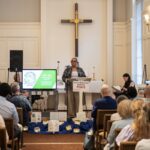
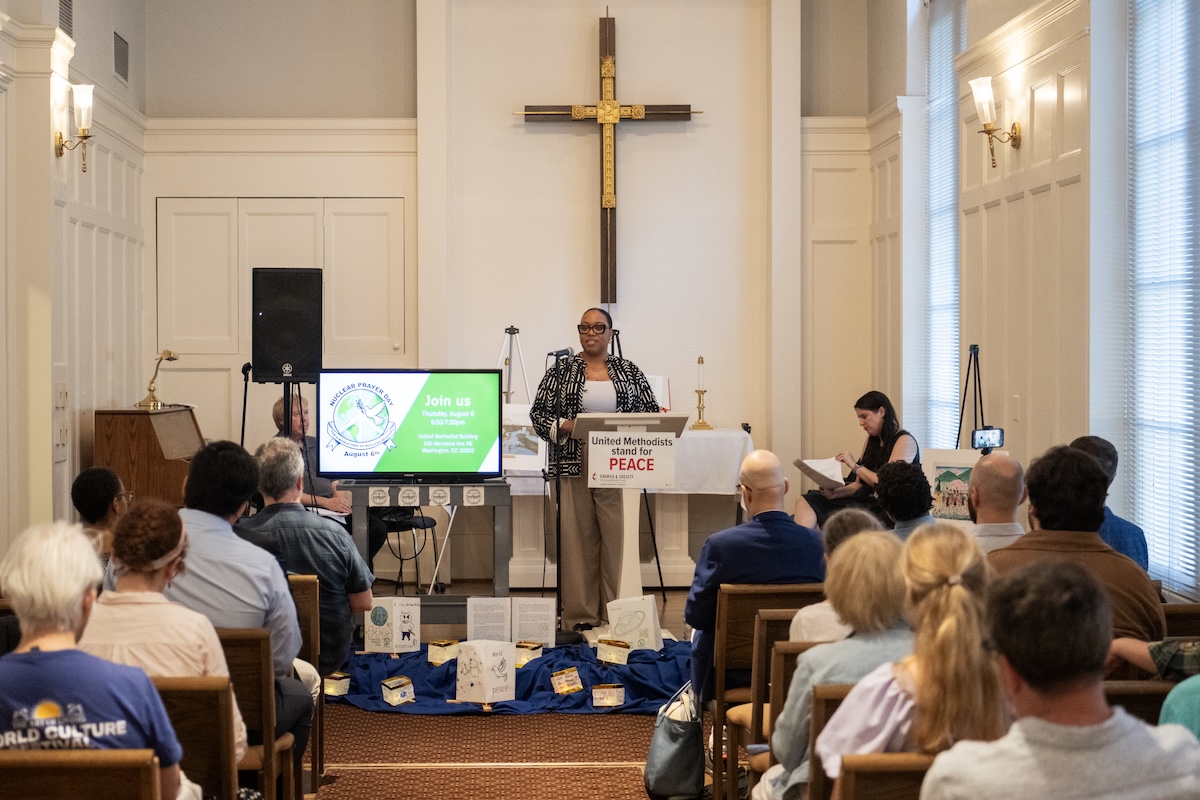
On August 6, 2026, faith leaders, advocates, and community members gathered in the chapel of the United Methodist Building on Capitol Hill for the Nuclear Prayer Day Vigil, marking 81 years since the atomic bombings of Hiroshima and Nagasaki. The vigil was organized by a coalition of DC faith‑based organizations and advocacy groups, united in a shared commitment to nuclear abolition.
Storms and heat pushed us indoors, but the closeness of the room made the gathering feel even more intimate. Lanterns glowed. Voices rose. And together, we carried forward the work of building a world free from nuclear weapons.
Opening Prayer — Charlene Howard, Executive Director, Pax Christi USA
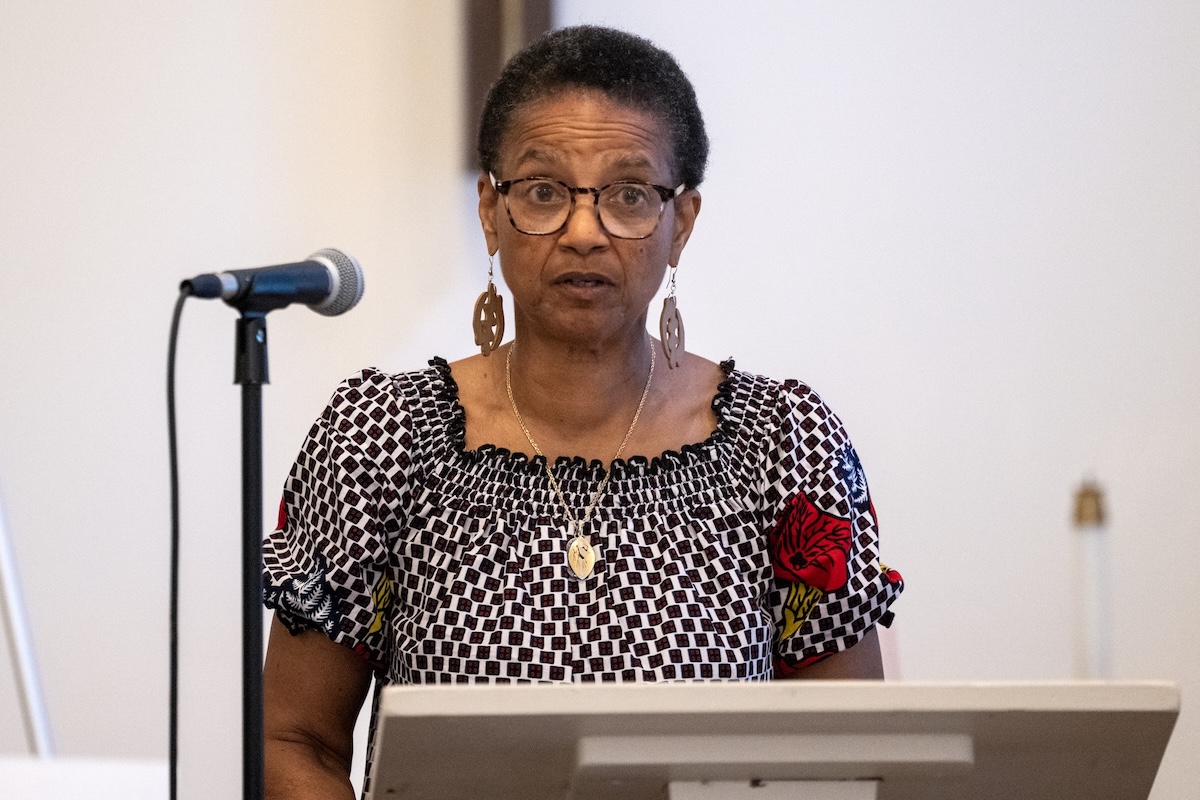
Photo: Paul Sherman
Charlene Howard opened the evening with a prayer that held both humility and agency — offering language from her Catholic tradition while inviting everyone, across beliefs, into a shared sense of responsibility for the world we inhabit.
“Let us put ourselves into the presence of our Loving God, the beginning and the end are in Your hands, O Creator of the universe, and in our hands You have placed the fate of this planet.”
Her words reminded the room that, however we understand the sacred, the work of protecting life and creation rests in human hands — in our choices, our advocacy, and our collective courage.
Lanterns of Memory, Lanterns of Resolve
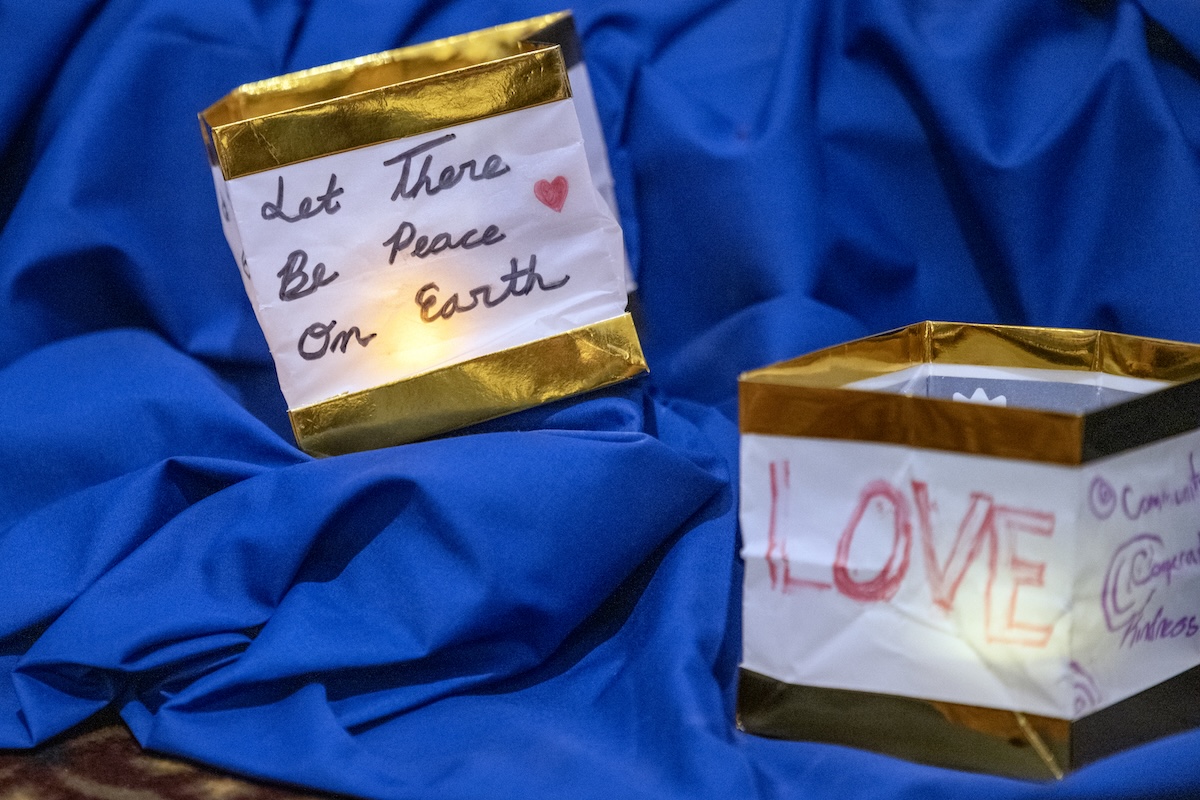
Photo: Paul Sherman
Charlene then lifted up the global tradition of Lanterns for Peace — a river of light that begins in Hiroshima and now flows through communities around the world. Children in Hiroshima and children in Washington, DC decorated lanterns that glowed throughout the chapel, each one carrying a story, a prayer, a promise.
“Each lantern symbolizes remembrance, hope, peace, and global solidarity.”
The lanterns reminded us that memory is not only about the past. It is a commitment to the future — a refusal to let the lessons of Hiroshima and Nagasaki fade.
Children’s Artwork from Hiroshima — A Legacy of Exchange and Care
At the opposite end of the chapel from the lanterns, the vigil space held reproductions of children’s artwork from Hiroshima, shared with All Souls Church (Unitarian) in Washington, DC in the years following the bombings. In 1948, inspired by the sermons of Rev. A. Powell Davies, children at All Souls collected school supplies to send to children in Hiroshima as an act of compassion and solidarity. In response, Hiroshima school children created original works of art — crayon drawings, watercolors, pen sketches, and calligraphic brush pieces — and sent them back as gifts.
Decades later, All Souls restored these precious creations and mounted an exhibit to preserve and share them with the wider community. Their presence at the vigil added a quiet, powerful tenderness to the room. Even in the aftermath of unimaginable devastation, children reached across an ocean with beauty, gratitude, and hope — reminding us that the work of abolition is ultimately for the sake of future generations.
The Moral Crisis of the Moment — Colleen Moore, Director of Peace with Justice (UMC GBCS) and Vigil Moderator
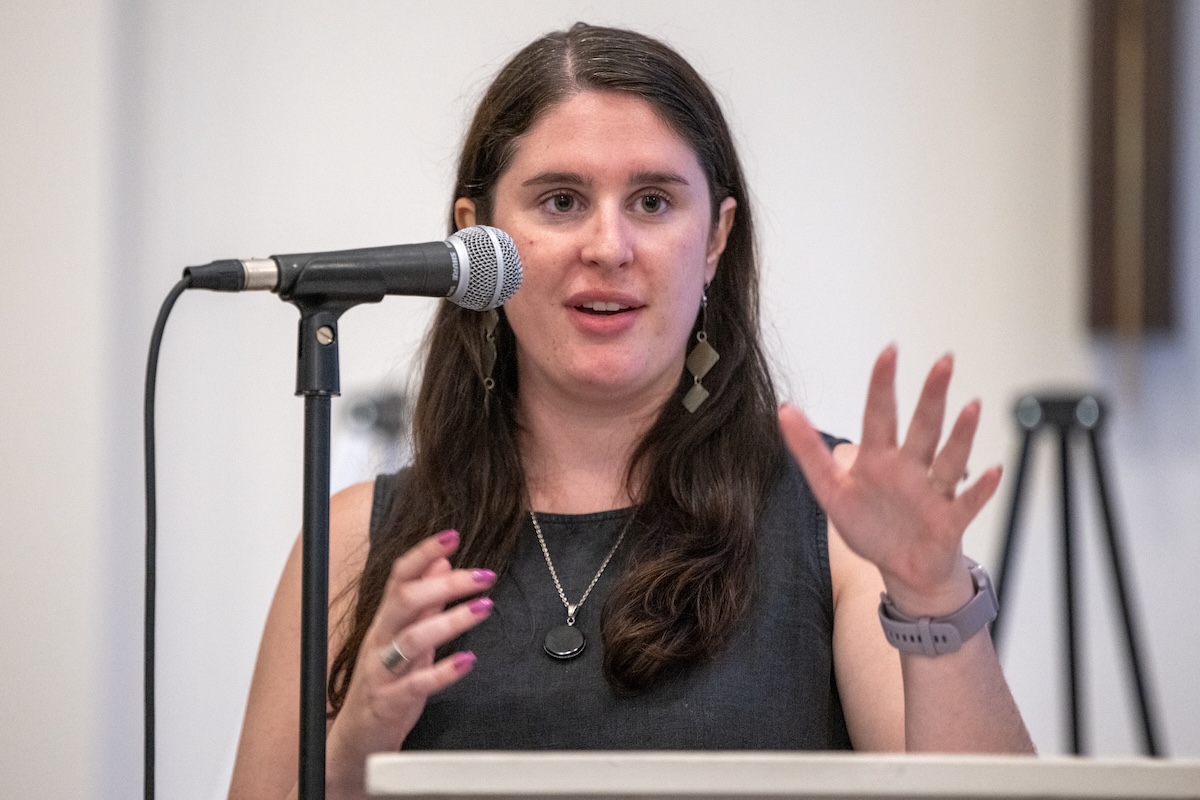
Photo: Paul Sherman
Before introducing the next speaker, Colleen Moore — Director of Peace with Justice at the United Methodist Church’s General Board of Church & Society, and moderator of the vigil — offered a stark and necessary framing of the moment. She reminded the room that this anniversary marks 81 years of the pervasiveness of the myth of nuclear security — the continued Cold War–era belief that nuclear weapons create safety rather than permanent vulnerability. She named the reality that deterrence thinking still treats nuclear weapons as instruments of geopolitical dominance rather than tools of protection.
“This is precisely why people of faith come together: to choose the grace of helping life flourish instead of the greed of funding more war and weapons.”
Colleen spoke plainly about the moral stakes of the present moment, noting that this anniversary comes amid a dangerous descent into authoritarianism, with the U.S. government fighting unpopular and illegal wars, detaining and killing neighbors, and cutting services communities actually need. Her words set the moral urgency for the vigil and prepared the room for the theological grounding that followed.
A Wesleyan Moral Frame — Rev. Camille Henderson‑Edwards, Senior Executive Director for Advocacy, UMC General Board of Church & Society
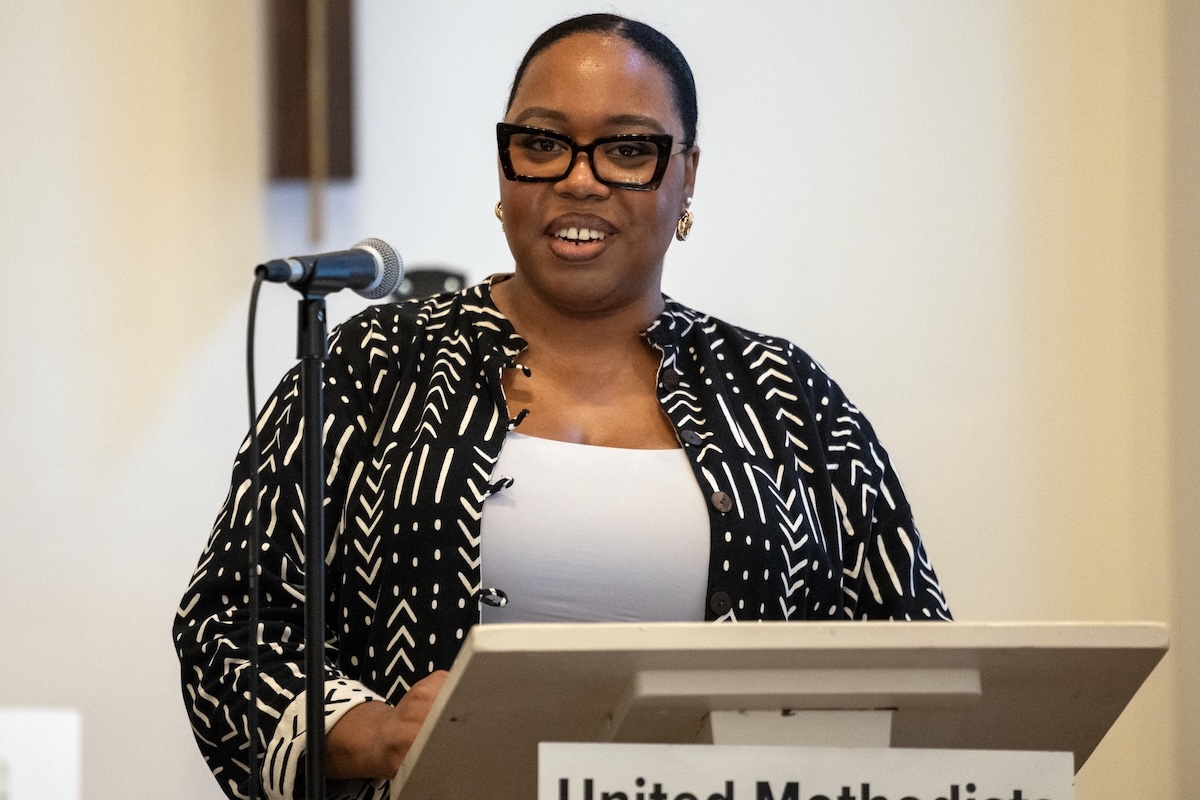
Photo: Paul Sherman
Following Colleen’s framing of the political and moral urgency of the moment, Rev. Camille Henderson‑Edwards offered the United Methodist theological grounding for the vigil, rooting the gathering in her tradition’s understanding of justice, peace, and public witness.
Rev. Henderson‑Edwards reminded the gathering that in the Wesleyan tradition, holiness is never a private spiritual experience. It is expressed in how we care for our communities, how we protect the vulnerable, and how we seek justice in the public square.
She named nuclear disarmament as a profoundly theological and moral concern — a question about the sacredness of life, the stewardship of creation, and our responsibility to one another as members of one human family. She connected nuclear weapons to broader justice issues: health justice, economic justice, gender justice. Every dollar spent on weapons of mass destruction, she said, is a dollar taken from affordable housing, food and nutrition programs, and access to comprehensive healthcare.
“Peace is not merely the absence of war, but the presence of justice.”
Rev. Henderson‑Edwards lifted up the disproportionate burdens borne by women and girls in conflict and displacement — caregivers in catastrophe who also face unique health impacts from radiation exposure — while honoring women as “the world’s most faithful architects of peace,” demonstrating that lasting security is built not through domination or fear, but through justice, cooperation, and shared humanity.
She closed by returning to prayer — not as retreat, but as formation. Prayer aligns our hearts with God’s heart. Prayer gives courage when challenges feel overwhelming. Prayer equips us for the work ahead.
Her blessing carried the room into the vigil’s next movement:
“May our prayers deepen our commitment to seek justice, to love mercy, and to walk humbly with our God. May they inspire us to advocate for policies that protect life and uphold human dignity.”
A Congressional Call: Naming Zero — Rep. Jim McGovern (MA‑02)
From remembrance, the vigil shifted toward responsibility. Rep. Jim McGovern, U.S. Representative for Massachusetts’s 2nd Congressional District, offered video remarks that brought the weight of Congress into the room. He honored the hibakusha and the dead, and then named the abolition goal with clarity and conviction.
“We have successfully reduced global stockpiles from 70,000 warheads to about 12,000 today, but our goal is zero.”
His message was unmistakable: the work of abolition belongs to all of us.
Music as Witness — Art Laffin, Dorothy Day Catholic Worker
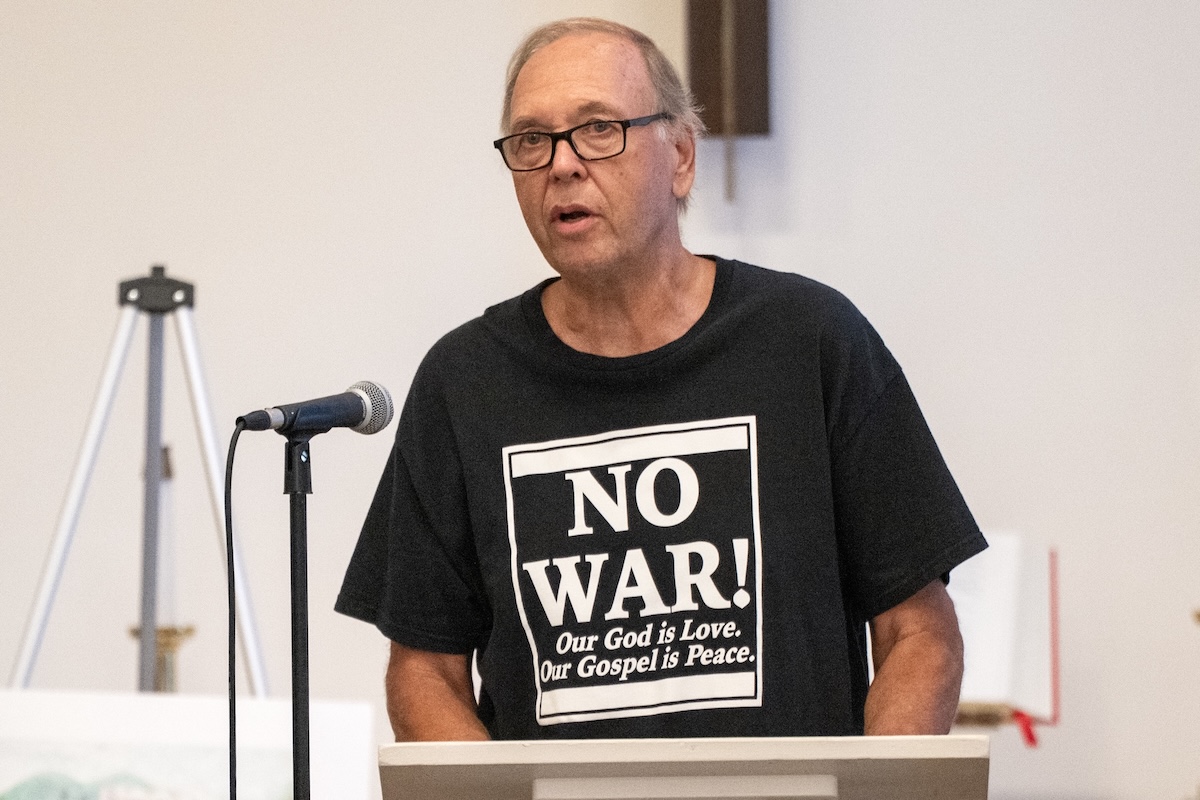
Photo: Paul Sherman
From congressional witness, the vigil moved into musical testimony. Art Laffin of the Dorothy Day Catholic Worker stepped forward and invited the room to call into presence “the holy plight of witnesses and all those who perished in the mortal sin of th
e use of nuclear weapons by our country.” He then offered “Never Again the A‑Bomb,” singing it in Japanese, a song that has become central to Hiroshima remembrance. Written in 1955 by Ishiji Asada and Koki Kinoshita, the piece emerged from the earliest years of hibakusha testimony and has become deeply meaningful to survivors and to all who work for peace.
Its lyrics carry the voice of Hiroshima itself — a hometown burned to ash, families buried in charred soil, and a vow that such destruction must never be repeated. Art shared the English translation of its opening lines:
“Our hometown Hiroshima was burnt down. We buried our family’s bones in the charred soil. Now white flowers are blooming on the soil. We will never allow another atom bomb to fall on our hometown.”
The melody was gentle and mournful, and even for those unfamiliar with Japanese, the emotional weight was unmistakable: grief, memory, and a collective promise that the suffering of Hiroshima will not be forgotten.
Art then lifted up the hibakusha’s enduring warning:
“The hibakusha say nuclear weapons and humanity cannot coexist.”
Through music and prayerful presence, he helped the room hold grief and resolve together — a form of remembrance rooted in nonviolence, solidarity, and the long moral witness of the Catholic Worker movement.
Unitarian Universalist Witness — Pablo DeJesus, Executive Director, UUSJ
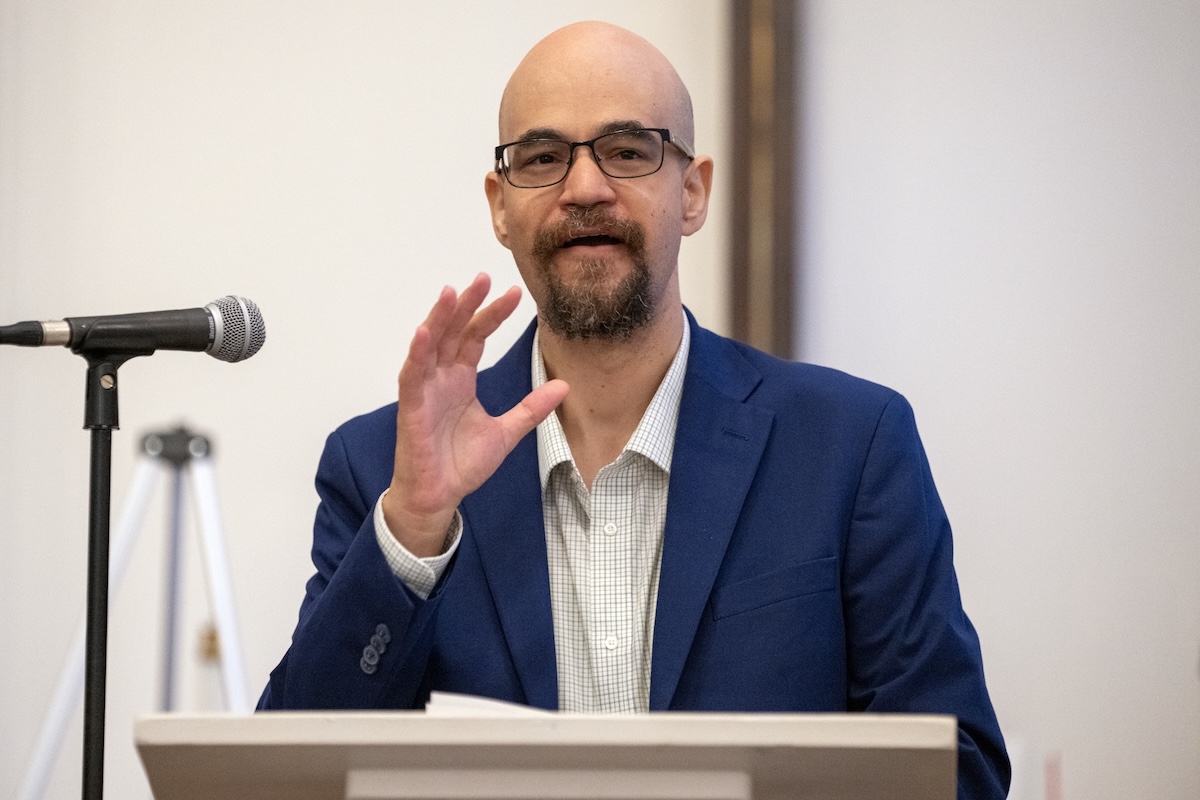
Photo: Paul Sherman
The vigil then turned toward the long moral witness of the Unitarian Universalist tradition. Pablo DeJesus, Executive Director of Unitarian Universalists for Social Justice, connected the evening’s remembrance to his own earliest justice‑making memory — sitting on his father’s shoulders at a No‑Nukes rally, learning that faith and public action belong together.
He spoke of how Unitarian Universalists have long opposed nuclear war and have consistently called for the complete abolition of nuclear weapons, naming them as genocidal instruments that threaten all life and creation.
“We agree we must step back from the brink, must show the spiritual discipline to continue that journey, even if it is a struggle.”
Buddhist Humanism and the Three Poisons — Daisaku Leslie, Senior Director, SGI‑USA
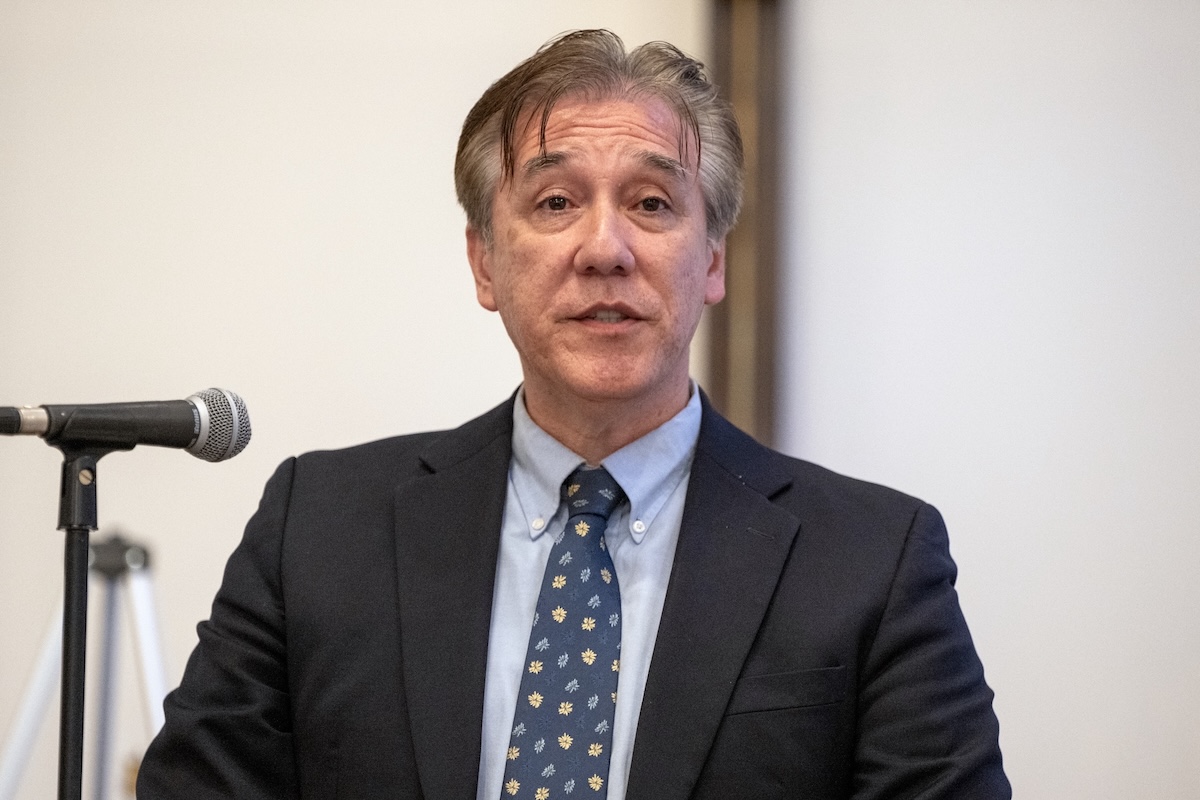
Photo: Paul Sherman
The spirit of the gathering shifted again as Daisaku Leslie, Senior Director at Soka Gakkai International–USA, connected the struggle for abolition to the inner work of transforming greed, anger, and ignorance — the three poisons that sustain the ideology of nuclear deterrence. He traced the movement for abolition back to Josei Toda’s 1957 declaration, naming nuclear weapons as an assault on humanity’s right to live.
“To emerge from the shadow of nuclear weapons, we need a revolution in human consciousness.”
His words reframed abolition as spiritual work: a transformation of the human heart.
The Marshallese Wound — Benetick Kabua Maddison, Executive Director, Marshallese Educational Initiative
The vigil then widened its circle of memory through a video message from Benetick Kabua Maddison, Executive Director of the Marshallese Educational Initiative, who brought the Pacific into the chapel and reminded us that nuclear violence did not end in 1945. It continued in the Marshall Islands, where fallout drifted down “like poison ash,” where entire communities were displaced, and where bodies still carry the scars of testing.
He described the human toll with clarity and grief — the forced relocations, the “nuclear nomads,” the cancers and miscarriages, the children born with devastating birth defects.
And then he offered one of the most powerful abolition calls of the night:
“Commit to work for the abolition of nuclear weapons, so no land becomes another test site, no city another Hiroshima.”
His testimony grounded the vigil in global solidarity and reminded everyone that abolition is not only a moral imperative — it is a matter of justice for communities still living with nuclear harm.
Rejecting Hubris — Chad Stanton, Political Director, Sojourners
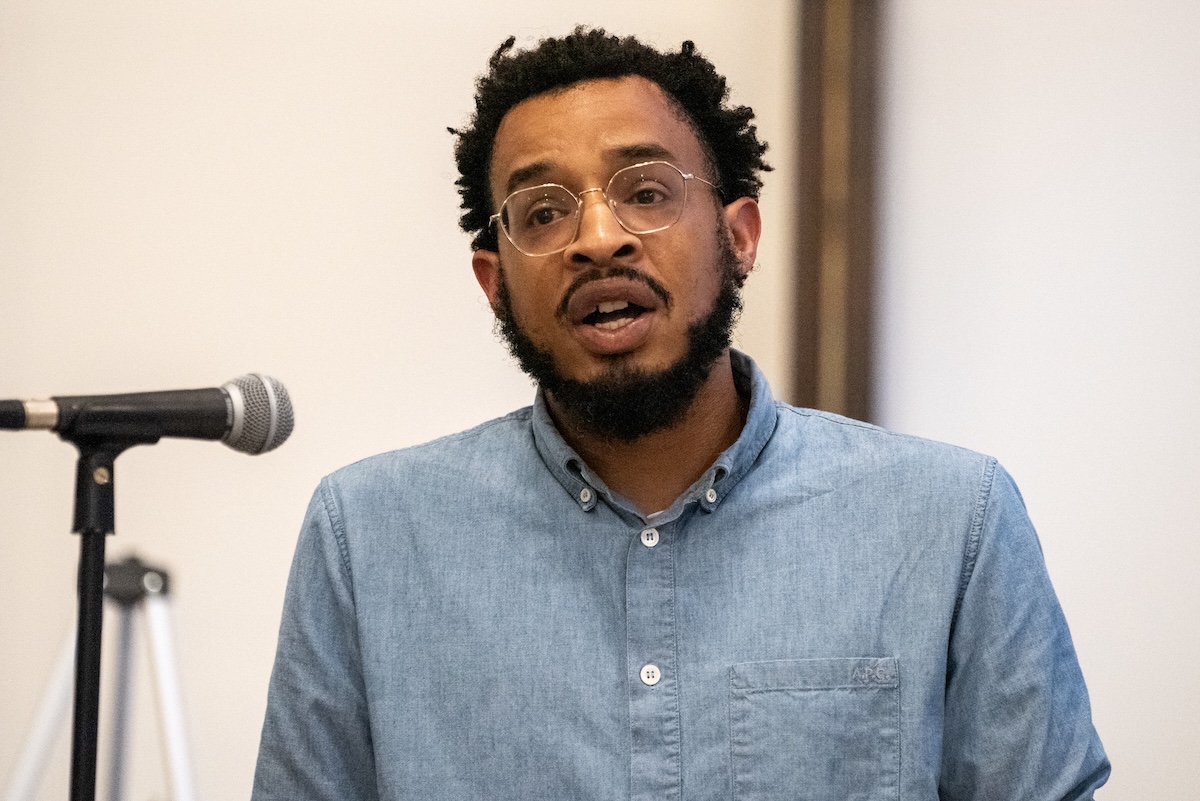
Photo: Paul Sherman
Building on that, Chad Stanton, Political Director at Sojourners, spoke to the spiritual danger of nuclear hubris — the arrogance that any nation could wield world‑ending power. He warned against the illusion that nuclear fallout could ever be contained.
“It’s this hubris that allows us to believe that we could ever reasonably possess the power to end the world.”
His words prepared the room for the final call to action.
Faith Into Action — Colleen Moore
At this point in the vigil, the room turned toward movement. Colleen Moore — Director of Peace with Justice at the United Methodist Church’s General Board of Church and Society — stepped forward to name the work ahead with clarity, urgency, and moral conviction.
She reminded everyone that remembrance must become organizing, advocacy, and public witness. She named the many ways people of faith can act: education, marches, economic activism, research, prayer, nonviolent direct action, municipal resolutions, and congressional advocacy.
And then she spoke the words that anchored the night:
“These words cannot remain just words, but they have to be translated into action.”
She called on everyone present to contact their representatives and senators to support H.Res.317 and S.Res.323 — the Back from the Brink resolutions.
Then she named the heart of the matter — the clarity the movement needs:
“We call on all of you to name abolition openly, because this moral and faithful clarity mobilizes.”
And finally, she offered the line that has already become a rallying cry:
“The nuclear debate cannot shift unless we clearly state the destination.”
Her leadership carried the vigil from memory into movement — from grief into action — from witness into abolition.
A Hibakusha Legacy — Bishop Julius Trimble
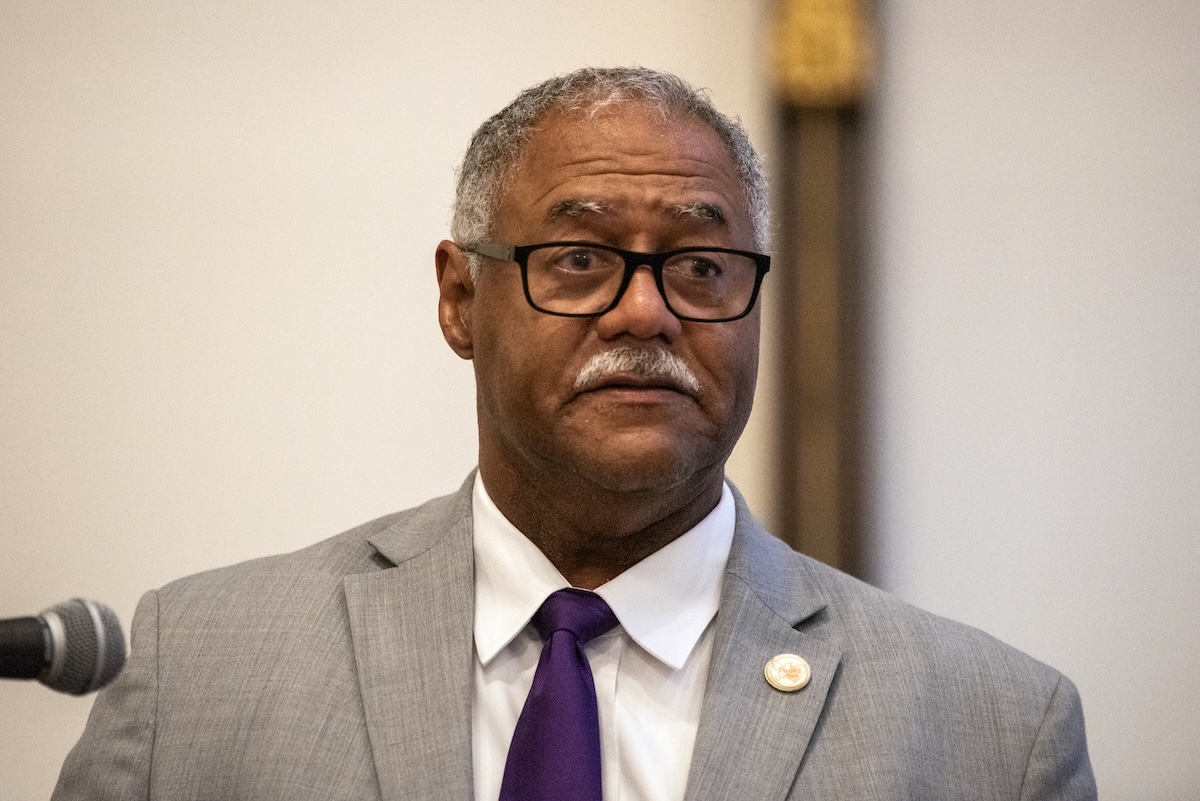
Photo: Paul Sherman
Finally, the vigil arrived at its emotional crescendo. Bishop Julius Trimble stepped forward, carrying a hibakusha family story that has shaped generations. He shared the testimony of Tayako Shatama, now 103 years old, who survived just outside the Hiroshima blast zone. Her memories remain vivid: returning to a city of total devastation, seeing bodies floating in the river, losing a younger sister who was never found.
Her trauma became a lifelong commitment to peace — a commitment she passed down to her children and grandchildren.
Bishop Trimble then pointed to the scriptures inscribed above the atrium of the United Methodist Building — words that shape the moral architecture of the place where we gathered.
“They shall beat their swords into plowshares… neither shall they learn war any more.”
And he offered a final charge:
“May this be more than just our prayer. May this be our pledge, our lifelong pledge.”
He closed with a blessing that carried the room into silence:
“That we might fight today, fight today, so that the children of this world may live and grow and laugh and play.”
Why We Gather
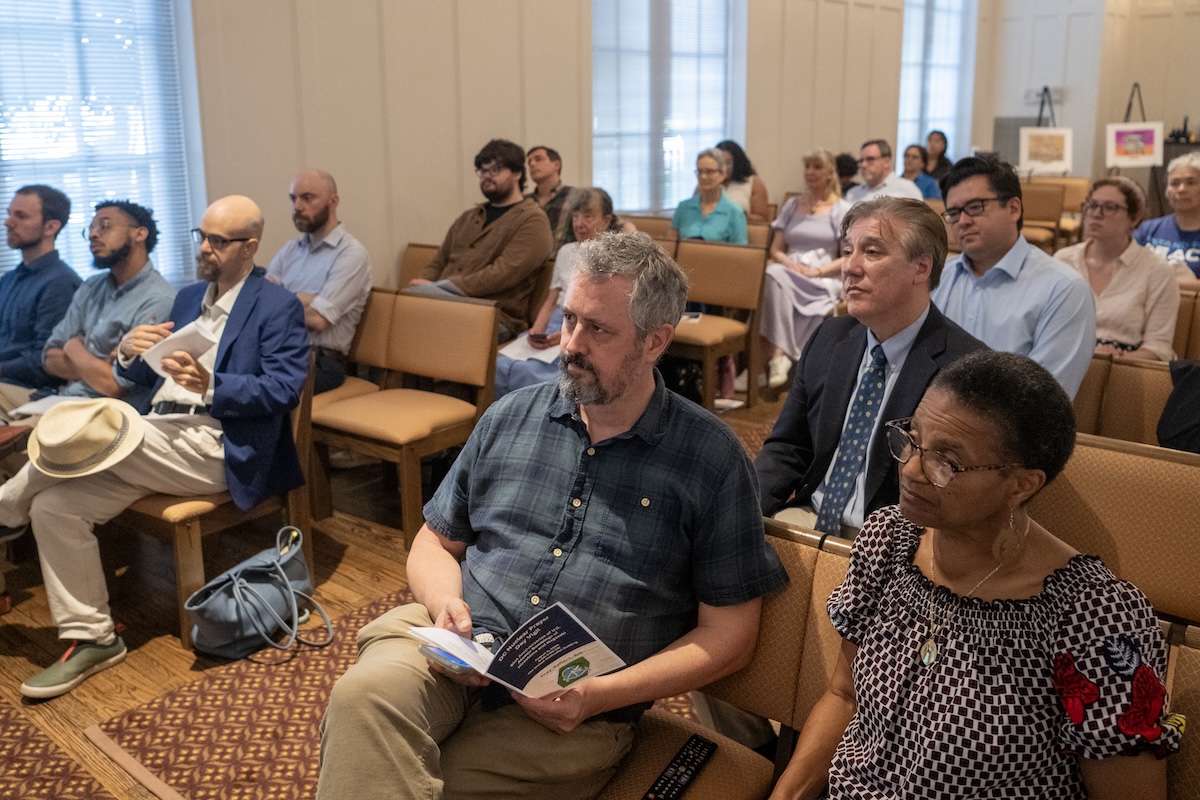
Photo: Paul Sherman
We gathered because memory is a form of resistance. We gathered because grief can become action. We gathered because abolition is not impossible — it is necessary.
We gathered because:
“It cannot be beyond the power of human wisdom to eliminate them.” — Daisaku Leslie
And because:
“Our goal is zero.” — Rep. Jim McGovern
This vigil was not an ending. It was a beginning — a recommitment to the work of building a world where nuclear weapons no longer threaten life on Earth.
*Faith in Action: Moral Courage for a Nuclear-Free Future
Faith traditions have long stood at the forefront of movements for peace, justice, and the sanctity of life. In this blog series, “Faith in Action: Moral Courage for a Nuclear-Free Future” we explore how people of faith are responding to the moral and existential crisis posed by nuclear weapons. Through reflections, event recaps, and contributions from our interfaith partners, this series offers a space for spiritual voices calling for disarmament—and a reminder that confronting the threat of nuclear annihilation is not just a political issue, but a deeply human and moral one.
While Back from the Brink is a secular campaign, we are proud to stand in solidarity with faith-based partners who see nuclear abolition as both a spiritual imperative and a call to justice. Together, we bear witness—and take action—for a future free from nuclear weapons.
If you’re part of a faith group that’s interested in getting involved with Back from the Brink, you can reach out to Danny Hall at danny@preventnuclearwar.org.