The Back from the Brink Podcast
About
Ep. 1 - Nuclear abolition: There’s no other option
Ep. 2 - Is this what safety looks like?
Ep. 3 - The nuclear house of cards
Ep. 4 - Proof it can be done
Ep. 5 - Twin threats: Climate change and nukes
Ep. 6 - Trust but verify
Ep. 7 - People, protest, and possibilities
About the Podcast
If you hope a nuclear weapon is never used again, but struggle to imagine a world without them, the Back from the Brink Podcast is for you. Through conversations with people from all walks of life who are working to eliminate the threat of nuclear weapons, we learn what a world free of nuclear weapons looks like and how we can build it together. Hosted by journalist Ryann Blackshere Vargas, this 7-episode limited series will leave you feeling informed and inspired.
You can also subscribe and listen to us on:
Listen Now
Your Host
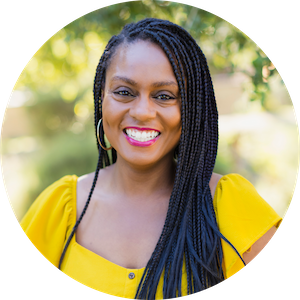
Ryann Blackshere Vargas is an award-winning journalist and host. She has reported for media outlets including Spectrum News and NBC News. Ryann currently serves as a media consultant for the Back From The Brink campaign. She is an alumna of the Columbia University Graduate School of Journalism.
Production Team

Jiayu Liang is a writer and communications professional in the Greater Boston area. In addition to supporting public education initiatives at Back from the Brink, she has also worked in higher education and nonprofit environments covering topics including climate science, public health, and environmental conservation. She has a B.A. in science communications from Vanderbilt University and an M.S. in journalism from Columbia University.
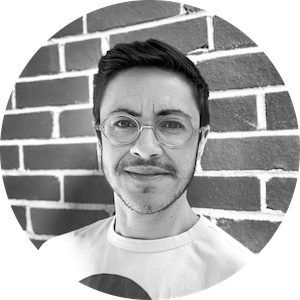
Anthony Eyring (they/them) is the audio producer and creative lead for The Back from the Brink Podcast. Alongside their work on nuclear abolition, they've been active in climate change activism, illustrating children's books, producing billboards, videos, and creative marketing. They live just outside Cambridge, Massachusetts with their spouse, cat, and slightly overweight dog.
Follow us on social media
This podcast was made possible in part by a grant from the Andrew Carnegie Foundation, formerly Carnegie Corporation of New York. The statements made and views expressed are solely the responsibility of the author.
Nuclear abolition: There’s no other option
Listen to this ep. on Apple Podcasts or Spotify
The threat of nuclear war has loomed over us since the first nuclear explosion in 1945, known as the Trinity Test. Decades later, communities are still contending with the impacts of that test and all the nuclear weapons that have been built since then. As Tina Cordova and Molly McGinty work to address these harms and build a safer world, host Ryann Blackshere Vargas explores why this issue matters so much to them.
Guests on this episode
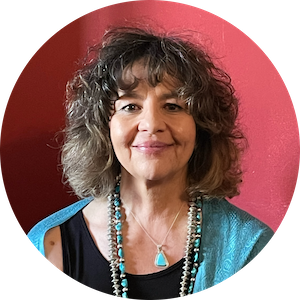
Tina Cordova is co-founder of the Tularosa Basin Downwinders Consortium. She is a seventh-generation native New Mexican seeking justice for the unknowing, unwilling and uncompensated, innocent victims of the Trinity Test.
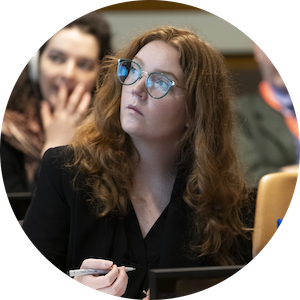
Molly McGinty is the Program Director at the International Physicians for the Prevention of Nuclear War (IPPNW). She highlights the humanitarian and environmental impacts of nuclear weapons and advocates for their total abolition.
Resources mentioned in this episode
- Molly McGinty’s organization, IPPNW: https://www.ippnw.org/
- Molly’s work with medical students: https://www.ippnw.org/home/medical-students
- Tina Cordova’s group, Tularosa Basin Downwinders Consortium: https://www.trinitydownwinders.com/
- The documentary “First We Bombed New Mexico”: https://www.firstwebombednewmexico.com/
View Episode Transcript
Tina Cordova: I often say to people, you may survive the testing of a nuclear device. You may survive the limited use of a nuclear device, but it will be the beginning of the end for you because that's what it's been for us.
Ryann Blackshere Vargas: That was Tina Cordova. Powerful, isn't she? She grew up near a nuclear weapons testing site in New Mexico and has dedicated her life to fighting for a safer, healthier world. She and Molly McGinty are our two guests today.
You're listening to the Back From the Brink podcast, a limited series where we explore why a world free of nuclear weapons is both necessary and possible. I'm your host, Ryann Blackshere Vargas. I'm a journalist, and like you, always learning how we can make this world a better place.
So I have a question for you. What kind of world do you want to live in?
We recorded this in early 2026, and as we prepared for this episode, the world started to feel a lot colder. The last arms control treaty between the U.S. and Russia has expired. It's been
looking like the U.S. might actually resume testing nuclear weapons again. And traditional diplomatic routes are starting to break down. I'm sure you remember, as I do, learning about nuclear weapons in school. I remember being horrified that world leaders have the power to kill millions of people in a matter of minutes. But that always seemed to be a threat of the past, a relic of the Cold War.
Today, nuclear weapons aren't even at the top of most people's priorities. But the more I learn, the more I'm certain that needs to change as global tensions rise. In fact, experts at the Bulletin of Atomic Scientists say we're closer to nuclear war now than we have ever been in the past.
That's truly terrifying. Can we change that? How do we keep our families safe? Could we really get rid of nukes?
All I have are questions. So I spoke with people who have the answers. Because I want to better understand what a world free of nuclear weapons looks like, and more importantly, how we can get there.
Today, I'm wondering what the modern threat of nuclear war looks like. So I wanted to speak with the activists and people who work on abolishing nuclear weapons every day. Why does this issue matter when there's so much else going on? So much going on. And what's motivating younger activists to get involved?
Our first guest, Molly McGinty, is the perfect person to answer these questions. She's the program director at IPPNW. That's the International Physicians for the Prevention of Nuclear War. Like so many young people, she cares deeply about building a happier, healthier, and more just world. And she started seeing connections between nuclear weapons and other issues she cares about. So she decided there was only one possible course of action. I'll let her tell you that story.
Ryann Blackshere Vargas: All right. Well, Molly, thank you so much for joining the Back From the Brink podcast. It's an honor to speak with you today.
Molly McGinty: Yeah. Thank you so much for having me. I'm so excited to be here.
Ryann Blackshere Vargas: Well, I'm excited you're here. The more I learn about you, the more I admire your passion for nuclear disarmament. So I was reading a little more about
your academic background. I know you have a degree in social work and gender and sexuality studies. Tell me how you got to that. What led you to those interests? And how does that inform your work and your activism?
Molly McGinty: Yeah. So I, like many people in teen years, was deeply unsure of what I wanted to do. I didn't really feel like I had much of a path. I knew I wanted to go to school, and I knew I wanted to do something that helped people in the broadest way possible. And when I was in high school Mike Brown was murdered by the police here in the States, and it really awoke a conversation in my community about police violence, and police violence against people of color. And from, really that was, I think, 2013 maybe or 2014. So a few years after Trayvon Martin's death. Really awoke a passion for me to kind of learn about what was really going on around the world and what role folks can play, myself included, in pushing back against all of these deadly norms that have just kind of existed parallel to me my whole life. That's a long way to say that I went into school hoping to help people and trying to figure out a way to do it.
Ryann Blackshere Vargas: So from my understanding, you eventually started working in nuclear disarmament in 2019 as a Quaker Voluntary Service fellow. So how did you learn of that opportunity, and what was that like? What was that experience like getting your toes wet into this space, nuclear disarmament space?
Molly McGinty: Yeah. So I learned about Quaker Voluntary Service, or QVS, through the Friends Committee on National Legislation, which is a DC-based lobby group. My senior year of college, I had a fellowship program with FCNL where I was working on police demilitarization advocacy in my local community in Salisbury, Maryland, where I went to school. That was the first time I'd ever engaged with Quakers before and really valued – again, I grew up Catholic – but really, really valued kind of the Quaker model of, just a basis of care for one another and a basis of justice as a form of care for one another, kind of fighting for one another to show love and community.
My beginnings with advocacy started with the Black Lives Matter movement, but my work with FCNL on police demilitarization really broadened my perspective on militarism. I was really drawn to IPPNW, which is the International Physicians for the Prevention of Nuclear War, where I still work today. I was really drawn to IPPNW. At the time when I applied, I knew absolutely nothing about nuclear weapons. I, again, do not have a background in international relations. And then that led me, when I saw IPPNW, to say, "Oh my gosh, nuclear weapons are still around?" It was genuinely one of the first questions that came to mind, and this is a problem that actually matters. And then going through the website, learning about the humanitarian impacts, I was like,"Oh, okay, this sounds like something that I wanna be a part of," and something that, I'm really grateful that they were able to take me on for what was meant to be a year, and really educate me from the ground up about what we can do about this problem and why it matters for people to act today.
Ryann Blackshere Vargas: Can you talk a little bit about how you felt at that time? Like you said, you touched on it, which was, "Wow, nuclear weapons are still around?" You know, what was your feeling then? Was it like, is it a sense of hope – I can do something about it. Is it a little bit scary? You know, I wanna get your sense and your feeling as a young person kind of in the realities that you are now finding yourself learning about.
Molly McGinty: Yeah. I wish I could say that one of my first, second, or third thoughts was hope, but I would say my first 10 thoughts was fear and a sense of overwhelm. You know, kind of like a bubble bursting or popping or a dam opening. You know, just like, "Whoa, okay. Now here's another thing to worry about in addition to everything else that's going on."
I mean, by the time I came in in 2019 the Ban Treaty was already adopted by the UN General Assembly, the Treaty on the Prohibition of Nuclear Weapons, which was an easily accessible, ready-to-use tool for me. So, you know, I was coming in after not just two years, but after decades and decades and decades of activists working on this issue and trying to find ways, successfully finding ways to bring people in. So the fear was definitely there. But again, I came in at a very, very good time to just kind of grab on and figure out where I was most needed.
Ryann Blackshere Vargas: Much of your work has focused on the power of grassroots organizing and youth-led movements. Why do you think youth should be at the forefront of nuclear disarmament, particularly when there are so many other pressing concerns nationally and internationally?
Molly McGinty: You know, this is a question I get asked a lot and something that I consider frequently when I'm doing outreach to youth groups, whether that's medical students or other, you know, climate groups that are youth-focused, or other youth-led and youth-centered groups, because it is inherently a terrifying thing to learn about and a terrifying thing to share. So the question often comes up in my mind of, is this the right thing to do? Is it the right thing to scare people and to kind of have the dam burst for them as it did for me?
And I come back over and over again to yes, it's a duty of care to share this information with, young people because, you know, at the end of the day, we're inheriting the world that's being created today, whether or not we know about each and every one of the horrors that we are going to face. And you know, it is a privilege to not just know about this information, but to be able to act.
Not everybody is going to have this as their number one top social issue that they want to care about and push back against. But nuclear weapons are here. We're under their threat every single second of every single day, and they need to be part of the conversation and at kind of the top of our consciousness. Yeah.
Ryann Blackshere Vargas: You've advocated for nuclear abolition at local, state, and national levels. What makes you believe abolition is possible, and what would you say to those who don't think it is?
Molly McGinty: Hmm. I would say that there's no other option, that things are so dire right now. Countries around the world are threatening to build their own nuclear arsenal. What's happening right now is not sustainable. It's clearly not working. We're lucky that we've made it this far.
I think the other piece to this is that nuclear weapons are not some sort of natural phenomenon. They're not out of our control. It's not like a storm is coming and we just have to wait for it to pass. We have control over the weapons. We built them over decades, but we have the ability to dismantle them just as, if not more easily.
Ryann Blackshere Vargas: Why is it important that women be part of these conversations surrounding nuclear abolition and people of color as well?
Molly McGinty: I think like every other issue, every single person needs to be in the conversation. You know, without everybody in the conversation, we're not going to have the bold actions required, the bold ideas, the new ideas to make change. You know, for much of the 20th century when these weapons were being built, it was men in charge of both building the weapons, creating the weapons, and in charge of arms control, risk reduction, other types of measures. And at that point in time, all of the nuclear arm states were northern western states, so you think of the U.S., Russia, France, and Britain, while states primarily in the Global South, were non-nuclear weapon states.
So today, those non-nuclear weapon states are taking back that power through the Treaty on the Prohibition of Nuclear Weapons and saying, "We're no longer willing to accept this as a reality." That includes people of color. That includes women. You know, women have really been at the forefront of ICAN, the International Campaign to Abolish Nuclear Weapons, saying, "We're not accepting this anymore. We're not waiting for somebody to ask us to have a seat at the table. We're building something new here." So I think having people that haven't always been a part of the conversation, you come in and you can see it in a whole new light, and you can have new ideas about how to do it.
There's also studies from the UN that peace talks are more successful when women are at the table. So whether we're looking at peace, whether we're looking at disarmament, women generally, are incredible communicators, and have an ability to connect with one another and not have some of those barriers that I think have always existed in these spaces.
Ryann Blackshere Vargas: Yeah, I really appreciate you talking about that because I do think that's important that there is, like you said, this is the world that we'll all inherit, and so it is so important to amplify youth voice, but really feeling, you know, identifying with the folks that are part of the community, so you yourself. So I hope there's, you know, folks that are listening and watch this who can see themselves in you and say, like, "There's a place for me, too. " Because that, that is so important. If you can talk a little bit about what you are doing with medical students and why, you know, grabbing and getting the attention of young people is so important right now.
Molly McGinty: So yeah, our work with our medical students is the forefront of IPPNW's work. And they do a number of essential advocacy activities. One of the really exciting things that they're working on that I get to support is looking at the connection between nuclear weapons and the climate crisis. So obviously many young people, you know, grew up concerned about the climate crisis. That's been kind of front of mind for generations now. But knowing that the climate crisis is accelerating and is getting further and further out of our control as red lines are crossed time and time again with the fossil fuel industry. They're looking at the connections between the climate crisis and nuclear weapons, which many people in this space talk about, and it's exciting to have our medical students play a role in that.
Ryann Blackshere Vargas: There's folks who are doing so much, you're doing so much personally, to advance this cause. Did you ever feel, though, a little fatigued or distraught by what's going on? And what do you do when you, when you have those feelings?
Molly McGinty: Yeah. I definitely feel fatigue. And I have 100% at times felt hopeless. At times it does feel like you're kind of spinning on a hamster wheel and the wins can feel, and can truly be, far and few between. So I think one piece to that is when you can, celebrating your wins when you have them. I found that that can be as small as I had a really good conversation with a medical student and they left our meeting planning to do X, Y, and Z. And then I talk to them in a month and they've done X and Y. That's huge. You know? That means that people are doing things and that the work is continuing on.
The other element to it is, that change can happen at any time, and historically does happen when things seem the most bleak. And I think we've learned through history that when things seem most dire and are most dire, something has to break. And I think right now, my hope and belief is that the thing that's going to break is the continued existence of nuclear weapons. But whenever we can, reminding ourselves that we have to keep moving.
Ryann Blackshere Vargas: What does a world free of nuclear weapons look like to you?
Molly McGinty: I might get on my, my cliches and I might get on a soapbox, but, um, it's one that, A I think is possible, and B, is a world that's based on cooperation, mutual understanding. Not a world based on threats of violence and threats of mass death, which is what we're living under right now. You know, one of the things that we often talk about in this climate nuclear nexus space is that as we build a world of nuclear weapons, it's going to require multilateral diplomacy. It's going to require trust through verification and through other processes. It's going to require trust and investment in the UN, through the IAEA, and through other bodies which we're really not seeing right now. And I think through that process, we will also learn how we can better respond to the climate crisis, how we can shift our priorities and shift our needs.
You know, without $10 billion annual investments in nuclear weapons, which is what we spent in 2024 alone on nuclear weapons, we'll be able to spend money on a just transition from fossil fuels to renewables. We can spend more money on public goods like transportation, education, healthcare, you name it. You know, we'll be able to completely shift where our priorities lie and what goods are seen as essential.
Ryann Blackshere Vargas: Molly, what brings you hope?
Molly McGinty: What brings me hope are the incredible people in the disarmament space. I'm frequently blown away by the great work of people around the world. That includes the United States and in every corner of our globe that are spending their precious minimal free time to work towards the abolition of nuclear weapons. I think I see a special side of this working with doctors. You know, there are physicians in IPPNW who, for example, our board chair, Dr. Ruth Mitchell, is a pediatric neurosurgeon that goes into surgery multiple times a week. And then in her very, very limited free time, joins IPPNW board meetings, speaks to the press, and publishes articles on the humanitarian impacts of nuclear weapons and the need to get rid of them. My hope comes from people that are willing to dedicate so much of themselves to this work. And they too see that a world without nuclear weapons is necessary and is possible. So, I will too.
Ryann Blackshere Vargas [NARRATION]: That was my conversation with Molly McGinty. More information about her work at IPPNW is in the show notes. This podcast is part of the Back From the Brink campaign, which has been working for years across the United States to bring communities together and prevent the growing threat that nuclear weapons pose to our health, environment, and all we hold dear. Information about how you can get involved is at the end of the episode and in the show notes.
In our next interview, we're going to go back to the beginning of the nuclear era. It's 1945 in South Central New Mexico, and the U.S. has just conducted the Trinity test. That's the first ever detonation of a nuclear weapon. The resulting radiation creates generations of Downwinders, or people who became ill from living downwind of the sites. And no, they were not informed of or protected from this massive exposure to radiation. It's a chilling history that may be repeating itself. For the first time in decades, a U.S. president is threatening to restart nuclear weapons testing.
To understand what this means, I reached out to our next guest, Tina Cordova. She's a seventh generation native New Mexican who grew up in the aftermath of the Trinity test. This background inspired her to found the Tularosa Basin Downwinders Consortium. And if you're trying to decide where you stand on the issue of nuclear disarmament and abolition, well, Tina has a message for you. So stay tuned for that.
Ryann Blackshere Vargas: Well, Tina, hello. Thank you so much for joining the Back from the Brink podcast. It's an honor to speak with you today, and the more I learn about you, I've been doing a lot of research about you, and I see that you've spoken out about nuclear weapons for decades. There's a lot of information about you. But I'd like to start with little Tina. Where did she grow up? Where was home? And what, who was around to watch her grow?
Tina Cordova: I grew up in a small village in southern New Mexico called Tularosa, and Tularosa was a town of about 3,500 people. And I grew up being raised in a family with a father whose name was Anastasio Cordova and a mother named Rosalie Cordova. I have three siblings. I'm the oldest, and we actually lived in a very idyllic place. I couldn't walk, you know, [chuckles] away from my home and not run into either somebody I was related to or somebody that I knew very well. The whole, the whole village raised the entire group of kids growing up when I was growing up. And I always tell everybody, I felt like I grew up in an Eden. We had a garden and grew almost all the vegetables that we ate, and so it was very, it was very idyllic. Everybody took care of each other. It was wonderful. I felt very blessed. It was really very, very simple, but very full.
Ryann Blackshere Vargas: Simple but full. I love that, and I love the idea of... It sounds like the neighbors and the village was part of your upbringing. Like, everyone was together. Is that right?
Tina Cordova: Oh, that's absolutely true. Everybody lived within walking distance, so if I was out and about and I got hungry, I could stop at one of my grandmothers’ house and grab a sandwich.
Ryann Blackshere Vargas: Did you guys ever hear stories of what had happened near your town as you were growing up, or is that something that you came to realize later?
Tina Cordova: I'll never forget this. There was a woman, and everybody knew who she was. She was such a strikingly beautiful woman. She had a young family, and she got brain cancer. And I remember the ladies talking, I'll never forget this, because somebody said it was probably because of the bomb. And it was really kind of one of those moments where when I heard “the bomb,” then I started thinking, "What are they talking about?" I can remember a lot of that stuff, and I do remember people clearly talking about the reason people were so sick was because of the bomb.
Ryann Blackshere Vargas: Can you talk about when you realized that there was something happening, there was a sickness happening within your family?
Tina Cordova: In his early 60s, my dad developed cancer at the base of his tongue, and he didn't have risk factors for that. He didn't have... You know, my dad wasn't a smoker, rarely drank alcohol. And I remember speaking to the surgeon that did this, the eight-hour surgery that he went through, and the surgeon told me, "This just doesn't happen, but we see it all the time in New Mexico."
When I went to college and started studying the sciences, it became crystal clear to me that this is why people are so sick, and this is why people are dying. We were very likely overexposed to radiation, uh, living adjacent to the Trinity site.
Ryann Blackshere Vargas: I just wanna pause, you know, in remembrance of your father and those who, you know, had to suffer the consequences of the cancer and the horrible reaction to that test. So I just wanna pause there and, and, you know, give my sincere condolences to that. [pause] So Tina, this is obviously very personal for you. Obviously, there's your personal story, but then there is a journey for you to become an activist and to speak out on behalf of your family and your community. What is that journey that led you to say, "I will be a voice for this. I won't just be, you know, someone that watches this happen in my community, but I will speak out"?
Tina Cordova: So I co-founded the organization 21 years ago with a gentleman named Fred Tyler. He has since passed away. Fred had a career away from Tularosa and had returned, and he wrote a letter to the local newspaper, a letter to the editor, and basically what he said was, "I've been away for 25 years. I'm back now. My mother just died after having multiple cancers. And when are we gonna hold the government accountable for the harm they did to us when they detonated the bomb here?"
And I called him up and I said, "Fred, I don't live in Tularosa any longer. You're there. My family's been through the same thing your family has been through." And I said, "We have got to do something. We've got to start an organization. We have to start giving people a safe place to come forward with their histories so that we can learn more about whether indeed what we believe is true is true."
And within a week of that phone call, I made a trip down, we sat down at his kitchen table, and we started to sort of chart out what we thought would be a process. And we scheduled a town hall meeting, and we asked people to come forward and let's have a discussion, and I was pleasantly surprised because 50 people, about 50 people showed up, which I thought, you know, if we can get 50 people or so, that'd be great, and sure enough, we did. And I think I thought I understood this, but it wasn't until I heard all those stories, and I remember at the end, because by this time I had already been diagnosed with my cancer, I'd already been through my treatment, and then I asked the question, "How many of you either have thyroid disease or have had thyroid cancer?" And I imagine about 75% of the people in the room raised their hand. And it was that confirmation I needed. And then I really did start to, um, explore all of this.
First of all, I learned, you know, about the test itself and that there had not been any warning to the public before or afterwards. I learned very quickly that they had counted on the people
in New Mexico to be unsophisticated, uneducated, unable to stand up for themselves, and that aggravated me in a way that I can't even describe because I thought, you know, they came here, they invaded our lands and our lives, they destroyed everything that we depended on because we truly did live off the land.
In 1945, when they detonated the bomb, we didn't have running water. We had cisterns, we had holding ponds, we had ditches, rivers, lakes, streams. We counted on the rain that fell from the sky. A cistern basically was a catch basin. The water was directed off the roof of your house into this catch basin. That water was precious. It was only used for drinking and cooking, and, you know, everybody planned on other methods for gathering water to be used for cleaning and bathing. And of course, our water supply was then completely contaminated. And we also didn't have electricity readily available, so nobody had refrigeration, which meant you couldn't go to a grocery store and buy things like, you know, dairy, meat, or produce. You could buy sugar, flour, coffee, rice, cereal, but you could not buy anything that was refrigerated, so all of the food that we ate was basically produced by our own means in our own home.
When I started to consider all these things, I thought it's the perfect storm. You know, the bomb was detonated in a way that created massive fallout. It was tremendously over-packed with plutonium. Only three pounds of plutonium were necessary for the fission process, but because they had to make sure that it was a go, they packed it with 13 pounds of plutonium, so 10 pounds of plutonium went up in that fireball and dispersed plutonium only God knows where, and it has a half-life of 24,000 years.
The more I explored, the more I learned, the more aggravated I became with the whole idea that we were just collateral damage. You know, I can only say this much. It was so hard for me to process that they thought so little of us. And when I thought about all the sacrifice and the suffering I had seen people do, I became so angry and so unable to let go of any part of this. I just decided that it had to become my life's work. It had to be what I would focus my time and energy on.
Ryann Blackshere Vargas: Obviously, you have your personal story, but there's so much going on in the world, so many issues that people could be focused on, that you could be focused on. Why is it important for you to continue to talk about this now and in the future?
Tina Cordova: I firmly believe that we are in a very dangerous time as it relates to the nuclear history of our country right now. We have no treaties in place that effectively control the way that nuclear devices are developed, tested, or used, and, you know, we're gonna enter a new... We are [laughs] already into a new nuclear arms race. They're building plutonium pits at Los Alamos labs, and we have not taken care of the environment that they basically destroyed the first go around.
I often say to people, "You may survive the testing of a nuclear device. You may survive the limited use of a nuclear device, but it will be the beginning of the end for you, because that's what it's been for us." And everybody needs to understand that there are real human
consequences to all of these things. I can't even fathom that we would start to test again when we've never taken, adequately taken care of the mess we made when we were testing nuclear devices at the rate that we were. I can't even imagine somebody thinking that the limited use of a nuclear device is okay. There are no winners. There's just losers.
Ryann Blackshere Vargas: What would you say to those that believe in nuclear deterrence, that, you know, well, one, we already have nuclear weapons, so it's too hard to remove them or get rid of them and not do that again, and that nuclear weapons keep us safe? I mean, how do you feel? What is your response to that, Tina?
Tina Cordova: It's insanity. I mean, I don't believe at all in the idea of deterrence, and I believe that the only thing that makes sense is complete abolition. The only thing that makes sense to me is not more guns, and certainly not more nuclear devices, and certainly not depending on everybody to play fair. You only have to have one madman with his finger on the, you know, the detonator to make this go really badly.
Ryann Blackshere Vargas: Doesn't that feel like an uphill battle sometimes, a huge battle? Have you ever felt that way, that it just feels overwhelming, the amount of work that has to be done in order to convince minds and hearts, and to get people aware of the need to get rid of these weapons?
Tina Cordova: Through all the years that I've been doing this work, I've lost count of the number of people who have told me they're never gonna acknowledge. They're never gonna offer us any kind of reparation. And I have said many times, "I will do this work until the time that they acknowledge and support us, or until the time they put me in the ground." And for those of us who truly believe that we can stand up and be heard, there comes a point of no return where you feel that way, where you start saying, "It's either gonna happen or they're gonna bury me trying." And for those of us who believe in abolition, for those of us who believe in disarmament, for those of us who believe in those processes, we have to believe that way. We have to believe that we're gonna do everything we can. It's how a movement works.
Ryann Blackshere Vargas: What is a successful result of your advocacy that you're most proud of?
Tina Cordova: In 1990, the U.S. government established a program called the Radiation Exposure Compensation Act, and that law existed for 31 years before New Mexico was included. And basically, RECA paid claimants in parts of Arizona, Utah, and Nevada, but never included the Downwinders of New Mexico although, you know, we were the first people exposed to radiation from an atomic bomb or test. And now, the people of New Mexico, the entire state, because our, our state was not only irradiated by Trinity, it was irradiated by the Nevada testing that took place, and that's a well-established fact because they had monitoring stations here that was, they were... Those monitoring stations showed that New Mexico received radiation from the Nevada testing.
So now people from throughout New Mexico that lived here for one year between 1944 and 1962 when they stopped doing above ground testing, if you lived here for one year and you have one of the 19 compensable cancers, you qualify for a one-time payment of $100,000. And you can also apply on behalf of a deceased spouse, a deceased child, a deceased parent, or a deceased grandparent.
So recently I received a call, and it was from a woman that I grew up with. She and her husband were high school sweethearts. They got married right out of high school, and about 15 years later, he died from brain cancer. She had to become the sole provider now for a family, not something she had intended or was expecting to do. And, you know, her family scraped by. And she was calling to tell me that the Department of Justice was asking her for her bank account information so they could make the deposit into her account, and she was crying, and she told me, "You have no idea what this means for me and my family." That does mean everything to me, that you're gonna get your money after all the years that you suffered as a single mom and without your spouse. I just... That means everything to me.
Ryann Blackshere Vargas: What brings you hope, Tina, in this work? What is your vision for the future that really keeps you excited and keeps you going?
Tina Cordova: 21 years ago when I first started doing this work, no one wanted to talk to me. No one wanted to hear this history. No one believed me, you know? And today I'm speaking with you, which is significant. You're interested in hearing about this. Last week I was interviewed by two architectural students from New York who are doing a thesis paper around building a permanent memorial to the Downwinders of New Mexico. I'm working with a graduate student from Amsterdam. She happens to be from New Mexico, but she studies in Amsterdam, and she's working on a project about what do adequate reparations look like for Downwinders across the world. You know, I work with organizations like ICAN to communicate the message of what it was like to be the first people exposed to radiation. More people now are reaching out to me because they wanna understand this history and because they cannot believe they don't know this history. That gives me hope.
It gives me hope when people want to engage with us, want to know more, and especially when young people are very, very interested in knowing more so that they can stand up for their own futures. And that's what I'm finding with the many young people that I interact with these days. That gives me hope because it is our job as the elders that work on these issues to make sure that we bring along our young folks who are gonna inherit this very pressing issue. And so I'm always impressed when I hear from somebody that's not from New Mexico, and they're young, and they wanna embrace this history as part of how they educate themselves around what to do relative to our current nuclear situation. And I mentioned earlier that we have this amazing award-winning documentary called First We Bombed New Mexico, and I think that if people are interested, they can go to the website firstwebombednewmexico.com, and they can actually see the trailer and learn more about the history of how the documentary was made.
Ryann Blackshere Vargas: Is there anything else that you wanted to mention or that I didn't ask you?
Tina Cordova: I just want to say probably in closing that this is not over for us. You know, one of the ladies on our steering committee said one time, this is our nuclear past, our nuclear present, and our nuclear future. For people who've been overexposed to radiation, it goes on and on. And, you know, I can only hope that people can embrace that idea as they decide where they stand on the issue of disarmament and abolition.
I mean, we absolutely cannot continue down this road. It's not sustainable. Imagine putting all this money. We spend 50 billion dollars annually just maintaining our nuclear arsenal in the United States, 50 billion dollars putting our nukes to bed at night. And can you imagine what we could do with all of the money we're spending now on building plutonium pits that we don't need and likely will never use? Trillions, trillions of dollars. And it just, until people stand up and say no more, this goes on. So everybody has an opportunity to stand up and say no more.
Ryann Blackshere Vargas: Well, I think one of the best ways to do that is to listen to survivors and families of survivors, listen to people's stories. So thank you for sharing the memory of your father, your mother, your story, your siblings, your community and the damage, but also the beauty of how you grew up and your concern for all of our communities.
Tina Cordova: Well, thank you, Ryann, and thanks to Back from the Brink for considering our voice as part of the podcast that you all produce. We really appreciate this opportunity.
Ryann Blackshere Vargas [NARRATION]: That was today's episode of the Back from the Brink podcast. Thank you again to our guests, Molly McGinty and Tina Cordova, for taking the time to share why this issue matters so much to them and is so personal. Check out the show notes for more information about Tina's work at the Tularosa Basin Downwinders Consortium and Molly's work at IPPNW. If you're feeling inspired by our conversations today and looking for tools to get involved, head to our website, preventnuclearwar.org.
Next time on the Back from the Brink podcast, we're going to dive deeper into what U.S. nuclear policy looks like to better understand why it needs to change. Spoiler alert, we're creating a lot of needless risk.
This podcast was written and produced by Jiayu Liang, Anthony Eyring, and me, Ryann Blackshere Vargas. Thank you also to the entire Back from the Brink team who helped out. It was made financially possible in part by a grant from the Andrew Carnegie Foundation, formerly Carnegie Corporation of New York. The statements made and views expressed are solely the responsibility of the author. If you're enjoying this limited series, please take a second to rate and leave a review on your listening platform. It really does help more people discover the show. Until next time, we wish you peace, joy, and a world free of nuclear weapons.
Is this what safety looks like?
Listen to this ep. on Apple Podcasts or Spotify
For as long as nuclear weapons have been around, we’ve been told that they keep us safe by deterring other countries from attacking us. This theory is known as nuclear deterrence. But is it actually keeping us safe? Guests Dr. Chuck Powell and Dr. Rebecca Gibbons have seen firsthand the impact of thinking this way, and they share what they learned with host Ryann Blackshere Vargas.
Guests on this episode
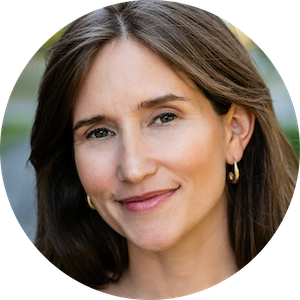
Dr. Rebecca Gibbons is an associate professor of political science at the University of Southern Maine and the author of The Hegemon's Toolkit. She was an academic co-chair of the Beyond Nuclear Deterrence Working Group, an initiative of the MacArthur Foundation and Harvard University’s Project on Managing the Atom.
Dr. Chuck Powell serves on the Board of Directors at Daisy Alliance, a non-profit focused on broadening education and awareness on the risks posed by nuclear weapons. He is also a Professional Certified Coach, a former U.S. Air Force missile launch officer, and a retired Healthcare Executive. His new book, Unicursal, a speculative novel about nuclear war, comes out July 14, 2026.
Resources mentioned in this episode
- Rebecca's book The Hegemon’s Tool Kit: US Leadership and the Politics of the Nuclear Nonproliferation Regime: https://www.cornellpress.cornell.edu/book/9781501764851/the-hegemons-tool-kit/
- Rebecca's article "Getting beyond nuclear deterrence: a research agenda": https://doi.org/10.1080/10736700.2025.2575524
- Rebecca's article "After nuclear deterrence: insights and uncharted frontiers": https://doi.org/10.1080/10736700.2025.2588472
- Rebecca’s article “The humanitarian turn in nuclear disarmament and the Treaty on the Prohibition of Nuclear Weapons”: https://doi.org/10.1080/10736700.2018.1486960
- Daisy Alliance, where Chuck is a board member: https://www.daisyalliance.org/
- Chuck’s book Unicursal: Redemption in the Age of Nuclear Annihilation: https://www.barnesandnoble.com/w/unicursal-chuck-powell/1149852073
- Chuck’s coaching services at Encompassing Leadership Associates: https://www.allcanlead.com/
View Episode Transcript
Chuck Powell: I start getting into this training with the nuclear weapons and realize, you know, how much damage can be done, how much damage will be done to civilians, how much damage will be done to the environment and animals, and all... And I was just like, "What have I done?" [gentle music]
Ryann Blackshere Vargas: That was former US Air Force missile launch officer, Dr. Chuck Powell. His is one of two extraordinary conversations that highlight the human cost of nuclear deterrence and the fallacy of the current nuclear weapons policy. You're listening to the Back From the Brink Podcast, a limited series exploring why a world free of nuclear weapons is both necessary and possible. I'm your host, Ryann Blackshear Vargas.
Nuclear weapons keep us safe. Well, at least that's what we've been told and sold. We need nuclear weapons to deter other countries from dropping the bomb on us. Yeah, that's the basic logic of nuclear deterrence.
The idea that nuclear weapons prevent war by threatening overwhelming retaliation reminds me of my friend's dog, Lucy. All right, all right, just stay with me here. Like a lot of dogs, Lucy barks when she thinks someone or something is near the door. Now, it's usually a passing car or a bus or whatever, but she keeps barking until, in her mind, the crisis has been averted. So to Lucy, barking her face off has led to 100% security.
Now, of course, nuclear deterrence isn't literally a barking dog. The stakes are unimaginably higher, but the logic is similar, thinking that the absence of disaster is somehow proof that the system works. And that's why deterrence theory is just that. Theory. It points to wars that didn't happen, attacks that didn't launch, to justify threatening mass murder.
And the people making those judgments are a small, insular group, historically shaped by military institutions and Cold War thinking, not by the communities living under the shadow of those decisions. An even smaller group of people are actually tasked with launching those weapons if called to do so.
Today's guest is one of those people. Former US Air Force missile launch officer, Dr. Chuck Powell, was a young officer who once held the literal responsibility of launching nuclear weapons. He, too, was told nuclear weapons keep us safe, but from inside the system, he began to question the very idea that deterrence guarantees safety or even control.
Ryann Blackshere Vargas: Hello, Chuck. Thank you so much for joining the Back from the Brink Podcast. I'm really looking forward to speaking with you today.
Chuck Powell: Thank you, Ryann. I'm very much looking forward to talking with you as well.
Ryann Blackshere Vargas: Yeah, I've been reading a lot about you, and you have extensive military background. Where did your interest in the military come from? You can take me back to what interests you and what made you enter the military.
Chuck Powell: Yeah, it was kind of out of necessity. I was 18 years old and didn't have a lot of prospects, and so I joined the Air Force and it took really good care of me, taught me a couple, professional things healthcare-wise, and then I wanted to finish up and become an officer, and then I got into something completely different, which was a nuclear missile launch officer.
Ryann Blackshere Vargas: So what did you start off with? You said you were 18 when you entered. Were you interested in being a nuclear mission officer right away, or what was your journey through the military?
Chuck Powell: Oh, [laughs] no, I never dreamed. I was more about just stabilization, finding something that would employ me the rest of my life if needed. And so I went to X-ray technology school, and then I went to nuclear medicine technology school later on, and so I had those two professions which led me to a lot of different jobs, but helped me finish out my career as a VP of overall medical imaging at Emory University and Emory Healthcare in Atlanta.
Ryann Blackshere Vargas: So as you talked about, you wanted to work your way to officer, and from what I understand, you're a former US Air Force officer, right?
Chuck Powell: That is correct, yes.
Ryann Blackshere Vargas: Tell me your journey to becoming an officer and eventually a deputy missile combat crew commander. What made you interested in that role, and what were your responsibilities?
Chuck Powell: So I think back in those days, I was a very impatient man, young man, and trying to get to the place where I wanted to go to the fastest. And I was going to night school at the University of Maryland, finished up my degree, and I wanted to become an officer. Didn't care what type of officer, just wanted to become an officer. So the most expedient way to do that was to become a missile launch officer, which kind of sounded intriguing at the time.
And so I went to officer training school, and then I went to Malmstrom Air Force Base in Montana and served for two and a half years as a missile launch officer. Which was a rude awakening, because I had lived this life where I was always serving and caring for patients, and now I was in the operational war fighting side of things, and it was a completely different culture in the Air Force. Some people say that is the only real culture of the military, because that's their job is to fight. And in some respects, it was very good. It taught me a lot of self-discipline, a lot of attention to detail.
The Air Force, all the militaries after the first Gulf War offered an early retirement, and I wanted to get back into healthcare. It was just more natural for who I was. I was having a crisis of conscience. And so I got back into healthcare on the outside and got a little bit of a payout from the Air Force as well and got back on track. So once I got through officer training school, then I went to Santa Barbara to do the missile training.
Ryann Blackshere Vargas: Okay, so talk to me about going through this and being an officer during the Cold War.
Chuck Powell: Yeah, it was really serious stuff, and it still is serious, but you had that backdrop where you had all these nuclear weapons and you had the Cold War going on and a lot of uncertainty in Eastern Europe. So it was constant. And then you had things going on in the Gulf at the same time. So, it was a little intense. And it was… You had a front row seat to it because you got to go out on alert and you had briefings in the morning before you went out in the field. And so they would talk about the global situation. They would share intel of the global pic- And you're required to have the highest top secret clearance to be in nuclear missiles, so you got to see all this stuff. At the same time, and rightfully so, you were allowed no room for error. And so you had to take tests in war fighting. You had to take tests in codes which, the codes are what decide whether a missile can be launched or not. And then you had to go into a simulator every month and fight things like fires or nuclear wars or different things like that, or security incidents. So you're constantly training if you weren't out on alert with the missiles.
Ryann Blackshere Vargas: Wow. And so what is the message that you're being given from the military? Is it like, you know, you're saving the world? Is this a way, like, to protect the country? You know, how are you feeling when you're learning all this and, you know, giving this, the weight of this responsibility?
Chuck Powell: No, that's a really good question. On one level, I was a little surprised. When I first entered the Air Force, you had to take a mental health test, which kinda, in the end, it found some individuals that shouldn't be around weapons or anything like that. For us in nuclear weapons, we didn't take any tests like that. So I was always surprised by that aspect of things. That being said, everything else was just, from a safety standpoint, was just perfect. I could not figure out a way that you could do something, you know, make something happen accidentally. It was that safe. And in terms of, yeah, there was a lot of sternness, a lot of discipline in terms of, yes, you are, you have a very serious role. You have the responsibility to defend the country. You have the responsibility to deter global nuclear war or any other type of war. So yes, there was that constant message.
Ryann Blackshere Vargas: And so the responsibility is, from my understanding, for the role that you had is you had to know the codes because at any second you could get the briefing and you would, you would, and your fellow officers would be responsible for launching the weapon. Is that right?
Chuck Powell: Yeah. Basically, within your squadron, there's five launch centers out in the field, and there's two-man crews for each one of those. And each crew had responsibility for 10 nuclear weapons with three warheads on it, so actually 30 nuclear weapons, 'cause those warheads could split off. MIRVs, M-I-R-Vs, Multiple Re-Entry Vehicles. At other times, though, you might assume additional responsibility. So like, if, you know, your crew member would go to sleep for a while, another capsule would help you monitor your missiles. Or somebody, you know, in warfare, you could lose a bunch of missiles and you could have a bunch of launch centers, and the launch centers would actually do all 50 of those by themselves. So, which was 150 warheads. So dependent on the moment, but in the day-to-day, you had those 10 and just those 10.
Ryann Blackshere Vargas: And have you seen them before? You see the missiles? You've seen how small or big they are?
Chuck Powell: Yeah, you can actually go to some Air Force bases where they either, A, still have a missile program or they previously had a missile program, and they'll have an empty missile standing out front. I'm just estimating. To me, they were about 40 or 50 feet long, probably about six to eight feet in diameter with a cone on the top. So they're pretty big.
Ryann Blackshere Vargas: You also mentioned a crisis of consciousness. Can you talk about that? What was that feeling and what was the weight that you were carrying?
Chuck Powell: Again, I was an impulsive person in terms of my career, and all of a sudden I start getting into this training with the nuclear weapons and realize, you know, how much damage can be done, how much damage will be done to civilians, how much damage will be done to the environment and animals and all th- And I was just like, "What have I done?"
And so I even, I went and talked to-- And the Air Force has a great chaplain program. These are ministers of varying faith. You know, they could be Jewish. They could also be Muslim. They could be Christian. So they come at it from different angles. But you can talk to a chaplain and everything you talk about will be private, will be confidential. And the guy I talked to, I was very fortunate, he was very pragmatic, and he basically said, "Well, yeah, you could opt out of this now if you wanted to, but in the end you're gonna destroy your career. Your family's not gonna have this income, and somebody else is just gonna do the job.” And he wasn't discounting how I felt, but he was putting it in very practical measures for where I was in life. And, you know, I went ahead and did it, and I would've done my duty. I would've launched those weapons. I wouldn't have been happy about it.
And when I got the opportunity, when they offered the early retirement after the Gulf War, I was like, "Yes, take me." Because it, to me, it was just, it was heaven-sent to be able to get back to healthcare and caring for people.
Ryann Blackshere Vargas: Yeah, I just, I'm picturing that juxtaposition. Like you said, you had been learning to heal folks. You know, you were in healthcare. Then you have this experience of the weight of the responsibility of what could happen if these missiles are ever launched. And so you, you're kind of carrying both of these responsibilities in your hands. How did it feel then to go back to healthcare?
Chuck Powell: It was just such a breath. And, the more I have done healthcare and now I do leadership development, I feel it's so nice to be in a profession, and with a lot of the clients I work with now, I coach people to be better leaders. There's this reward when you care for people. So it's not just about that you're helping them, you get helped by helping them. And it's the same with leadership development. To me, it's the same with parenting, it's the same with teaching, which I've done as well. But I think it's also the same thing with trying to do, you know, what we're in now about trying to minimize nuclear weapons. It's a good feeling. It... You're not only bettering the world by trying to do that, you're being improved as well. You're being enriched.
Ryann Blackshere Vargas: And what made you take that journey, Chuck, from, not just getting out of being a missile officer and going back into healthcare, but actually being part of the effort to get rid of nuclear weapons? What made you become an activist in that sense?
Chuck Powell: So I think getting back into healthcare and really finding the meaning of caring for patients was a start. But in 2007, I went and decided to get my PhD, and my PhD was in leadership and change, because leadership is what I cared about. I had to go, "What do I care about that's gonna sustain me to getting my PhD and doing the dissertation and all that other stuff?" And so I went to Antioch University, and I think part of being there kind of started shifting my consciousness about being more caring about the planet and caring about people more deeply and, and what happens to people.
But I got to the point where it was time for me to choose my dissertation topic, and I really thought about it and I said, "You know, what's really meaningful?" And so I wanted to look at common purpose because I've seen the power of common purpose in healthcare and in education is a great way to lead people. And so I said, "What's a really strong common purpose that maybe I know something about?" And I said, "What about getting rid of nuclear weapons? What, what could be a greater common purpose than that?"
And so my methodology was interviewing activists who were working to get rid of nuclear weapons. And I wanted to see, did the common purpose of getting rid of nuclear weapons enrich those people who were involved in it? And these people were from around the world, different organizations. Some of them were students, some of them were doctors. Some of them were hardcore activists, the kind of people that lie down in the road and get arrested, you know? And so, it was just so cool to see all those different people coming at the same problem. And in the end, I feel like it did help them grow, and then it also sustained them. These people that have been doing this have been involved in this work for 20, 30 years. So it's been a lifelong thing for them.
And so after that, I remember I was interviewing one of them who was a lawyer, and he said, "What if you do this type of work someday?" And I was like, "I don't know. Maybe I will." But then I did get into it and became a board member for Daisy Alliance, and done some stuff with Back from the Brink, your organization. And so it did happen, and there's more that I want to happen because I have a book coming out in July that is about this exact topic, getting rid of nuclear weapons or preventing nuclear war.
Ryann Blackshere Vargas: Oh, okay. We gotta get back to that, Chuck. I didn't know about that. I just wanna ask you though, since you talked about your dissertation, I was actually gonna ask you about that and how you interviewed a number of leaders. Did anyone say anything that really stood out to you?
Chuck Powell: I think the thing that stuck with me and sticks with me to this day, and I absolutely think it's the only way for us to make a difference, is we have to get back to the 1980s in terms of consciousness. You know, there was 70,000 plus nuclear weapons back then, and people just said, "Enough." And they got out and they took to the streets.
I don't know how we do it with all the competing attention-grabbing things that are out there nowadays, but somehow we've gotta elicit that type of anger, caring, worry for people to wake up and say, "Hey, what is... [chuckles] What are we doing?" And it's even more dangerous now than it was then. Maybe not from the standpoint, we don't have so many nuclear weapons, but they're more lethal. The leadership over them is more erratic. We virtually have no treaties now governing these things. Somehow I think it's gotta be a grassroots thing where people are standing up and just saying, "We gotta stop this. We gotta reduce these things." And I kinda look at this differently, 'cause I don't know. I'm gonna say I don't know. This is such a complex subject. I believe in the end we have to get rid of all the nuclear weapons, but there's a lot of things that need to happen before that. We have to talk about how do we deal with conventional wars in the absence of nuclear weapons, or how do we deal with chemical, or how do we deal with bio? How do we deal with cyber? So it's a really complex topic. And the other way it's a complex topic is you have communities throughout the United States that are relying on this industry.
You know, the bad name for it is military industrial complex. But in reality, it's just people trying to live, you know? Trying to improve their lives, and this is their profession. And so how do you, how do you deal with that? So to me, those two topics have to be dealt with as you're dealing with reducing nuclear weapons.
Ryann Blackshere Vargas: That's wonderful. So tell me about your book. You said you're writing about this topic.
Chuck Powell: Yeah. I wanted a different way to, again, make people aware of this issue, that we got all these nukes laying around. We got this uncertain leadership of nuclear weapons. And that's the thing. We are not age appropriate for nuclear weapons. We are not ethically developed enough to have nuclear weapons. And you can see a similar thing starting to happen with AI as well. And so I just think it's so important that we have good leadership in place to help us get through this.
And so I wrote a speculative novel. It's a novel of impossibility, knowing what we know. But basically, it's about a very flawed individual, because I wanted to show the individual being able to grow while he went through this as well. A very flawed individual preventing a nuclear war that has already happened, and so that's the speculation part. There's some science fiction aspects to this, which I won't go into yet. Somebody's gonna have to buy it or, or read it.
Ryann Blackshere Vargas: Well, we'll have to read it in July you said, right, when it comes out?
Chuck Powell: Yeah, July it'll come out. It's called Unicursal, U-N-I-C-U-R-S-A-L. It's kind of like an Escher print, where you're just in this loop and you can't get out of it. That's what Unicursal is.
Ryann Blackshere Vargas: Unicursal. All right. Chuck, what gives you hope?
Chuck Powell: I'm gonna be a little hard on my generation right now. It amazes me, my generation, and there's a lot of exceptions to what I'm gonna say, but in general, we've created these issues, and it's like we're just handing them off. And so what gives me hope is the youth of today, or anybody younger than me. I think if we can get people to wake up in the generations after mine, and unfortunately we've left them with this mess. And I think people within my generation as well, but I don't think they're gonna be the ones that make the difference. I think it's really younger folk. And there's just a great organization that is allied with Back From the Brink, and that's Students for Nuclear Disarmament. And I just... You know, right there, if that could just mushroom and grow, I think it would be incredible.
Ryann Blackshere Vargas: I know that now you're an executive coach, right, who provides leadership and organizational development across the globe.
Chuck Powell: Yes.
Ryann Blackshere Vargas: How would you coach a world leader through the process of deciding whether to launch a nuclear weapon?
Chuck Powell: What's cool about coaching is you're not telling people what to do. You're actually... You establish rapport, and you listen to them. And you have to ask them really good questions. And you do this without any judgment of that person either, right? So, and then you listen for cues of what they're saying and try to understand, you know, what maybe the trigger points for them are, or the barriers. And so, I'd be very attentive listening on the front end to try to understand.
There's this great quote I read the other day by John Steinbeck. He wrote, "Armed with mass murder, our silly only way of deterring mass murder," which was speaking of nuclear weapons. We're using mass murder [laughs] to stop mass murder. And so you look for inconsistencies like that, and you dig in on those. "Hey, what's going on here? Let's unpack that."
So without getting too political, you have somebody in charge who says he wants to be the peace president. What greater way to be the peace president than to deal with this? 'Cause nobody, absolutely nobody, is immune from these things. None.
Ryann Blackshere Vargas: Maybe you'll be his coach one day and you can tell him that. [laughs]
Chuck Powell: As they say, that's above my pay grade. [laughs]
Ryann Blackshere Vargas [NARRATION]: That was my conversation with Chuck Powell. We'll link to his book in the show notes. The policy of nuclear deterrence can sow doubt in military officers just like Chuck, and also people whose land and life are threatened by the existence of nuclear weapons. In 1946, entire communities living on the Marshall Islands were forced to relocate so the United States could test their nuclear weapons there. US officials told the Marshallese it was, quote, "For the good of mankind." They ended up conducting 67 nuclear tests there, the equivalent of more than 7,000 Hiroshima bombs. This would permanently contaminate the land and reshape the futures of the people who lived there and hoped to return. Now that logic, that for the good of mankind you should sacrifice now for supposed security later, is the same flawed logic that still underpins nuclear policy today.
As a young teacher in the Marshall Islands, University of Southern Maine professor and our next guest, Dr. Rebecca Gibbons, taught children whose families were uprooted by US nuclear testing. She saw firsthand what acceptable risk looks like when it's ridden onto other people's bodies, their land, and their culture. That experience would shape her career interrogating the assumptions behind nuclear strategy itself.
Ryann Blackshere Vargas: Professor Gibbons, I'm really excited for you to join the Back from the Brink podcast, so thank you for joining us today.
Rebecca Gibbons: Thank you for having me.
Ryann Blackshere Vargas: I'm really interested in learning more about your background and how you ended up in this work. I know you're in academia now, but before that you were an elementary school teacher in the Marshall Islands, correct?
Rebecca Gibbons: Yes, that's correct. For a short amount of time.
Ryann Blackshere Vargas: Wow. So what led you there, and what was it like to teach there?
Rebecca Gibbons: When I was graduating from college, I knew I wanted to try to be abroad for a period of time before I figured out exactly what I wanted to do. And I was lucky in that there was a professor in the education department where I went to undergrad, and he somehow formed a relationship with the minister of education in the Marshall Islands, and he had started this program where he'd send recent graduates to different places in the Marshall Islands to teach for a year or sometimes two after graduation.
I wanna mention his name 'cause he did recently pass away, and he did so much in this space and was really attached to the Marshall Islands. He used to go and teach there in the winters. He put on musicals with the high school students. His name was Andrew Garrod. He was in the education department at Dartmouth College.
And so I went in September after I graduated, and I taught on the very small island of Kili. It's a 200-acre coral island, had not been inhabited by humans previously. I taught elementary school, a variety of subjects, during that time. And one of the subjects I taught was social studies. And so part of that was teaching, you know, sometimes eight-year-olds, nine-year-olds, 10-year-olds about how they came, their community came to live on that island, right? Because the community I was teaching in was part of the Bikini community. Kili was one of the places where the displaced Bikini population was sent eventually after being removed from Bikini Atoll in 1946 so the US could conduct the nuclear tests there.
And so, you know, I'm trying to explain to these young children who speak Marshallese and are learning English, but you know, I don't know Marshallese, they don't... They're learning English. And I'm trying to teach about the Cold War and why the US felt like it needed to develop these weapons, and not just the initial atomic weapons, but hydrogen bombs, you know, these thermonuclear weapons. And so it got me thinking a lot about the implications of nuclear testing and how we might not think as Americans about nuclear tests that we did in the '40s and '50s. And here, the legacy is forever with this community of people. And so I had a lot of time to think about what I wanted to do, and just thinking about the history of the nuclear testing, it got me thinking a lot about nuclear weapons. And then I went on to get a master's and then a PhD where I could study this issue more.
Ryann Blackshere Vargas: And this history that you're talking about, did you know the history before you went to the Marshall Islands? Were you also reading this from a textbook and then telling it to your students or...? And I'm thinking about you being on the island, having to look in the faces of children who learned about how, you know, they themselves, their families, their communities have been impacted by all of this is really heavy. I'm curious, did you hear any stories from the students or their families about how nuclear testing had affected them? And how did their stories, the history that you were teaching, that you were learning yourself impact the work that you do now? Did it influence you to go into the work that you do now?
Rebecca Gibbons: Yeah. For sure it did. I mean, I think what I took from the students is they heard from mostly their grandparents about this other place that they were supposed to live. And again, remember I said it was supposed to be a temporary move, and obviously it is not temporary, right? We're, you know, decades later and no one is moving back there. And so, I think that's kind of the legacy. It's like they live on this small place. The schooling only went to eighth grade, so if students want to pursue their education, they are leaving, right? They're gonna go to Majuro, the capital, and then a lot of people come to Hawaii or other places in the US.
And so I think that stuck with me as, like, how do you provide reparations for that kind of loss of history and culture? In terms of how it affects my work, I have done work looking at the ways that people are affected by nuclear testing around the world, right? So Aboriginal populations in Australia, people in Western China, obviously looking at the effects of the bombings of Nagasaki and Hiroshima, other Pacific Islands, Algeria. I did a report for UNIDIR at one point just looking at what it would mean to address the survivors, like to adequately address what survivors would want in terms of the countries that did this damage. Looking at, you know, whether it's financial reparations, apologies, information. Sometimes the countries that now have people, like in Japan or in Kazakhstan, those countries, you know, pay people and help people or provide healthcare, but not necessarily the capital where the decisions were being made to either use nuclear weapons or to do this testing.
Ryann Blackshere Vargas: You're the academic co-chair of the Beyond Nuclear Deterrence Working Group from the MacArthur Foundation and Harvard University. It feels like deterrence has been taken as a given for as long as nuclear weapons have been around. Can you define deterrence for our listeners?
Rebecca Gibbons: So just briefly, to deter is to stop another actor from taking an action because of a threat of some kind of punishment or retaliation for taking that action. So then when we think of nuclear deterrence, it means you're stopping an action, like an attack, you know, on your territory by using the threat that you might use nuclear weapons if a country does take that action, right? And so nuclear deterrence has been sort of the dominant theory of the use, of the utility of nuclear weapons for a long time by the states that possess them or are part of a nuclear alliance, right? Extended nuclear deterrence.
Ryann Blackshere Vargas: Something you said that is staying in my mind is that the Marshallese were told that moving was for the good of mankind
Rebecca Gibbons: Mm-hmm
Ryann Blackshere Vargas: And we spoke earlier with Chuck Powell, who was a US missile officer during the Cold War. And he explained that while deterrence was heralded in the military, he began to feel that deterrence didn't keep us safe, right? Him, someone who was responsible and tasked with launching these weapons if necessary. Why do you think that so many people still believe in deterrence? And what are some historical examples or evidence to suggest deterrence may not be what it's advertised to be?
Rebecca Gibbons: Yeah. So that is a really hard and a really good question. I think that this idea of nuclear deterrence has a long, relatively long and embedded history and strategic thinking in the nuclear age. And it went unquestioned for quite a long time. I also think those that are responsible for strategizing about what we do with our nuclear weapons are a relatively small group of people. And so even during the Cold War, when this was a salient issue, like nuclear weapons, nuclear deterrence, it still was a small group of people, mostly men, you know, who were engaged in thinking about this. So I think more recently, the kind of the lack of questioning comes from just the public doesn't think about this very much. And I would say, I mean, there is such a thing as conventional deterrence. I do think military deterrence is something that works.
And so I think the way that I question nuclear deterrence is not as much to say, "Well, nuclear deterrence has never worked," right? It's actually something that's very difficult to study, and to say it works or doesn't work, I think is quite difficult, right? Because you're studying cases of things that didn't happen if you're saying that deterrence worked. Saying that nuclear weapons kept the peace since 1945, and I think we have to be very careful about when we say kept the peace here, I'm talking about we haven't seen World War III, right? We haven't seen great powers attack each other as they did in World War I and World War II. There have been many conflicts in that time, right? The world has seen war. Even in the Cold War, there was over 70 proxy wars, so it's not like we've all been safe in this period, even if you buy into nuclear deterrence, right?
And so I guess where my kind of concern with nuclear deterrence comes from is more that there seems to be this, like, strong confidence that just because nuclear weapons haven't been used in war since 1945, that's how it's going to continue into the future. I do ascribe to some of the arguments that suggest there's many cases where we've been lucky, you know, and will that luck run out? I think the reason when you asked before why it stuck around so long, this idea, and why people have confidence in it, I think they're taking kind of what's happened in the past and saying, "We've managed it before, we'll continue to manage it," and that the history is one of them not being used in warfare, and that will continue. And I just, I wonder if that's, if we should have that kind of confidence.
Ryann Blackshere Vargas: What risks are we taking by betting that deterrence works?
Rebecca Gibbons: We're betting that nuclear war could happen, right? Nuclear war could escalate. I do think there's people who have some confidence that even if a "small nuclear weapon," you know, what we might call a tactical or theater nuclear weapon, was used in a conflict, that we could keep it from escalating from another one or another one or another one being used, you know, and increasing the size or the yield of these weapons. I'm not confident about that. We haven't tested that. We don't know. And I also just think it's really important to highlight when we talk about this idea of low yield or theater-based or tactical nuclear weapons, that we're talking about weapons that are... could be the same size as ones that were dropped on Hiroshima and Nagasaki, that those are relatively small yields compared to what's available now with thermonuclear, with modern nuclear weapons, which we can measure in megatons versus kilotons.
Ryann Blackshere Vargas: What are some alternatives that you would recommend to the deterrence-based nuclear policies that the US has right now?
Rebecca Gibbons: What I would love to see in the US is just any sort of public discussion about our nuclear policies, right? So we're in the middle of this modernization program. We're getting new subs. We're getting new intercontinental ballistic missiles. There is a new bomber that, you know, has capabilities for conventional payloads, but also will have, you know, some dual-capable aircraft that can drop nuclear weapons, you know. And that's... You see different estimates of what that would cost. Some people think by the end it will be $2 trillion to do all of this, right? This is expensive. And yet there's really no debate about it at all, really, in the public sphere. You know, I do think in a democracy that people should have a better sense of what's being done in their name, right? What we're threatening, what it means to have the nuclear arsenal that we have in the United States.
I think if you get to a place where nuclear weapons are only for deterring other nuclear weapons, then the logical, one logical conclusion of that is that you can get rid of them together, you know, as long as your adversary is doing it, whether it's some, like, slow phase down approach where you, you know, increase in trust, and obviously verification is gonna be a part of that. But we don't have that policy of sole purpose. We say that our nuclear weapons, that there are some contingencies, whether it's some future technology we don't know or biological weapons or, you know, our nuclear postures have not gone to the place of saying the sole purpose of nuclear weapons is to deter nuclear weapons. If you got to that place, then it's not a hard logical jump to say, "Well, if we all could come down."
But I do think arms control is broader than just treaties, right? There's confidence-building measures. There's communication tactics. There's risk reduction measures that can be taken to make the world safer while nuclear weapons exist. So that is something that, you know, hopefully future administrations will work on.
Ryann Blackshere Vargas: How do we get folks to talk about not just nuclear when we're just talking about Russia or Iran, but how do we talk about nuclear disarmament, bringing, you know, the amount of weapons down so that eventually we can abolish them? And how can the everyday person support that work that you all have done and continue the narrative?
Rebecca Gibbons: You know, humans on this planet need to know about this, and the question is how, right? And I think my concern is it's gonna take something really big for people to pay attention, and that we need to get ahead of that.
And so I do appreciate that in recent years... I mean, I'm teaching a class actually right now called WMD in the Movies, and we spend a lot of time looking at pop culture and how nuclear weapons and other, you know, chemical and biological, but I spend a lot of time on nuclear weapons, how they've been portrayed in films. And that happened a lot during the Cold War, and then it kind of fell off. But we're seeing a little bit, you know, with the movie Oppenheimer, which most of my students have seen. There was House of Dynamite, which I had all my students watch last year, and I think really got people talking about nuclear weapons. I mean, in that movie particularly, like, just losing an American city one day out of the blue, and could that actually happen? Well, it could actually happen. And missile defense, and how confident are we in missile defense? So I do think there's a role for pop culture. I think Annie Jacobsen's book [Nuclear War: A Scenario] has been helpful for people to learn more, but people chat about it, and then it goes away, right? And so I do think our leaders should talk more about that, and just foreign affairs in general. I mean, it's just not, it's not given a lot of attention.
Ryann Blackshere Vargas: Recently, I mean, the last few months, there have been some kind of close call moments that have put nuclear weapons on the minds of folks, more popularly, like when President Trump talked about possibly blowing up a whole civilization. Does this feel like a scary time to be thinking about nuclear weapons? And what brings you hope?
Rebecca Gibbons: I do think it is a scary time. I mean, I think the areas of hope are, I mean, my students who every semester learn about this topic and seem really interested and wanna know more. It is a fascinating topic. As negative as it can be, I find it sort of the paradox of the best of humanity in terms of thinking about harnessing this technology and nuclear technology can be used, you know, peacefully for agricultural, medical, other uses. Energy, of course. And so it's like, it's our curiosity and our quest for knowledge on one hand, and then it led to this thing that we can destroy ourselves with. And so that paradox I find to be really fascinating.
Ryann Blackshere Vargas: I just have one more question for you, and that is if you can talk a little bit more about nuclear weapons being an intersectional issue.
Rebecca Gibbons: Yeah, I mean, I think the big two that I mentioned, I think it's an intersectional issue with anyone who cares about the environment because of the damage that these weapons do. I mean, one of the reasons why they are a weapon of mass destruction, why we categorize them differently, why they are not conventional weapons, is because of the radiation and the lasting damage that they can do, both to bodies, but also the environment. And so, you know, if you care about the environment, you do not want these weapons being used.
I mean, I'd also say it's not just use, actually. You don't want them to be tested. Even the development processes, uranium mining is a really dirty process, right? So some of the, you know, survivors of the nuclear age are not just in the testing space. They're people who worked in uranium mines or have worked in uranium mines, or the wastewater that comes out that's then contaminated, right, has also harmed many people. So it's, I think I should point out that, you know, from cradle to grave, the nuclear weapons enterprise is negatively impacting the environment so, clear environmental connection.
And I think in terms of kind of human rights, racial justice, justice for Indigenous people, those are the people that have been disproportionately affected by testing. So the Uyghurs in China, the Indigenous people in Algeria who were living when the French tested, Pacific Islanders, many different Pacific islands, people in Kazakhstan during the Cold War, you know, which is present-day Kazakhstan, you know, were not... You know, it was seen as a periphery, right? The Aboriginal Indigenous people in Australia, and then of course the people in the Western United States, I think, who were not treated adequately. And, you know, our compensation, RECA, has expanded, but I think it needs to expand more. I mean, there's some just artificial boundaries, and that's the thing about radiation, it doesn't respect boundaries. So, like, putting up an artificial, like, "This county is protected," but that's not, it just doesn't make any sense.
Ryann Blackshere Vargas: And like you said, it's easy to be removed from the human toll of this all and to see, you know, we obviously have so many, unfortunately, so many examples of the destruction that nuclear weapons can cause to communities across the country. So it's really important that folks learn about this and be involved in raising their voice and making it part of public discourse so that, you know, this doesn't continue to happen. So thank you, Professor Gibbons, for speaking with us. This is really, really powerful stuff.
Rebecca Gibbons: Thank you for your questions. It's good to talk with you.
Radio Broadcast: In a few moments, we shall take you to Bikini for the first controlled test of an atomic bomb against naval power. Mutual correspondents, along with other radio reporters, are now standing by waiting to give you their story from ship and plane as they follow the atom bomb plane to the target, the dropping of the bomb, and the explosion that follows. There are too many factors regarding the atom bomb and its effects which are still classified secret. These may or may not be answered. Remote from the bomb itself and today's test will be many other scientists who hope that someday atomic power will be the answer to many of the questions they've been trying to solve for the good of mankind. Right now, the B29 carrying the atom bomb is high over Bikini, climbing to a point six miles [...]
Ryann Blackshere Vargas [NARRATION]: That audio broadcast is from Operation Crossroads in 1946, the first of America's many nuclear tests in the Marshall Islands. It's courtesy of the Hoover Institution Library and Archives. Thank you again to Dr. Chuck Powell and Dr. Rebecca Gibbons for joining us today on this episode of the Back From the Brink podcast. More information about their work with Daisy Alliance and the Beyond Nuclear Deterrence Working Group respectively is in the show notes.
This podcast is part of the Back From the Brink campaign, which has been working for years across the United States to bring communities together and prevent the growing threat that nuclear weapons pose to our health, environment, and all we hold dear. If you're feeling inspired by our conversations today and looking for tools to get involved, check out our show notes and head to our website, preventnuclearwar.org.
This podcast was written and produced by Jiayu Liang, Anthony Eyring, and me, Ryan Blackshere Vargas. It was made financially possible in part by a grant from the Andrew Carnegie Foundation, formerly Carnegie Corporation of New York. The statements made and views expressed are solely the responsibility of the author. Until next time, everyone, we wish you peace, joy, and a world free of nuclear weapons. [outro music]
The nuclear house of cards
Listen to this ep. on Apple Podcasts or Spotify
U.S. nuclear weapons policies are based on many faulty assumptions, creating a lot of unnecessary risk. In fact, we’ve already had numerous close calls with nuclear war. Guest Dr. Lisbeth Gronlund and host Ryann Blackshere Vargas discuss who has the authority to launch nuclear weapons, whether missile defense could protect us from incoming attacks, and whether nuclear war is really a possibility today.
Guests on this episode
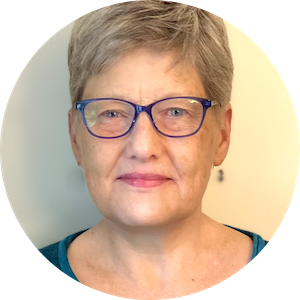
Dr. Lisbeth Gronlund is a physicist working with the Laboratory for Nuclear Security and Policy in the Department of Nuclear Science and Engineering at MIT. Previously, she spent nearly three decades with the Union of Concerned Scientists’ Global Security Program, including serving as co-director.
Resources mentioned in this episode
- Lisbeth’s writing for The Bulletin of Atomic Scientists: https://thebulletin.org/biography/lisbeth-gronlund/
- Lisbeth’s writing for The Union of Concerned Scientists: https://blog.ucs.org/author/lisbeth-gronlund/
View Episode Transcript
Dr. Lisbeth Gronlund: People and equipment make mistakes, and you don't want that to turn into a, "Oh, wow, we, we have to launch our weapons right now." You know, it's so dangerous, and it's so unnecessary. That's why it's a problem.
[Intro music]
Ryann Blackshere Vargas: That was today's guest, Dr. Lisbeth Gronlund, a theoretical physicist and longtime expert on nuclear weapons policy, missile defense, and global security. As you'll hear later, she's recounting an actual incident where a nuclear missile, a live warhead, was almost launched by mistake. It's one of the many, many flaws baked into our nuclear weapons system.
You're listening to the Back From the Brink podcast, a limited series where we explore why a world free of nuclear weapons is both necessary and possible. I'm your host, Ryann Blackshere Vargas. I'm a journalist, and like you, always learning how we can make this world a better place. When we recorded this episode in early 2026, the Trump administration was continuing to escalate its war in Iran.
WHITE HOUSE CLIP (President Trump): We have a plan, because of the power of our military, where every bridge in Iran will be decimated by 12:00 tomorrow night, where every power plant in Iran will be out of business, burning, exploding, and never to be used again. It will take them 100 years to rebuild.
Ryann Blackshere Vargas: Some of the president's most violent and aggressive threats were still yet to come, but things were already feeling pretty scary. We knew it was an unstable situation made even more volatile by nuclear weapons. That's why in our last episode, we challenged the idea that nuclear weapons keep us safe through deterrence. Our guests were Dr. Rebecca Gibbons, a political science professor, and Chuck Powell, a former nuclear missile launch officer. Both of them said, no, the only thing that will keep us safe from nuclear weapons is getting rid of them completely. It was a really eye-opening conversation, to say the least, so make sure you give that a listen if you haven't already.
Since then, I've been thinking more about this whole system we've built around the gamble that nuclear deterrence works. Everything from how the weapons are built, how they get launched, and who gets to make those decisions. But deterrence assumes we always have perfect information, and perfect judgment, and perfect execution every time. Perfect, perfect, perfect. Which, you know nothing is perfect. So what does that mean for the system built on top of it? I decided to ask an expert.
Today's guest, Dr. Lisbeth Gronlund, was a student studying physics during the Cold War. She was there during the nuclear freeze movement of the '80s, when everyday people signed petitions and took to the streets, calling on the US and Soviet Union to stop testing, producing, and deploying nuclear weapons. Since then, she spent nearly three decades with the Union of Concerned Scientists’ Global Security Program, including as co-director. She helped establish the International Summer Symposiums on Science and World Affairs, mentoring generations of scientists working on arms control and nuclear policy. She's a fellow of both the American Association for the Advancement of Science and the American Physical Society. So safe to say, she knows her stuff.
Now, we may not see as many people protesting nuclear weapons out in the streets today, but the movement is still very much alive and growing, particularly at Back From the Brink. In addition to people organizing protests and talking to their elected officials, there are also scientists like Dr. Lisbeth Gronlund, who use their expertise to point out why things need to change.
Lisbeth has spent decades analyzing and improving US nuclear weapons and missile defense programs, so you know I had to ask her about the Golden Dome. Introduced by President Trump, the Golden Dome's intended purpose is to protect the US from missiles that might deliver a nuclear weapon. But this is something that Ronald Reagan also tried to do decades ago with his Star Wars program. It didn't succeed. So is there any chance Golden Dome might work now?
Dr. Lisbeth Gronlund: Uh, I wonder how it got called that, given Trump's desire to make everything gold. [laughs] [laughs] So there have been proposals, which really underestimate the cost, but to put up a system that could maybe shoot down a handful of weapons would be in the tens of billions. But here's the, here's the catch. These satellites start... Their orbit starts to degrade over time, and eventually they spin through the atmosphere and hopefully burn up. So you have to replace them every four years.
Ryann Blackshere Vargas: Wow.
Dr. Lisbeth Gronlund: So that cost comes due again, and again, and again. It's like rent. [laughs]
Ryann Blackshere Vargas: Like rent. [laughs] And how effective are they?
Dr. Lisbeth Gronlund: Well, there you go. Probably not at all. Yeah. So, the idea is that you would shoot the missile while it was still burning. So time is of the essence. And current missiles, like current Russian missiles, it’d be very iffy, but there's no reason they couldn't make it burn even quicker, and then it would just be hopeless. So the whole system is kind of pointless, but it is part of what Trump demanded for Golden Dome. So they're gonna put money in it, and it won't, you know, it won't happen.
Ryann Blackshere Vargas: So it's like spending a lot of money on shoes you don't need, that don't work, that are impractical for your feet.
Dr. Lisbeth Gronlund: Yeah. [laughs]
Ryann Blackshere Vargas: Where did your interest in science come from?
Dr. Lisbeth Gronlund: Well, I think initially I was really interested in math. I really like math. I loved the, you know, the certainty of it, like something equals something else. And I was a math major when I first went to college, and I took a intro physics class, and I decided I wanted to do physics instead. You know, my physics class in high school was dreadful. [laughs] So that was certainly not what inspired me. [laughs]
Ryann Blackshere Vargas: What physics class in high school is not dreadful?
Dr. Lisbeth Gronlund: Yeah. Well, yeah. Well, this one was extra dreadful. So I was at the University of California Santa Barbara, and in the middle of my stay there, they opened an institute that brought these young hotshots, you know, post-docs, and they started a group. This was at the end of the Cold War. They started a group to sort of talk about these things, and I joined it, which was great. And so I have always felt that this is really a topic that's appropriate for physicists to be engaged in. I mean, you know, there's this historical reason for that, but I think that... And many are. So I, you know, I felt like this was just kind of who I was, that I was gonna keep working on these things. It was the time of the freeze.
And then when I went to graduate school, somebody had told me if I wanted to keep working on these issues, I should look up David Wright, which I did. And there was... He sort of was the head of a group of mainly physics graduate students. You know, they were older than I was and more sophisticated, and I think they had a feeling that they could make a difference, which would not have occurred to me, frankly. [laughs] So it was, it was that they were very serious about it, and they thought there was something they could do. And so they got on radio programs, and they wrote things. And so I, eyes wide open, you know, took that in, and I think, came to believe that as well. So it was a very formative experience for my future career. It became a really important thing to me.
Ryann Blackshere Vargas: Hmm, yeah.
Dr. Lisbeth Gronlund: And then, President Reagan gave his Star Wars speech, and I just turned a corner.
Ryann Blackshere Vargas: Mm.
Dr. Lisbeth Gronlund: It was so much more relevant to me than physics was. And I did get my physics PhD 'cause I think that's really important. It has been really important, but I spent a lot of my time doing organizing and writing, and then I kept doing that after I got my PhD.
Ryann Blackshere Vargas: What are some misconceptions people have about nuclear weapons?
Dr. Lisbeth Gronlund: Well, I think, first of all, they don't really know how many the US has or the world has. So the US has about 1,800 deployed. It has more in storage. Same with Russia. And the other countries have anywhere from, like, 100 to 300, 400, and those are France, Britain, China, Israel, India, Pakistan, North Korea. So they have relative-- They have smaller numbers. So it's about 5,000 total.
And there was this fascinating video somebody did a few years ago when they were in Washington, and they just went in and asked people, "Do you know how many weapons the US has?" And they asked a member of Congress, and he was like, "Oh, you know, I don't know, 200?"
Ryann Blackshere Vargas: Wow.
Dr. Lisbeth Gronlund: Right? People don't even know!
Ryann Blackshere Vargas: A sitting member of Congress?
Dr. Lisbeth Gronlund: Yeah. Yeah. Yeah. So, you know, I think if you understand how many weapons there are, you start to think about, well, wow, what's that about, you know? How could we even use that many? So I, yeah, I think there is a, you know, a lack of understanding, a lack of knowledge, really.
Ryann Blackshere Vargas: I think part of that may be, too, that people think nuclear weapons were used in the past. Obviously they learned about the Cold War, but that was something in the past, right?
Dr. Lisbeth Gronlund: Yes.
Ryann Blackshere Vargas: And we don't really have a need for them.
Dr. Lisbeth Gronlund: Yes.
Ryann Blackshere Vargas: They're kind of there, we kind of figure, but no one's gonna use them. So maybe that's why, you know, folks are not as concerned about it or not as knowledgeable about it. But from your perspective, is nuclear war really a possibility in today's day and age?
Dr. Lisbeth Gronlund: Well, I think it's unlikely, but it's definitely a possibility. So the US policy, which has gotten better over the years, is it will not use or threaten to use nuclear weapons against almost all countries except Russia, China, and North Korea. And it would use nuclear weapons first in response to maybe a conventional attack or chemical attack or maybe even an AI attack. And so that possibility really opens the door to starting a nuclear war. I mean, the US has quite a lot of conventional weapons. And I think it understands that, you know, crossing that line would make the whole world different. So it's definitely possible. I don't think it's likely. And so that's what there's been an effort to get the US to say no first use. We're not gonna use them first against anybody. Which I think would take off the table that possibility.
Ryann Blackshere Vargas: But you talked about these statements and these policies, which makes me think about treaties that we no longer have in place, that we had in place for many years with countries like Russia that you're talking about, and they've been rolled back. You know, there's the threat of starting nuclear testing, explosive nuclear testing again. So from your perspective, how... You know, factoring that stuff in, do you still feel like it's, you know, a possibility but unlikely?
Dr. Lisbeth Gronlund: I think a possibility is an arms race, which makes war more likely, not necessarily because there are more weapons, but because it increases tension and distrust, and then it's so easy to kind of misunderstand something and, you know. So in and of itself, an arms race makes things worse. It makes things worse in terms of trusting each other.
The nuclear testing is interesting. So the limit, there's a zero limit on testing. Like, not even a tiny, tiny, tiny. And the accusation is that both China and Russia have done a little tiny, tiny test, and I believe what the US is talking about is, "Okay, fine, we'll do a little tiny test," which is very hard to detect, so it's not gonna be a big explosion, I don't think. It'll be awful anyways. And they don't need it for all the work they're doing on making a new weapon. They don't need it. You know, so maybe China and Russia felt like they really needed it, but the US doesn't need it.
It would just be, "Oh, yeah? Well, watch me." You know, the two-year-old on the playground.
Ryann Blackshere Vargas: Yeah, there's a lot of toddlers with weapons these days, huh? [laughs] Your work has been published in several leading outlets during your career, your long career, which is really amazing. The titles of academic publications are usually quite boring, I must say, Lisbeth, but I was really intrigued by several of yours. So I have questions about you, questions for you about a few of your titles, okay? So one of your past titles was Memo to Congress: America Already Has Low-Yield Nuclear Warheads. That was published in 2019. What would your memo to Congress be today?
Dr. Lisbeth Gronlund: Golden Dome Missile Defense Still Doesn't Work. [laughs] Like, it could be pretty short and sweet. [laughs]
Ryann Blackshere Vargas: That's a good one. Another publication was called Finger Off the Trigger: The US and Russia Need to Defuse the Possibility of Accidental Nuclear War. That was published in 2015. Is accidental war still a concern?
Dr. Lisbeth Gronlund: Well, so the US and Russia both have a policy that they could, not that they have to, that if there were, say, an incoming attack, if the US sensors and computers detected an incoming attack from Russia aimed at US missile silos, that it might choose to launch those missiles before there was absolute verification that there really was an attack, which requires that they land. And so, you can just imagine the kinds of mistakes that come up, and there have been in the past false alarms due to, like, the sensor. There's a glint off a cloud. There was, there were some geese flying, and one time they saw this attack that looked exactly like the one they'd been practicing for. Oh my God. And it turns out it was. Somebody had put the training tape in the computer.
Ryann Blackshere Vargas: Yikes!
Dr. Lisbeth Gronlund: Right? And so I do believe things have gotten better, but there is nothing like zero risk when you're talking about sensors and computers. People and equipment make mistakes, and you don't want that to turn into a, "Oh, wow, we have to launch our weapons right now." You know, it's so dangerous, and it's so unnecessary. That's why it's a problem. And so you could just have a mistaken assumption and decide to go for it.
Ryann Blackshere Vargas: I wanna talk about sole authority and why is it not a good idea for the president of the United States to have the sole authority to launch a nuclear weapon, and now that that person has the authority, how can we ever change that?
Dr. Lisbeth Gronlund: It's a really good idea. Really good question. So there are two ways that the US might use nuclear weapons. The first, if the military gets wind that there's an attack coming, and they decide, "Okay, it's real. We think we should use… launch nuclear weapons," and meanwhile, the missile is coming. It only has 30 minutes to get there. And it takes a while for the sensors and the computers, and then the military confers, and then they have to get approval from the president.
Ryann Blackshere Vargas: Mm.
Dr. Lisbeth Gronlund: And it... There's about 10 minutes right there, okay? 10 minutes. And they present the president with options, probably not including no use, and then the president has to choose. Now, I mean, the good thing is the president has to get in the loop. It's not just the military. But one person, it's too much of a decision for one person to make. So FEMA tracks the president and several people in the line of succession. So the vice president would be next. The Speaker of the House is third. President of the Senate is fourth. So they know where they are. At all times, they can communicate with them like that. And so when they need the president, they have to get him on the phone.
So we actually have a proposal, and they could at the same time get the vice president and the Speaker of the House on the phone. And our idea is that the president would choose one of these options, but the other two would have veto power.
Ryann Blackshere Vargas: Ooh.
Dr. Lisbeth Gronlund: Yes. So three people have to agree in order for there to be a launch. Now, you know, the military doesn't like anything that might slow things down, which, you know, it's important to realize this doesn't slow things down. You know, does the president wanna give up their sole authority? Probably not. But, you know, having these conversations is important because it does show that there are alternatives. And I kind of imagine that some presidents don't want that responsibility, right?
Ryann Blackshere Vargas: I can't, I can't imagine it.
Dr. Lisbeth Gronlund: Yeah. Yeah. Yeah.
Ryann Blackshere Vargas: How have current policies gotten us dangerously close to nuclear war in the past?
Dr. Lisbeth Gronlund: I think, you know, what the US is now talking about is increasing its arsenal. I think any time that starts to happen is very dangerous. You know, that occurred during the Cold War. It was nuts. Now it looks like maybe it's gonna be an arms race again, and an arms race is inherently dangerous. You know, people don't trust each other.
Ryann Blackshere Vargas: Yeah, it's very concerning for all of us. So how can we get rid of nuclear weapons? Like, you know, how do we convince folks that deterrence doesn't work? How do we get rid of them all and make sure they don't come back? [laughs]
Dr. Lisbeth Gronlund: Well, it's a tough problem because I think right now, the countries that have them are sort of even more attached to them. And, you know, France is increasing its arsenal because now it wants to put an umbrella over NATO because they can't trust the US anymore, and China's increasing its arsenal. I mean, I used to think that it would just kind of wither on the vine. Well, that's not happening right now. I mean, one thing the US does care about actually is the opinion of other countries. You know, there was a nuclear ban treaty.
Ryann Blackshere Vargas: Mm-hmm.
Dr. Lisbeth Gronlund: It lobbied like crazy for its allies not to sign. It cares. Weird, but it does care about its image. Well, maybe Trump doesn't. [laughs] You know, historically, the US really, really has cared a lot about that. I think you just keep pushing. Now, I know this is not top of mind for the public, and I'm not even sure it should be. My God, there's so many other things right now. There's climate change. There's unemployment. There are things that really matter more, and I don't begrudge people that at all. So long as there are some people, you know, still doing this work and still harassing Congress and still writing letters to kind of keep it alive. And then, you know, I think things will turn again. I hope things will turn before they go really bad.
Ryann Blackshere Vargas: I wanna go back to something else you said, which was, of course, the purpose of and the mission of Back from the Brink, which is to will, get the public will, you know, along with leaders to push for the end of, the abolishment of nuclear weapons.
Dr. Lisbeth Gronlund: Yes.
Ryann Blackshere Vargas: And you said the public will, right? They're writing the letters. They're getting folks to raise their voice and say, "We don't want these, get rid of them."
Dr. Lisbeth Gronlund: Yeah.
Ryann Blackshere Vargas: "They don't... We don't feel that they make us safe." Why do you think it is important for scientists to be part of that public will and that public conversation?
Dr. Lisbeth Gronlund: Well, for better or worse, I think scientists have more credibility, especially physicists when it comes to nuclear weapons, which I, I'm not even sure is justified, but there you have it. You have a tool. [laughs] Bash them over the head with it. [laughs] And I think particularly powerful is when scientists and citizens work together and have visits with their members of Congress or their, you know, staff on the House Armed Services Committee.
I think the combination of scientists and citizens is also really powerful because, I mean, the one thing I've done and my physics colleagues have done is because we know some basic science, we're able to analyze these programs in more detail and demonstrate they don't work. And so that's something that adds to the ammunition, let's say, in trying to stop these programs.
Ryann Blackshere Vargas: You know obviously a lot about this issue. You've dedicated your professional career to this. Do you ever feel like the weight of the world in terms of, you know, how much could go wrong, the catastrophes that could happen? And then what do you do when you feel that way? What brings you hope? What helps you continue and keep going?
Dr. Lisbeth Gronlund: Yeah. I mean, for much of the time that I worked on these issues, things seemed to be getting better. They were bad, but they seemed to be getting better, and I felt like I could help that. In the last several years, I don't feel that way anymore, and I have to say it's pretty, I'm pretty despairing.
Ryann Blackshere Vargas: Hmm. Yeah.
Dr. Lisbeth Gronlund: It's pretty despairing. I feel like it- all that good stuff has just been thrown out the window, and I don't really know where things are headed. Situation with Iran is horrible. Yeah, so I, I do. I... Well, so I've started maybe just skimming the headlines, reading the headlines, and maybe skimming the article. [laughs] And I try to do other things more than I used to. More than I used to. I used to pretty much, you know, do a lot of work. I am actually officially retired, so I don't have to. [laughs] But I do, 'cause I think it's important, and I feel committed to it, and I'm interested in it. But I read more books. When the spring comes, I'll do more gardening. Just kind of try to ground myself and realize that this is not everything. It's a lot, but it's not everything.
Ryann Blackshere Vargas: That was today's episode of the Back from the Brink Podcast. Thank you again to our guest, Dr. Lisbeth Gronlund. If you want to keep learning, we've put some of her research and analysis in the show notes for you. This podcast is part of the Back from the Brink campaign, which has been working for years across the United States to bring communities together and prevent the growing threat that nuclear weapons pose to our health, environment, and all we hold dear. If you're feeling inspired by our conversations today and looking for tools to get involved, check out our show notes and head to our website, preventnuclearwar.org.
Next time on the Back from the Brink Podcast, we're going to focus on how we can change things. We'll have Ambassador Bonnie Jenkins sharing how she builds international cooperation on complex challenges like nuclear weapons. You won't wanna miss it.
This podcast was written and produced by Jiayu Liang, Anthony Eyering, and me, Ryann Blackshere Vargas. It was made financially possible in part by a grant from the Andrew Carnegie Foundation, formerly Carnegie Corporation of New York. The statements made and views expressed are solely the responsibility of the author. The clip you heard in our intro was courtesy of the White House. If you're enjoying this limited series, please take a second to rate and leave a review on your listening platform. It really does help more people discover the show. Until next time, everyone, we wish you peace, joy, and a world free of nuclear weapons.
[outro music]
Proof it can be done
Listen to this ep. on Apple Podcasts or Spotify
With treaties expiring and traditional diplomatic routes breaking down, it may be hard to imagine how countries could come together to confront an existential challenge like nuclear weapons. But international cooperation is not uncharted territory. Ambassador Bonnie Jenkins talks to host Ryann Blackshere Vargas about how nations have come together in the past to reduce the nuclear arsenal and eliminate entire classes of weapons, and what it will take to continue that work.
Guests on this episode
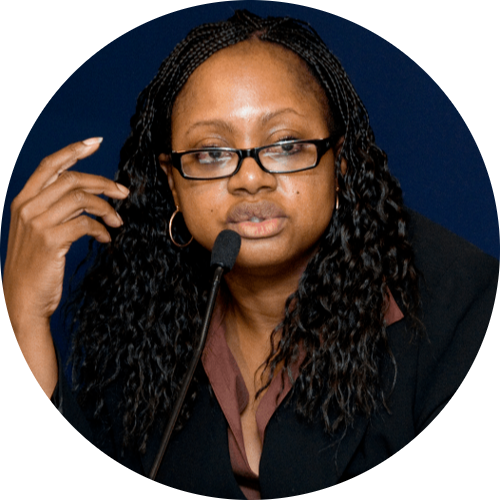
Ambassador Bonnie Jenkins served as the Under Secretary of State for Arms Control and International Security in the Biden Administration. During the Obama administration, she was the U.S. Department of State's coordinator for threat reduction programs in the Bureau of International Security and Nonproliferation. Ambassador Jenkins is the Founder and Executive Director of Women of Color Advancing Peace and Security (WCAPS), as well as the Shapiro Visiting Professor of International Affairs at George Washington University.
Resources mentioned in this episode
- Ambassador Jenkins’ organization, Women of Color Advancing Peace, Security, and Conflict Transformation (WCAPS): https://www.wcaps.org/
- Ambassador Jenkins’ Substack: https://abjen.substack.com/profile/posts
View Episode Transcript
Bonnie Jenkins: There becomes a point when the international community decides that these weapons are so destructive in the way in which people die, you know, and the suffering that people go through because of the use of these weapons. There was a decision that we as a collective, as a global community decide, that all of us agree to get rid of that weapon.
[intro music]
Ryann Blackshere Vargas: That was our guest, Ambassador Bonnie Jenkins. She was the Under Secretary of State for Arms Control during the Biden administration. She also served as Special Envoy and Coordinator for Threat Reduction Programs under President Obama. Needless to say, when it comes to diplomacy, Ambassador Jenkins knows what she's talking about.
You're listening to the Back From the Brink podcast, a limited series where we explore why a world free of nuclear weapons is both necessary and possible. I'm your host, Ryann Blackshere Vargas. We recorded this in early 2026, at a time when President Trump's, quote-unquote, "diplomatic tactics" seemed to only escalate tensions with Iran.
Fareed Zakaria (Global Public Square/CNN): Let me just read for those who have missed it, but I am quoting the President of the United States. "Tuesday will be power plant day and bridge day all wrapped up in one in Iran. There will be nothing like it. Open the [beep] strait, you crazy [beep], or you'll be living in hell. Just watch. Praise be to Allah."
Ryann Blackshere Vargas: Yeah. That's just one example of why diplomacy lately has been feeling strained, inconsistent, and sidelined. In that kind of environment, it can be hard to picture countries working together to confront an existential challenge like nuclear weapons. But in spite of that, we know that international cooperation is not uncharted territory. Nations have come together before to reduce and even eliminate entire classes of weapons. Those efforts didn't happen overnight, and they didn't happen easily, but they did happen. And Ambassador Jenkins played a key role in making that possible. She also worked on the New START treaty, which was a landmark agreement between the US and Russia to limit the size of their nuclear arsenals and delivery systems.
So heading into my conversation with Ambassador Jenkins today, I have just one question in mind. Can countries work together to get rid of nuclear weapons? Most of us have spent our entire lives under the threat of nuclear war, so it can be hard to imagine things could be different. But as Molly McGinty told us back in episode one, we really have no other choice. If anyone has the answer for whether countries can work together diplomatically and solve big problems like getting rid of nuclear weapons, it's Bonnie.
Ryann Blackshere Vargas: Ambassador Jenkins, welcome. I'm really interested always in how people get started in this work. Is this something that you were always interested in? Like, even since you were little? Tell me about that. How did you get involved in peace and security work?
Bonnie Jenkins: Actually, it was not something that was on my mind. actually grew up in the Bronx, and I was not thinking about these issues at all. It wasn't until I went to school for my master's and my law degree, and then I... The one thing I did know is I wanted to work in public service. I knew that from a early age. And so what I did is I started by working in city government. I worked in the Bronx. Then I worked in... I went up to school at Albany 'cause I wanted to work in state government.
And then my ultimate goal was to get down to Washington, DC, which I was able to do through a program called the Presidential Management Fellowship Program. And so that was like a fast track into government. And so while I was there, I was working at the Pentagon, and I was working out as a fellow in the International Law Office.
And it was during that time that I went to a meeting. And it was an inter- what they call inter-agency meeting, you know, with the, different departments and agencies were meeting to discuss a particular issue. And what they were discussing at that time was instructions that they would, they would send to a delegation negotiating treaties overseas. And that was my first entree into treaty negotiations, into arms control, and related topics for peace and security.
So when I walked out that meeting, I told my boss, I said, "I found the area of law that I wanna work on. I would like to do public international law." And then there was one place to do that, and it was called the Arms Control Disarmament Agency. And the goal of the agency was to negotiate arms control treaties and conventional weapons treaties, 'cause his concern was an increase in the number of countries that have nuclear weapons. So, if you wanted to negotiate the treaty, that's where you go. So that's where I went, and that's how I got started. It was really, I went to a meeting, and I didn't know what they were gonna be talking about. I just was kind of bored that day, and I told my boss, I said, "Can I follow you to your meeting?" And he said yes.
Ryann Blackshere Vargas: Wow. So some chance meeting that you weren't even supposed to be at kind of changed the trajectory of your life.
Bonnie Jenkins: Exactly.
Ryann Blackshere Vargas: So I mean, it really is an honor to speak with you today 'cause you have so much academic knowledge and of course, practical and professional knowledge as well. So thank you for this conversation. As you know, the focus of this podcast is nuclear weapon abolition, and as is the focus of the Back from the Brink campaign as well.
And a lot of time, what activists hear from people when they're talking about the campaign is nuclear weapons cannot be banned because they've already been created, they've already been used, countries have them, the knowledge is out there, and there's no turning back. What is your take on that? Do you... Is that true? And can you talk about the history, or the precedence of abolition? Have weapons of mass destruction been banned before?
Bonnie Jenkins: You know, you're not gonna, you're not gonna get rid of weapons in one day. It's gonna take a process, and it's a process that we've been on. But, you know, under the Nuclear Non-Proliferation Treaty, the five declared nuclear weapon states, the UK, US, France, Russia, and China are obligated to disarm one day. And actually, with the, a series of treaties that we had, the US had started with the Soviet Union during the Cold War, and then with Russia, called the START treaties, we have been able to reduce our nuclear weapons by about over 80% since the end of the Cold War.
We have been able to, with the Chemical Weapons Convention, ban, I mean, get rid of a whole class of weapons of mass destruction. We know there are still concerns about what some, what countries may have, like Russia, and do they, you know, what are they doing with chemical weapons? But, overall, you know, all the states that declared chemical weapons when the treaty entered into force have gotten rid of theirs. Same with biological weapons, another class that has been significantly reduced. And so we do have success.
Nuclear, of course, is, is a, is a challenge. And we also have states like China, which is interested in developing more. But I still don't believe that we will never get rid of them. I just think it'll take work, and it's gonna take leadership in countries who want to re- get rid of them and have to ask the question, what is the real value of nuclear weapons? And why do they have them in the first place? But there's also a vast majority of countries that don't want the weapons. They don't see the value. They don't see the reason to put all the money into a nuclear weapons process. That's the nuclear security you have to have, once you have these nuclear weapons. It's a, it's a, it's, it's not a small thing to do, making sure you have the material, the uranium, plutonium, to actually make the weapon. So it's really the will of the leadership and the will of people within particular countries to actually do that. And not go backwards. [laughs]
Ryann Blackshere Vargas: So you, Bonnie, have had a lot of experience sitting at the table with leaders of countries across the world and discussing peace and security. You were the US State Department's lead for all four of the nuclear security summits held from 2010 to 2016, as well as the US representative to the G7 global partnership against the spread of weapons and materials of mass destruction. Can you share what inspired countries to come together and act, and what role did the US play, and how long did negotiations take?
Bonnie Jenkins: Well, you know, the history of treaties is they vary. They vary in terms of how long it takes to negotiate. I always say the 1990s was the last decade of real treaty negotiations, where, you know, you had treaties that were negotiated for years. You really don't do that anymore, at least not in the weapons of mass destruction space. It may happen in the other areas of work in peace and security, but not in weapons of mass destruction. But, you know, treaties usually start because there is an issue that is around, that countries figure that it's best to sit down and negotiate how we can limit those, the weapon. For example, whether it's biological weapons, where there was a desire in the '70s, you know, the '60s, to actually ban not just the use of biological weapons, but the production, the stockpiling, everything related to biological weapons, and same with the Chemical Weapons Convention in the 1990s.
So it really takes a state or two, a country or two to take the lead, and the US has often been the country to take the lead, because there becomes a point when the international community decides that, for example, in the case of chemical weapons, that these weapons are so destructive in the way in which people die, you know, and the suffering that people go through because of the use of these weapons. There was a decision that we, as a collective, as a global community, decide that we want to make sure that all of us agree to get rid of that weapon. So it takes that it takes that initial state or group of states to get it started, and it takes a collective decision because countries are giving up a tool that's within their weaponry. They're giving up a tool that they could use if they're attacked, so they're not gonna do that easily. But they will do it if everyone else also agrees to do it.
There may be one or two countries that, for whatever reason, feel that they need to still hold on to one or two. But that does not negate the value of having done it. That doesn't negate the fact that the vast majority of countries, we're talking about 180 countries, 170 countries, have decided to do it and are now doing it. So that's much more valuable. And then when the few actually do use them, that's when the international community has to push back and say, "That was wrong. You're violating international law." Maybe violating domestic law, let's say if it's a non-state actor. So it, these things are very variable. They take time because of the sev- the weight of the subject matter.
Ryann Blackshere Vargas: So let's talk New START. It was the only arms control treaty between two of the world's biggest nuclear powers, the US and Russia, when it expired a few months ago in February. Bonnie, as someone who advocated for its extension, how are you feeling about all this?
Bonnie Jenkins: I, well, you know, I feel bad about it because I think at a minimum, we should have at least decided to stick with the limits, you know? Because it was the last treaty that we had with Russia, we've had them since the 1970s. They have been useful in reducing nuclear weapons on both sides. They have been an instrument by which we can verify and be accountable for the Nuclear Non-Proliferation Treaty to say we are actually taking steps to fulfill Article 6 of the treaty to get rid of nuclear weapons.
But if you don't have that, you don't have anything, which means that you don't have any barriers at all to the US or Russia developing more weapons or new types of weapons. There's nothing. And there, so now there's no bilateral treaty at all between the two of us. And of course, you know, it's unfortunate, but you know, as I said earlier, you're also battling with the fact that you have countries like China which wants to increase its number of nuclear weapons. It, you know, so that's why it's not good for a country to be developing more weapons now, 'cause it just makes others want to do the same.
Ryann Blackshere Vargas: And accelerates that arms race.
Bonnie Jenkins: Exactly.
Ryann Blackshere Vargas: What is it, though, like going back to you talking about, you know, this has happened before, the precedence of countries agreeing to get rid of some of their arsenal. What is the process of getting those weapons banned, or reducing that stockpile? And are there moments when these efforts have almost failed?
Bonnie Jenkins: The process is… a lot of times when you're doing these negotiations, you have the whole treaty, but you may have subgroups that negotiate certain parts of the treaty. And through it, and during negotiations, there's always, bilateral discussions. There may be discussions between all the NATO countries. There may be, you know, so there's always a number of discussions taking place. And these are done to help move it forward by maybe talking with like-minded countries to make sure we're all on the same page.
But there's also maybe conversation between adversaries, so you may have an issue that US and China or US and some other country, for example, cannot get past, and so you may have like a bilateral discussion on the side to say, "How can we come to agreement on something?" So you have that going on, and one of the discussions will always be, how are we actually gonna make this happen? What are we going to do to make it happen? So for example, I was part of the end side, the ending of something called the Conventional Forces in Europe Treaty. It was originally between NATO and the Soviet Union, but then it was with NATO and countries that were part of the Soviet Union, and its effort was to prevent a surprise attack in Europe. And so countries had to destroy certain things like tanks and all these kinds of things that are conventional weapons.
So there was a process, a very intricate process, that was agreed upon to make sure that destruction happened in a particular way so that you could not put them back in the market, for example. That's a way of saying it. So you had to cut them a certain way. You had to cut the tank here or you cut the aircraft here, you know, and that's a process that obviously involves the military 'cause they know about the equipment. They would know what do you need to do to tanks to make sure they cannot be used again. You know, and then there's always a verification. You know, there's always a part of it where you have to verify that the country that is getting rid of whatever weapon it is is actually doing it, so that's where you have inspections. That's why you use national technical means, which are satellites, to see what countries are doing.
So that's the usual process for all treaties. I will make one exception, which is the Biological Weapons Convention does not have a verification regime. The others do, but most treaties of this type, you have to be able to make... How do you make sure countries are actually doing what they say they're doing?
Ryann Blackshere Vargas: I'm curious, too. Are these conversations, these discussions usually happening in person? It seems to me, right, a lot of this will be dependent on the rapport that the leaders or, you know, the representatives from each country have. And, you know, sometimes you can get things done in person that you can't get done virtually and all that. So I'm just curious how that typically happens.
Bonnie Jenkins: It's, these are in person. Both, I mean, the majority of all the treaties I've mentioned were done before there was a lot of focus on computers and Zoom and all this kind of stuff.
Ryann Blackshere Vargas: Mm-hmm.
Bonnie Jenkins: You really can't, you have to be face to face with people with these kinds of discussions. There's too many nuances. There's, you know, we have a delegation of 10 people. We have a delegation of 15 people. You can't really do that around a computer.
Ryann Blackshere Vargas: But that itself is an investment, right? Like having to get on the plane, travel there-
Bonnie Jenkins: Mm-hmm
Ryann Blackshere Vargas: ... stay in a hotel, like all of that kind of stuff I think is important as you talk about, you know, the countries being willing to do this because it takes all of that effort in addition to obviously everything else.
Bonnie Jenkins: Exactly. And, you know, that, I mean, and it's done different ways. Like the US, for example, has traditionally, because we tended to have a little more money, we would send people to join like the US Embassy folks who are there. So in a chemical weapons situation, we have an ambassador that's dedicated just to chemical weapons issues. So, but we had that luxury. A lot of, most countries will just have the normal ambassador of that country just take that on.
Ryann Blackshere Vargas: I was just gonna ask, what are some of the big problems or like the big treaties that countries cooperated on before? What would you name?
Bonnie Jenkins: In the WMD, weapons of mass destruction space?
Ryann Blackshere Vargas: Mm-hmm
Bonnie Jenkins: There's really, there's the big ones which I mentioned, the Chemical Weapons Convention, Biological Weapons Convention, Nuclear Non-Proliferation Treaty, all were negotiated in 70s timeframe, 60s, 1960s, 1970s timeframe. You have the Comprehensive Nuclear-Test-Ban Treaty, which was negotiated in the 1990s. Those are the main ones, the, in the area, and then you may have, you have, like, regimes, export control regimes. They're not treaties, but they also help in the effort of nonproliferation.
Ryann Blackshere Vargas: For these types of weapons, how do you get countries to agree to get rid of their existing arsenals? And how do you, how do you confirm? I know you said there is a verification process, but how do you, as much as you can share, like, how do you verify that? How is that even possible? 'Cause I know that's another argument that a lot of folks say, like, people will just tell you that they don't have it, but they actually do.
Bonnie Jenkins: Yeah.
Ryann Blackshere Vargas: How can you tell for sure?
Bonnie Jenkins: You do convince some countries, but usually countries have made decisions that they wanna be in the room. Like I said, when you're talking about giving up a tool of your national defense, you're there 'cause you have decided that you wanna be there. No one's gonna twist anybody's arm. So for example, you know, there would be, like, a lot of meetings at NATO, and these meetings will continue throughout the negotiation process, but through that process you get buy-in. Whenever you're having conversation, it gives an opportunity for countries who have issues to raise them at that time.
And so by the time you get to the table, it's not so much, the discussion's not convincing them to do it, it's more of a question of what are the provisions gonna say? You know, how are we gonna do it? The convincing part is usually done already. Some countries like India, Pakistan, and Israel don't belong to any of these WMD treaties 'cause they've decided they don't want to. They don't wanna be limited by them. So you know, if you're there, you already decided that that's what you wanna do.
On verification, you know, as I said, you have to verify to make sure countries are actually doing what they say they're gonna do. And these take many forms. Most of them are inspections where you actually go to a country, and the treaty will set up the rules for the inspection. So the inspectors follow what they're supposed to do based on what's in the treaty and based on what, what parameters are developed, let's say, after the treaty is concluded. You may have inspectors who work with countries about what's, you know, how the inspection's gonna take place. So a lot of it's mandated in the treaty itself, so it's legally binding.
Ryann Blackshere Vargas: But how do you make sure a country doesn't break these agreements and start using the weapons again in the future?
Bonnie Jenkins: When you talk about international issues, you know, you have to recognize that countries are sovereign, and they can do whatever the hell they want [laughs] essentially. There's no international police person that's going to swoop down on them and tell them not to do it. So with that as a background, you know you can't force a country, short of maybe going in there militarily. But on these issues, you know, you don't wanna have to do that. And, I mean, as we could say a whole lot about what's going on [laughs] with Iran, for example, on that issue.
But really the inspections are the way to do it, and, these treaties always provide for these, what are called consultative commissions or review conferences that happen every five years, or there's always regular exchanges amongst the countries. So once you ratify the treaty, that's not it. You start having the consultative meetings. Like, each one of these treaties have meetings on a regular basis every year. Every five years they may have the big one. But throughout the five, in between those five years, they meet on a regular basis, and so that's an opportunity to have regular conversations about if they think a treaty... If they have an issue with a country, they can raise it, you know? And they don't have to wait till the five years. And ideally you wanna raise issues before they escalate, you know? 'Cause it's part of diplomacy, it's part of the process, it's part of the back and forth of treaties. It's ways to help to make sure that countries don't violate treaties, and for the most part they have not. So you wanna make sure that you have conversations and you resolve things diplomatically, you know?
And there's, and the treaty does provide for other kind of provisions, like the Chemical Weapons Convention provides for what they call challenge inspections. Where if you have a concern, you can say, "We think that there should be a challenge inspection in this country," in addition to what they call routine inspections. So there's inspections that take place on a regular basis. So there are mechanisms to actually, if you have a real concern, to address that concern, not by a police, somebody coming in with a gun and saying, "Oh, you can't do that." But you wanna always try to do these things diplomatically as much as possible.
Ryann Blackshere Vargas: It seems so far from what you've said that there's this undercurrent or this, this thread of willingness and, like, a values that is, what is the glue that's bringing people to the table, right? 'Cause like you said, you can't force people to even want to negotiate. They have to be willing to come, to wanna be in this room to discuss, you know, not using these weapons anymore. So that they've separately made this decision that they are committed to not wanting these weapons and wanna see how that can be done, and you know, wanna find a fair way to do that. But that that value, right, that that willingness to do that thing is hopefully gonna be the adhesive and the thread that keeps them at the table, you know, makes them actually get rid of these and dismantle these weapons and then continue that in the future so that hopefully, you know, they aren't used again. Would you say that's kind of accurate?
Bonnie Jenkins: Mm-hmm.
Ryann Blackshere Vargas: That there's something else going on and there has to be kind of an ethic or, a value that is placed on this as well.
Bonnie Jenkins: Exactly. And like I said, you know, there may be a country here or there that decides to do something that is not allowed in the treaty, so you have to acknowledge that you still may have a country here or a country there that does that. But for the vast majority of countries do not do that. They abide by the treaty. They feel it's in their interest.
Ryann Blackshere Vargas: You were the board chair of Women of Color Advancing Peace and Security. Why is it important that women and people of color be part of the conversations that broker peace?
Bonnie Jenkins: When we started it in 2017, my main concern was finding ways to help women of color who are in these peace and security spaces who often feel by themselves. I kept hearing so many places, "I'm the only one." And after a while I said, "Well, all these people are saying they're the only one," which they probably are, "How do we develop a network of these women so they don't feel by themselves anymore?"
Ryann Blackshere Vargas: Mm.
Bonnie Jenkins: And you know, some of these women, most of them are very dedicated to what they wanna do. And you know, sometimes if you feel you're by yourself, you may not wanna stay. So part of it was that, 'cause I think we need to have women in peace and security, particularly women of color, 'cause so much of what happens that's negative affects us the most.
Ryann Blackshere Vargas: Have you seen any differences in the way the US approaches diplomacy now versus a few decades ago? And do you think something like the Nuclear Non-Proliferation Treaty could be negotiated today?
Bonnie Jenkins: Not at this moment. The US is not perfect, but in terms of international negotiations, we've always been a leader. We've always been the one trying to live up to international law. The changes that have happened in just the last year is incredible. You know, the way we've treated our allies, the way we've treated Canada, who's been our neighbor, by saying we're gonna take over Canada, say we're gonna go after Greenland, which is, is part of a country that's part of NATO. How does that work? How do you go after another NATO country?
I mean, it's inconceivable that that would've happened and totally inconceivable that it would be the US making that statement. So we're not trusted. We're not… we're not trusted. I was at University of Georgia last night, University of Georgia at Athens, and I was speaking to some students, and the question I get constantly from young people is, "How do we get back to the place where countries support us, respect us, look at us as a partner?" And I just tell them, "We could get it back. It's just gonna take a long time."
Ryann Blackshere Vargas: Why do you think nuclear abolition is possible?
Bonnie Jenkins: So the US has already gone down so much, and a lot of it is because of negotiations with the other country that had a lot of weapons. So we both have worked together to go lower. I don't see why we can't continue to do that. What you need is a desire to keep that moving forward. That means a vision both in the US and Russia to make that happen, but now also with China. The word abolition is a little problematic 'cause it kind of gives it the sense that countries will just tomorrow get rid of the weapons. It's just, it's not gonna happen that way. It'll never happen that way. And I think it's tricky because then when they don't, when folks don't see abolition, they get upset without realizing you can't get rid of weapons tomorrow. It's gonna take time. So I would just use different words to be more accurate.
Ryann Blackshere Vargas: What word would you use?
Bonnie Jenkins: I would say “reduction”. It's, you know, that's what START was. That's what START did. Abolition gives the impression of getting it done tomorrow. And when we get to no, if we get lower and lower and lower, I mean, we'd have to get pretty low to get to the point where France and the UK get involved, but they're like, "We have so few, and you have so many. Leave us alone." I mean, China says the same thing even now. They say even though it's clear they wanna build more, they're like, "Look, you still got so many more than we do. So when you get down to our numbers, then we'll start worrying about it." [laughs]
Ryann Blackshere Vargas: It's a process. [laughs]
Bonnie Jenkins: It's a process. Yeah.
Ryann Blackshere Vargas: Yeah. In the process of all of this, having done all the work that you've done, and you've seen these processes take place, what brings you hope?
Bonnie Jenkins: Tomorrow's another day. People move on in life, and others take their place. I mean, Reagan and Gorbachev were able to make, you know, agreements on arms control because you had two of the right people in there on those particular issues. It takes the right person and the right people at the right time. You know, and willingness to put the country above person. We ain't got a lot of that right now. [laughs]
Ryann Blackshere Vargas: Maybe we can will it to happen. Bonnie, it is an honor to have you on the Back From the Brink podcast. Thank you so much for joining today.
Bonnie Jenkins: Of course. My pleasure. [gentle music]
Ryann Blackshere Vargas: That was today's episode of the Back From the Brink podcast. Thank you again to Ambassador Bonnie Jenkins for speaking with us today. I know I'm feeling a lot more hopeful that cooler heads can and will prevail. Oof, I hope so. More information about the group she founded, Women of Color Advancing Peace, Security, and Conflict Transformation, is in the show notes.
This podcast is part of the Back From the Brink campaign, which has been working for years across the United States to bring communities together and prevent the growing threat that nuclear weapons pose to our health, environment, and all we hold dear. If you're feeling inspired by our conversations today and looking for tools to get involved, check out our show notes and head to our website, preventnuclearwar.org.
Next time on the Back From the Brink podcast, we're talking to Dr. John Burroughs from the Lawyers Committee on Nuclear Policy, and Dr. Rachel Cleetus, who works on climate change at the Union of Concerned Scientists. Yes, I said climate change. I know, different issue from nuclear weapons, but they're both big global problems that we can address with treaties and international law. It'll be an interesting conversation, so make sure you check it out.
This podcast was written and produced by Jiayu Liang, Anthony Eyring, and me, Ryann Blackshere Vargas. It was made financially possible in part by a grant from the Andrew Carnegie Foundation, formerly Carnegie Corporation of New York. The clip you heard in our intro was courtesy of CNN. The statements made and views expressed are solely the responsibility of the author. If you're enjoying this limited series, please take a second to rate and leave a review on your listening platform. It really does help more people discover the show. Until next time, we wish you peace, joy, and a world free of nuclear weapons. [outro music]
Twin threats: Climate change and nukes
Listen to this ep. on Apple Podcasts or Spotify
Next ep. drops July 16th >
Climate change and nuclear weapons have a lot in common: they are existential threats, their impacts don’t respect geographical boundaries, and no country can solve them alone. Dr. Rachel Cleetus and Dr. John Burroughs join host Ryann Blackshere Vargas to discuss how treaties, international law, and the voices of everyday people can work in tandem to confront both threats.
Guests on this episode
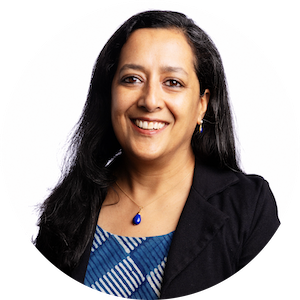
Dr. Rachel Cleetus is the Senior Policy Director of the Climate and Energy program at the Union of Concerned Scientists. She conducts research on climate impacts and clean energy, and advocates for science-based policies to advance climate action. She is an expert on the United Nations Framework Convention on Climate Change and has been attending international climate negotiations since 2009.
Dr. John Burroughs is Senior Analyst at the Lawyers Committee on Nuclear Policy (LCNP). He has represented LCNP in Nuclear Non-Proliferation Treaty review proceedings and in negotiations on the Treaty on the Prohibition of Nuclear Weapons. Dr. Burroughs was also a member of the legal team for the Marshall Islands in its nuclear disarmament cases in the International Court of Justice.
Resources mentioned in this episode
- John’s article “The Inadmissibility of Nuclear Threats”: https://www.armscontrol.org/act/2024-04/features/inadmissibility-nuclear-threats
- John’s work representing the Marshall Islands in the International Court of Justice: https://www.lcnp.org/marshall-islands
- Information from John’s organization about the Treaty on the Prohibition of Nuclear Weapons: https://www.lcnp.org/tpnw
- Rachel’s blog: https://blog.ucs.org/author/rachel-cleetus/
- Rachel’s recent report “Colliding Crises: The Dangers of Extreme Heat in Affordable Housing”: https://www.ucs.org/resources/colliding-crises
- Rachel’s recent report “Science and Democracy Under Siege: Documenting Six Months of the Trump Administration’s Destructive Actions”: https://www.ucs.org/resources/science-and-democracy-under-siege
View Episode Transcript
Rachel Cleetus: In this new world, it's even more important for people in the United States to recognize that it's in our best interest for diplomacy in these global agreements to be durable. Ten years from now, 50 years from now, we might find ourselves in a situation where we're not calling the shots anymore in the way that we do today. What kind of world do we want to live in where our rights will still be respected, our sovereignty will still be respected, our collective interests will still be respected?
[intro music]
Ryann Blackshere Vargas: That was one of today's guests, Dr. Rachel Cleetus from the Union of Concerned Scientists, getting at the heart of today's topic – treaties, and whether international cooperation can still meet the scale of the crises we face.
You're listening to the "Back From the Brink" podcast, a limited series where we explore why a world free of nuclear weapons is both necessary and possible. I'm your host, Ryann Blackshere Vargas. Now, if you're listening to this show, chances are you've spent some time thinking about existential threats, which probably means you've thought about climate change, too. And whether we're talking about carbon emissions or nuclear deterrence, one thing becomes very clear very quickly: These are global issues.
Rising seas don't care about borders. Neither does radioactive fallout. And in both cases, science has been warning us that our time for hand-wringing and ignoring the problem is running out. Climate policy and nuclear abolition may focus on different threats, but they ask the same questions. How do you build international cooperation when trust is fragile? What actually pushes governments to act? And once countries sign an agreement, what makes it real instead of just symbolic?
Today, I'm bringing together two guests who have spent years answering these questions. Dr. Rachel Cleetus is Senior Policy Director of the Climate and Energy Program at the Union of Concerned Scientists. She has been attending international climate negotiations, including the UN climate conferences, since 2009. We're also joined by Dr. John Burroughs, Senior Analyst at the Lawyers Committee on Nuclear Policy. He's represented his group in review proceedings for the Nuclear Non-Proliferation Treaty and in negotiations on the Treaty on the Prohibition of Nuclear Weapons. Here's our conversation on what climate diplomacy and nuclear abolition can learn from each other, and what it takes to move from being concerned to taking action.
Ryann Blackshere Vargas: Thank you both for joining us on the "Back From the Brink" podcast. I am really excited to speak with you today. I'm curious, are you guys familiar with each other's work at all?
Rachel Cleetus: I'm meeting John for the first time. I'm really excited for this conversation. So, it's great to be here with you.
John Burroughs: Yeah. No, I'm looking forward to this. I've been very interested in the parallels between the climate and nuclear spheres.
Ryann Blackshere Vargas: Wonderful. I was just going to ask. I would love to kick this off with what fascinates you most about each other's work. Rachel, I'll start with you.
Rachel Cleetus: Well, I think the thing that fascinates me about the parallels is, of course, we're both dealing with issues that are existential threats to our planet, to humanity, and at the same time, they're problems that no nation can solve on their own. By their very nature, they require diplomacy, multilateral discussions, the kinds of treaties we're going to be talking about. And that, I think, is a huge opportunity. I know we've seen the dark side of it, especially recently in terms of geopolitics, but that really is the only way we can confront these sorts of big global challenges. So I'm really looking forward to learning and sharing a little bit from our different spheres.
Ryann Blackshere Vargas: John?
John Burroughs: Right. Well, nuclear disarmament and non-proliferation, since pretty early on, has proceeded on the basis of international cooperation, limited but real. And so, as Rachel said, there's a parallel there to climate protection. One of the ways I really entered this work was, I was there for the proceedings, the arguments before the International Court of Justice in 1995 on the legality of the threat or use of nuclear weapons. And then the court's opinion came out in 1996, and in a surprise, the court said there is an obligation to negotiate nuclear disarmament in all its aspects and bring those negotiations to a conclusion.
Well, fast-forward almost 30 years, and the International Court of Justice rendered an advisory opinion on climate protection, climate change. The International Court of Justice is the judicial branch of the United Nations. And you can see some parallels between the court's opinion in the two cases. Basically, where very, very serious or existential risks are being faced that states do not have freedom of action, they must prevent harm, they must cooperate, and they must also take into account the interests of future generations. So I see a lot of parallels between climate protection and nuclear disarmament.
Ryann Blackshere Vargas: I was thinking about treaties between countries, and the idea of a marriage contract and a prenup came up for me. [chuckles] And I say that because it seems that there's these two sides that have to be willing to come together and agree to a union, and at the same time protect their individual rights and assets in that union. Would you say that's accurate, and how do you both define a treaty?
Rachel Cleetus: So I guess I like where you started. It's a provocative way to put it, but I see this as very different than the harmony, hopefully, and love in human relations. It actually starts from a point of, you and I agree as nations that we want to preserve a livable climate. We don't want a nuclear catastrophe. But your interests and my interests might diverge on trade, on other aspects of our relationships, but we're going to preserve space here for harmony. And how you do that, and how you evolve over time, because these treaties have to be durable, and the durability part of it is a whole other challenge. You can reach an agreement, and then how do you keep it together over the long term is a whole challenge in itself.
Ryann Blackshere Vargas: Sounds like marriage to me. No, I'm just kidding.
John Burroughs: Yeah. Well, it's a nice analogy because it points out that states do preserve their interests as they enter into agreements. There's no question about that. If it's a well-developed treaty, and there are subsequent meetings, and there are assessments of commitments and so on, then there can develop a positive relationship of cooperation. Now that's a happy story. It doesn't always happen. And in the case of the Nuclear Non-Proliferation Treaty, a lot of people fear it's sort of unraveling now, the trust and cooperation that had been built up over the years. In terms of what a treaty is, a treaty is an agreement among states which is considered to be legally binding. In the United States, under the US Constitution, it is explicitly part of the supreme law of the land.
Ryann Blackshere Vargas: Rachel, you've attended the Conference of the Parties for several years, and John, I know you've participated in Nuclear Non-Proliferation Treaty Review proceedings and the negotiations for the Treaty on the Prohibition of Nuclear Weapons. I'd love to hear about what it's actually like to negotiate international agreements like these, and from your perspectives, what makes it so challenging?
John Burroughs: So in the case of the Non-Proliferation Treaty, the NPT, the role of NGOs mostly is supplying information and analysis and advocacy, providing papers, making statements during the proceedings. In the case of the Treaty on the Prohibition of Nuclear Weapons, it was a very innovative, forward-looking process, and the governments who are leading those negotiations made a real effort to include and highlight the work of non-governmental organizations. We advocated certain things, and some of them ended up in the treaty, and probably we played a role in that happening.
Rachel Cleetus: The Union of Concerned Scientists, the organization to which I belong, has been participating as an observer party to the UN Framework Convention on Climate Change negotiations since the very beginning. That framework convention includes pretty much every country until January of this year when the Trump administration took the United States out of the Framework Convention on Climate Change, the first time that's ever happened. They have exited the Paris Agreement before, but this was the first time they exited the bedrock convention. And that convention, when it came together, it's really actually quite wonderful to read the original language because you see how science and equity was baked in from the very beginning.
There was an understanding of climate science and how heat-trapping emissions from human activities like burning fossil fuels was leading to a dangerously altered climate, and that that would have huge human consequences, and that's why countries were coming together to address this challenge. They understood that it was a collective action problem, that heat-trapping emissions from nations were accumulating in the atmosphere to cause this problem. But there was also uniquely an understanding that it was emissions from the richer, more powerful countries that was primarily responsible for the climate change that was already starting to become apparent. And that in the convention was built in this concept of common but differentiated responsibilities. The idea that everybody needed to address this problem, but that lower-income nations needed finance from richer nations, they needed help from richer nations to help make this transition, and that this would have to be done with equity and poverty alleviation and fairness built in from the front, with the wealthier countries who were most responsible for the problem recognizing that they had a greater obligation to help address this together, but that everybody would need to do something.
Organizations like the Union of Concerned Scientists, as a science-based organization, we're observers. We represent our views publicly in a lot of ways through submissions, through speaking to the media, through advocating with negotiators. The other voices that have been very important in this problem is the countries that are on the forefront, the front lines of this climate crisis in a very acute way. And in this case, some of those countries have been the small island nations, for whom the existential threat of sea level rise in particular means that they're literally losing their countries, the land on which their countries exist. And for them, they have always held the high water mark, both the moral authority as well as the legal piece of why it's important to address this in a fair way. And John spoke about the ICJ, the International Court of Justice opinion that came out last year around climate. That opinion was sought by small island nations because what they wanted to do was reestablish, not something new, but reestablish the existing legal obligations that nations have to address climate change. And indeed, the court reaffirmed that in their opinion last year, their advisory opinion.
Ryann Blackshere Vargas: So when the courts make these kinds of decisions, who enforces these things? Who makes sure they happen?
John Burroughs: In principle, decisions that resolve disputes of the International Court of Justice can be enforced by the Security Council. There's a provision in the UN Charter for that to happen. However, there's the usual issue about the Security Council, which is that decisions can be vetoed by any of the five permanent members, US, United Kingdom, France, Russia, and China. Now, but we're talking about advisory opinions. Advisory opinions do not, in effect, call for enforcement. They're the court giving its authoritative opinion about legal obligations of states. So there isn't, per se, an enforcement mechanism involved there. One of the interesting things about the climate sphere, however, is that there are, I don't know, hundreds of lawsuits in national courts around the world seeking to get the governments to live up to their climate protection obligations. So that's a pretty real kind of enforcement. Nothing really parallel to that in the nuclear area.
Rachel Cleetus: I think the reality here is that the enforcement piece of this has always been a challenge because countries, especially larger, more powerful countries, have often chosen to subvert the obligations that they've agreed to, and they can do it simply by not cooperating or not recognizing. So the United States does not recognize this advisory opinion from the ICJ in the context of climate change. And it isn't whether it's a Republican or a Democratic administration, the country just refuses to acknowledge its obligations. And this is the point at which one has to understand there's the human part of the enforcement mechanism. There is no global police. But when it comes to an issue like climate change, regardless of the politics, the science is clear, the reality is clear. So when we choose not to act or when we choose to undercut global treaties, it is going to come back to bite. It means people in every country, rich or powerful or lower-income countries who have contributed the least to the problem, they're going to find themselves experiencing climate impacts, sea level rise, catastrophic flooding, wildfires, storms, heat waves. They don't care about courts. They don't care about treaties. That's going to come to your doorstep, and it is coming to people's doorsteps around the world.
So then the reinforcing mechanism is, do people within countries then put pressure on their governments to live up to these global commitments, because now it is coming home to roost. And I think that, as John was saying, we're seeing not just these global agreements, but we're seeing these parallel efforts, including litigation, both to hold countries responsible, as well as fossil fuel companies whose products are contributing to this damage and this climate crisis. And so these are all complementary. It's an ecosystem. The treaty cannot carry everything on its own. It is a very important piece, but then there are all these other reinforcing mechanisms where within countries, you get pressure to please live up to these treaty obligations because it matters to people domestically. It's not just an international treaty. It matters domestically.
Ryann Blackshere Vargas: Absolutely. And like you said, it matters to the humans who are facing this every day. It's on their doorstep.
John Burroughs: There's a very interesting instructive episode in nuclear weapons history, and that is how the ban on nuclear testing came to pass. The Comprehensive Test Ban Treaty was… Negotiations were completed in 1996, and after that, France decided they were going to do a few more tests in the Pacific.
And there was a worldwide outrage in protests about this. There have been instances where there is sort of social movement in support of control of nuclear weapons, more than one. There were big protests in the 1980s. On the Comprehensive Test Ban Treaty, maybe we'll talk more about it later, but it does have an enforcement mechanism, a very explicit one, which is, first of all, there's a governance process where states can join together and make decisions about what should happen and impose sanctions. A question of a violation can eventually be referred to the UN Security Council, where there might be a veto problem, but there might not be a veto problem.
Ryann Blackshere Vargas: We talked a lot about how when parties come together, the different countries come together, and they work on treaties. But it seems like a lot of people feel like traditional diplomatic routes now are breaking down, and it's hard to even get politicians and countries to cooperate. How do you get countries to come to the table now?
John Burroughs: It's not just the, how to put this, but the opposition of certain segments of US politics to sort of US being bound by global treaties. It's also just that you need two-thirds of the Senate to approve a ratification of the treaty. That's a pretty high bar. So the problem of getting countries to enter into a treaty is, in particular, a problem with the US. I think Russia is willing to go along with multilateral treaties as long as they feel they're not being taken advantage of. China is, on the one hand, not interested in nuclear arms control, but is quite enthusiastic, and Rachel can speak to this, but about the climate protection agreement. So China really has sort of a pro-multilateralist view of the world over the last, I don't know, couple of decades. So the problem is right here in the United States.
Rachel Cleetus: Yeah, maybe I'll start with a bright spot, which is the Montreal Protocol, which was reached in 1987 to address the challenge of ozone-depleting substances that the world recognized were a big problem that could only be solved through collective action. And that protocol, while originally not a climate protocol, became one because some of the substitutes for those ozone-depleting substances were found to be then harmful for the climate. They were global warming gases. So HFCs, the hydrofluorocarbons, were addressed in a subsequent amendment, the Kigali Amendment to the Montreal Protocol, which the US actually helped lead in terms of negotiating. So there are these bright spots that you have protocols and treaties that are reached and that are amended over time to be durable and to address new challenges.
But as John pointed out with the UN Framework Convention on Climate Change, this has been, over time, much more challenging. The first instance of the United States sort of playing spoiler was the Kyoto Protocol. The Kyoto Protocol was a protocol under the UNFCCC that was supposed to be binding emission reduction commitments that countries would be making. And under the Clinton administration, this was a really important protocol that was being negotiated, but the US ultimately never ratified the Kyoto Protocol, and it went into effect with most of the countries and the rest of the world. But then ultimately, the US is such a big player on the global landscape in terms of an economy, in terms of the biggest historical emitter of heat-trapping emissions, that ultimately it is impossible to have an agreement where the US sits on the outside. And that led to the Paris Agreement, which the US insisted, as John was pointing out, would be a voluntary commitment. No binding commitments. The Obama administration was not going to take this to the Senate. They wanted a voluntary framework.
And the world went along with the United States and helped through agreements with Europe, China, the United States, the big players. The Paris Agreement was a high point, and it would not have happened without the fact that it was not going to be taken back to the Senate. So that was unfortunately a concession that the United States demanded. And for the rest of the world, it sort of leaves a sour taste because that agreement was reached, and here is the United States, the one country that stepped out of the Paris Agreement twice under each Trump administration and now has stepped away from the UN Framework Convention itself. Now, at the same time as John is saying, there are other countries that are staying steady. Nobody else has stepped away from the Paris Agreement. Many other countries are sort of alarmed, not just in the climate space, but in many other geopolitical spaces at the rogue way in which the United States is engaging right now. It's genuinely making the world a less safe place on many fronts.
Ryann Blackshere Vargas: Rachel, I really appreciate you talking about putting into perspective that we are in a moment, and that history tells us that moments come and go, and that while it feels very intense right now, that we have to be mindful that we have to continue the work. The countries have to continue the work to be committed to that, because all of this is going to take a while, but that there has to be a commitment to see it, whether tensions are high or low. There's a commitment and a cooperation in order to get things moving forward. So, I appreciate that.
John Burroughs: And on that theme, I want to be clear that the US has a history of being very, very constructive regarding multilateral treaties in the nuclear and the WMD sphere. The US was a leader in negotiation of the Nuclear Non-Proliferation Treaty that came into force in 1970. The US was a leader on the treaty prohibiting biological weapons, the Biological Weapons Convention, kind of a simple treaty, but important. Under the George H.W. Bush administration, the US was a leader in negotiation and bringing into force the Chemical Weapons Convention, prohibiting and eliminating chemical weapons, the most far-reaching disarmament treaty ever negotiated. So, there's a history there that the US needs to return to.
Ryann Blackshere Vargas: What are the building blocks of a really good treaty in your eyes?
Rachel Cleetus: I think for a treaty to work and have durability, there needs to be a recognition of the different interests that countries have and what the collective interest is. So, how do you do that Jenga where you put together, yes, countries are slightly different, have different interests, and there is this collective big picture interest. And what I would love is for more young people, as they go through school and as they learn civics, as they learn multilateral diplomacy, that they have those experiences of those model UN and other spaces in which you get to practice what that looks like. Practice what it takes to look at an issue from the eyes of someone who's not you. Really understand what the other side is thinking. Whether you agree with them or not, you can't reach an agreement unless you can appreciate, okay, how does this look from another person's perspective, another country's perspective, another set perspective on the history of how we got here?
So, in the United States, for example, on the climate issue, there's very little acknowledgement of the historical responsibility around heat-trapping emissions, this cumulative pollutant, where the US is the largest historical emitter. There's sort of like, "Let's move on from here and talk about what comes next." But for a lot of other countries, they're sort of like, "Well, let's talk about how we got here. Who brought us here?" And also talk about the fossil fuel interests that have played such a malign role throughout. Who are the blockers and why? What are their motivations? And then I think to get successful treaties, when I think about how the Paris Agreement was negotiated, you need skilled diplomats who can actually bring together people who think differently and point out, "Hey, if you give a little of this, you can get a little of that."
You don't get a treaty by everyone getting 100% of what they want. You have to be willing to give and take. And it's the playground lesson that we teach children in kindergarten, but we seem to forget when it comes to really weighty issues like climate change and nuclear weapons. You got to give a little to get a little, and get that collective best interest.
Ryann Blackshere Vargas: As a mom of three, I'm going to say I'm a skilled diplomat - [laughs]
Rachel Cleetus: Indeed. [laughs]
Ryann Blackshere Vargas: I'm helping these siblings come together. I'm interested, are there any specific issues that you think are better solved by something other than a treaty?
John Burroughs: Yeah. So, it's really an important thing to consider. We don't want to seem, I don't want to seem like treaties are some kind of panacea. Just on the contrary, a good treaty will often emerge out of preexisting political and legal processes, and sort of cement and solidify that. And so it's important for nuclear-armed countries to show restraint on things like producing the fissile materials that you need for nuclear weapons. Or, prior to when we had the Comprehensive Test Ban Treaty, refraining from carrying out nuclear explosive testing. Under Gorbachev, the Soviet Union initiated a moratorium, even though the US didn't right away agree to it, on nuclear explosive testing. And that, I think, was helpful in building the momentum towards the Comprehensive Nuclear Test Ban Treaty. In general It's really important that countries find ways to coordinate at least restraint, if not even a reduction of reliance on nuclear weapons. That can form the basis for these durable, legally binding agreements, treaties.
Ryann Blackshere Vargas: Thank you. It's interesting coming into this conversation, you think about where we talk about the two existential threats, right? Climate change, nuclear weapons, and the heaviness and the weight of that. I think that we're feeling those both a lot now. What brings you to hope? Living in these spaces, or working in these spaces all of the time, what brings you hope in these situations that tomorrow will be better?
Rachel Cleetus: Yeah. I think for myself, what I would say is, it's not the rainbows and bunny rabbits kind of hope. It's more like a steely determination, [chuckles] and it's more of a sense of, I think, responsibility that we have to people we share the planet with, the flora and fauna, the ecosystems, and to generations to come. I think we cannot abandon and get cynical about what's at stake. It can feel really hard.
I've been doing this work long enough now that I certainly cried when I saw the Trump administration trample over all of that hard-earned progress as they continue to do. And yet, I think that there is tremendous overreach and illegality in the approach that they're taking, and the seeds of how to overcome it are in that overreach, and the pendulum is, I think, slowly starting to swing back. I think having a longer view of history, it's humbling. You want the successes, and you want them quickly, and then you realize there's some hubris to that, to think that you would just have these breakthroughs and just keep moving. So it's like at this moment when our very democracy is under attack, you realize that every generation has to fight for it. You just can't take it for granted. You have to create the conditions. You have to have the education. You have to connect with people's hearts and minds again and again.
And so the hope I have is when it comes to climate change, this is such a severe challenge that is becoming so apparent to people around the world, wherever they are, that my hope lies in the fact that this is a problem that we have created as human beings, so of course we can solve it. It's a question of time, though, because with climate, the science is very sobering. If we wait too long to wake up, we have unleashed the kind of world that... The Earth will continue to exist, human beings will continue to exist, but so vastly diminished in terms of all the losses that we're already starting to see and the injustices that are being magnified in this moment. So it's hard to call it hope in the sense of, oh, everything will turn out fine when I know the reality is that it's already going sideways in so many ways.
But, yeah, just determination, really determination, and sometimes rage. I'm fueled by a lot of rage against fossil fuel companies and politicians who are in their pockets and are looking at their short-term gain versus the immense loss to so many people on the planet. So on different days, it's a different fire in my belly, but it's always there. This is more than work. It really feels like a responsibility.
John Burroughs: I think I have a sort of a similar answer to Rachel. There are some advantages to being older. I was around nine years old during the Cuban Missile Crisis. I forget the exact year. Maybe it was 1962. And I still remember this extremely vivid nightmare I had during that crisis. So the reality of nuclear war was quite real to people, the '50s, '60s, '70s. If you have taken in, as I did, how just utterly horrible a nuclear conflict would be, it's just sort of a matter of rational determination. This cannot be allowed to happen. We have to move towards a world in which it is not possible.
So it's not like I wake up every day and am filled with this emotion that it's possible it's going to happen. It's just like, it's necessary. [chuckles] It's rational. So that's partly how I would answer your question. But I imagine Rachel would agree with this. You can certainly find reasons for hope. For instance, my experience in working with Tony deBrum and other Marshall Islanders, or younger people coming into the field. A lot of them have sort of an audacity in they're ready to believe things are possible, as opposed to me saying, "Well, it must be possible." But they're like, "It can happen." And so that gives me hope as well.
Ryann Blackshere Vargas: Well, I will take time to say thank you both for your work that you do day in and day out with that determination and with that hope, so that no other nine-year-old wakes up with nightmares about the threat of nuclear war or whether their house is going to burn down from a wildfire that could've been prevented because of climate change or any of the many things that kids are cognizant of and aware of. But through your efforts and a lot of efforts, hopefully there will be brighter days. So thank you. [outro music]
Ryann Blackshere Vargas: That was today's episode of the "Back from the Brink" podcast. Thank you again, a huge thank you to Dr. Rachel Cleetus and Dr. John Burroughs for speaking with us today. More information about their work at the Union of Concerned Scientists and the Lawyers Committee on Nuclear Policy, respectively, is in the show notes.
This podcast is part of the Back from the Brink campaign, which has been working for years across the United States to bring communities together and prevent the growing threat that nuclear weapons pose to our health, environment, and all we hold dear. If you're feeling inspired by our conversations today and looking for tools to get involved, check out our show notes and head to our website, preventnuclearwar.org.
This podcast was written and produced by Jiayu Liang, Anthony Eyring, and me, Ryann Blackshere Vargas. It was made financially possible in part by a grant from the Andrew Carnegie Foundation, formerly Carnegie Corporation of New York. The statements made and views expressed are solely the responsibility of the author. Until next time everyone, we wish you peace, joy, and a world free of nuclear weapons. [outro music]
Trust but verify
Listen to this ep. on Apple Podcasts or Spotify
When countries agree to get rid of their nuclear weapons, verification tools can confirm that they actually did it. But how does it work? Arms control expert Mike Edinger talks to host Ryann Blackshere Vargas not only about the details of verification, but also how the work is constantly evolving to address changing global politics.
Guests on this episode
Mike Edinger is an independent arms control consultant who previously served as a Foreign Affairs Officer at the State Department’s Bureau of Arms Control, Verification, and Compliance. In that role he was the US government lead for the International Partnership for Nuclear Disarmament Verification (IPNDV) from its inception in 2015. Prior to that he served as a Minuteman ICBM Crew Commander in the U.S. Air Force.
Resources mentioned in this episode
- The International Partnership for Nuclear Disarmament Verification (IPNDV): https://www.ipndv.org/
- Mike’s recent report, “Negotiating Nuclear Verification: Arms Control, Disarmament and Non-Proliferation”: https://vcdnp.org/negotiating-nuclear-verification-arms-control-disarmament-and-non-proliferation/
View Episode Transcript
Mike Edinger: Suddenly, the conditions developed a couple years later where here we have this monumental agreement where we're dismantling an entire class of nuclear weapons. Nobody saw that coming, but it was a great opportunity for all this work to be put in place.
[intro music]
Ryann Blackshere Vargas: That was our guest, Michael Edinger, an expert on today's topic, treaty verification. In other words, if a country promises to dismantle their nuclear weapons, how do you make sure they actually did it? It involves technology like you might expect, but also a surprising amount of politics. I'm excited to get into it today.
You're listening to the "Back From the Brink" podcast, a limited series where we explore why a world free of nuclear weapons is both necessary and possible. I'm your host, Ryann Blackshere Vargas.
At the height of the Cold War in the 1980s, there were more than 70,000 nuclear weapons. Diplomacy and public pressure has gotten it down to where there's around 12,000 nuclear weapons in the world currently, which okay, that sounds like progress, right? Maybe. But when we know that the damage that could be done with just one, eh, it really sounds like that's 12,000 too many. So we need to keep driving that number down, and we know that many of those Cold War-era treaties worked in part because countries had ways to verify each other's compliance. But what does that actually look like in practice? Once we've agreed on a set of rules, how do we make sure everyone's following them? I know we can't uninvent nuclear weapons, but can we confirm the existing ones get destroyed and make sure that new ones don't get built?
To dig into the details of verification, I talked to Michael Edinger. He spent the better part of a decade as the US government lead in the International Partnership for Nuclear Disarmament Verification, or IPNDV. Michael started working with the group when it was first formed in 2014. At the time, he was a foreign affairs officer at the State Department's Bureau of Arms Control, Verification, and Compliance. Today, he's an independent arms control consultant doing research on verification. As we work to dismantle nuclear weapons, this verification work is going to be incredibly important. So of course, I want to ask him how it works technologically, politically, and logistically. He should know, as he's actually watched countries dismantle these weapons up close. But I also want to hear Michael's take on the landscape of arms control right now. As treaties expire and diplomatic routes break down, where does that leave the verification experts?
Ryann Blackshere Vargas: Well, Michael Edinger, thank you for joining the show. We are very excited to talk to you today.
Mike Edinger: Thanks. I'm excited to be here.
Ryann Blackshere Vargas: So we've talked a lot on this show about treaties and countries coming together to agree to get rid of nuclear weapons. Now, I know that you were the US government lead at the International Partnership for Nuclear Disarmament Verification, right? IPNDV. So I want to start by asking you directly a yes or no question. Can countries verify whether another country has dismantled a nuclear weapon?
Mike Edinger: So the answer is always it depends. When you're talking about treaties, these are legal agreements, and specificity matters in a way that it doesn't in so many other places. And so that's where the it depends part comes in. But yeah, at the end of the day, we know how to do this, and we have understood and identified and figured out what the tools are, what the processes and procedures are to use those tools to really do the kind of verification that you need.
Ryann Blackshere Vargas: Let's get into how that verification works, and dive into the logistical and technological aspects of getting rid of nuclear weapons. How do you actually dismantle a nuclear weapon?
Mike Edinger: Within the IPNDV, within the partnership, the way we sort of approached it was we had to give ourselves some boundaries on what that meant. And so from our perspective, dismantlement really was focused on the separation of the high explosive material from the nuclear material inside of a warhead. That was what we used as the measure of dismantlement, because that really takes that weapon and renders it unusable for its designed purpose. Now, then you get into the issues of where does that high explosive, and nuclear material, and other material go? How do you verify the movement of that? But that's the core of where we focused our efforts.
Ryann Blackshere Vargas: And what do you do with those materials to make sure they don't get used for nuclear weapons again in the future?
Mike Edinger: High explosives can be burned. They can be, frankly, utilized in other applications. The bigger concern, obviously, is the nuclear material. You can down-blend it so that you reduce the enrichment level of the material. You can vitrify, vitrification, where you basically turn it into glass. Then in terms of what happens to that material, whether it goes into long-term storage, monitored storage somewhere, or if it's down-blended, it can be used as fuel in other reactors or something like that. Those are all things that obviously are options that countries would have to sort of work through the process and then there are different verification methods that would apply to those different processes as well.
Ryann Blackshere Vargas: What happens after a nuclear disarmament treaty is signed and ratified? What is the process of verification?
Mike Edinger: The treaties will typically specify what their entry into force requirements are. Something, a bilateral treaty like the START, either START or New START or INF, that involved really just the US and the Soviet Union. It's a matter of once the countries ratify that and either exchange instruments or ratification, and the treaty basically is in force, and then whatever verification measures are specified. And the timing of those can begin at that point. You have treaties like the Comprehensive Nuclear Test Ban Treaty, the CTBT, that has a set of 44 specific states that have to ratify before the treaty enters into force, and that has not happened yet. But even once that does, there's, I think it's a 180-day period after that, that the treaty is technically in force, but the verification measures can't begin yet. So it's all about what specifics are included in a particular treaty or agreement.
Ryann Blackshere Vargas: Now, as I mentioned, you were the US government lead at the International Partnership for Nuclear Disarmament Verification, IPNDV, when it was created in 2015. Can you tell me a little bit about how that group formed and the work you did there?
Mike Edinger: IPNDV grew out of another project that the Nuclear Threat Initiative had been running for a couple of years prior to that, called the Verification Pilot Project. And that brought together a group of experts from the US, the UK, a variety of different countries, and academia, and looked at getting into a world where you're going to consider multilateral verification, particularly that involves both nuclear weapon states and non-nuclear weapon states. How do you need to approach that?
And one of the key recommendations there was really for non-nuclear weapon states, was think through where do you see your interests in a multilateral agreement and multilateral verification, and then think about developing your own organic structures, and identifying agencies and experts that can engage in that process. Assistant Secretary of State Rose Gottemoeller, at the time, was the one who sort of took this challenge and brought it into the government. And we partnered at the State Department, through a public-private partnership with the Nuclear Threat Initiative, and so they were the one non-government entity that participated in IPNDV.
And I think initially there were 26 or 27 countries, including the United States, that we invited into that partnership. It involved all five of the nuclear weapon states and as well as then a large number of non-nuclear weapon states.
[transition music]
Ryann Blackshere Vargas [NARRATION]: Hey, this is post-production Ryann here. Quick note: Mike is referring to the five legally recognized states under the Treaty on the Non-Proliferation of Nuclear Weapons, which are the United States, Russia, the U.K., France, and China. However, four additional countries (Israel, Pakistan, North Korea, and India) are known to also have nuclear arsenals, bringing the real-world total to 9 countries. Ok, just wanted to clarify! Now, let's get back to the interview.
[transition music]
Mike Edinger: And over time, we added, I think Nigeria and Hungary joined after the first couple of years. Unfortunately, the Chinese and the Russians backed away from it. They tend not to like to talk about verification in the abstract outside of a specific agreement. But when you look at the nuclear weapon life cycle, and this goes all the way from mining uranium to the far end where you've dismantled weapons and you have material that you're trying to get rid of. The IAEA and the safeguards world really covers kind of the two extremes of that wing.
What we saw as the challenge was fielded operational nuclear weapons systems. How do you take those from that operational state, download warheads, remove infrastructure, dismantle all of that, and do it in a way that is verifiable by a multilateral mix of both nuclear weapon and non-nuclear weapon states? And so that's where we focused our energies initially, and we organized ourselves into a set of three different working groups that took on different sort of focus areas. And we did that for, we set ourselves sort of a two-year period. And then at the end of each of those phases, we published a series of reports and papers and documented what we had discovered and come up with, and then looked at what the next phase would take on.
Ryann Blackshere Vargas: This coming together has to be with nuclear weapon states and non-nuclear weapon states. Can you tell me about the power of that partnership and why each side benefits from a relationship?
Mike Edinger: Yeah, well, I think there are a few dimensions to it. One, from 35 years in government, you would often hear non-nuclear weapon states talk about the P5 as if we're sort of this social club. We all have the secret handshake. We all talk and whisper in the corners, and it couldn't be further from the truth, right? All five states have their own security programs and requirements and have, in many ways, different nuclear weapons enterprises and operate things differently. So there was value, I think, in kind of demonstrating to the non-nuclear weapon states that it's not this really closed cabal that is hatching schemes and doing things all in a vacuum.
But I think the bigger issue is obviously when you're talking about future disarmament, where you're really going down to low numbers and eventually to zero nuclear weapons, all those non-nuclear weapon states want to have some kind of confidence that that dismantlement has taken place. And so rather than just relying on taking our word for it, this whole effort is looking at how do you involve those states in that process. And as we started to really talk about processes and how, certainly for France, the UK, and the US, who were a part of that partnership the whole time, as we walked through our various processes to the extent that we could, those countries really started to understand that it's not smoke and mirrors, it's real, and saw that these are really challenging constraints to what we can actually do. But they also saw that we were genuine in our efforts to try to overcome or incorporate those limitations into a really effective verification.
And by the same token ... on the nuclear weapons state side, we took things for granted. And when you get questions from non-nuclear weapon states about, "Well, what does that really mean, and why do you say that?" Those challenges were useful because we would think through sometimes, oh, yeah, maybe that isn't really how it needs to be, or maybe there is room to look at this over here in a way that we hadn't thought of before. So I think that's always the case when you bring together different groups with very different perspectives. You're always going to learn something, each from the other.
Ryann Blackshere Vargas: And it sounds like trust is a big part of that partnership, at least developing this trust. That you're going to do what you say you're going to do, and then we will all be safer as a result of that, and we can trust-
Mike Edinger: Right. Absolutely.
Ryann Blackshere Vargas: Verification sounds really high-tech and modern, but we've actually had satellites for decades that can monitor and do some of this verification work, and these are known as national means of verification, or NTMs.
Mike Edinger: Yeah.
Ryann Blackshere Vargas: Can you tell us more about these and how they work?
Mike Edinger: Yeah. So, in the early days, going back as far as the SALT agreements, those put limits on big things. Missiles, ICBM launchers, things that you could see from space fairly effectively. And so national technical means and those kind of reconnaissance satellites became an important element of verification. And if you go back and you look at those agreements, the use of NTM is enshrined in the text of those treaties, along with a commitment by states not to interfere with those, not to use camouflage netting and try to spoof the cameras and sensors and things on board those satellites.
So that was the start of that verification, as we started to figure out what was in the realm of the possible. And then when you got into the next sort of big one was the INF Treaty. And there, you're dismantling things, and it's not necessarily things that you can see all the time with satellites. And that's where we started to develop the on-site inspection capability, where you had actual inspectors on the ground watching these processes as these weapons and components would be dismantled.
I actually got to do that when I was at the Defense Threat Reduction Agency and was on the ground at facilities in the Russian Federation as you had workers with torches cutting all the different missile components and the launch canisters and all of that. And then you still had a role of NTM because those components would be left outside, exposed to satellites to verify and count.
And the arms control inspection business is weird. It's not intuitive, and again, like I said, it's a legal process. Nothing is what it is until you've made the measurement that says it is. So you can stand in the yard outside of a factory and see that those components belong to an SS25, for example, but until you actually make the measurements that you're allowed to do, it's not verified, it's not confirmed until you've done that, and that's why I've been such an advocate for this kind of verification for the last 35 years. But even in the START treaty, a lot of that was based on counting rules, right? Where you had procedures that allowed you to verify there weren't more warheads on that ICBM than were allowed by the treaty. And so most of that was really still pretty low tech. We always joke that the most important tool for an inspector is what we call the Mark One Eyeball. It's about what you see, and then you had tape measures and plumb bobs and fairly low technology kind of inspection processes.
Now, as we look to the future, where you're going to really start to think about not only counting actual warhead load-outs, but then tracking individual warheads through their lifetime until they're dismantled, then the technology requirements become much more involved. But you also have to understand that you have this operational environment that puts constraints on what technologies you can use. You may have a great radiation detector that will tell you, "Yes, this is a nuclear warhead of this type." But it might require three hours for the equipment to warm up, and then four hours of calibration time, and another three hours of measurement time. And you just don't realistically have those kinds of timelines in this kind of work. You have small windows where you can get into a facility and tight timelines where you have to get things done. So then you have to work backwards from that and figure out, okay, this is the technology that I might ideally want to use, but I can't for these various reasons. So what can I use that gets me enough confidence and that I can marry up with other measures that allow me to build a picture over time that yep, that warhead is warhead number six that we saw first over here, and now it's in pieces over here.
Ryann Blackshere Vargas: Makes a lot of sense. So let's suppose everyone has gotten rid of their nuclear weapons, and we verify that they've done that. Can you do anything to make sure nobody builds more weapons in the future?
Mike Edinger: Yeah, that's another big challenge. And that's something where we've kind of-- If you're familiar with the Chemical Weapons Convention, they have this notion of challenge inspections, and it's basically an anywhere, anytime kind of an inspection process. And that's essentially what we have worked on in the IPNDV over the last 10 years, is in that post-global zero world, you have to have a mechanism to be able to say something about that facility is suspicious. It's always going to have to be based on some triggering action. It's just not realistic to think that inspectors can, at any time, show up anywhere they want to and start digging around.
But again, if you've done your homework and your verification was robust enough on the dismantlement process on the way down, and that's going to involve not just dismantling warheads, that's going to include dismantling delivery systems. Making sure that ballistic missile submarines and ICBM launchers and heavy bombers aren't capable of employing the kinds of weapons that they were in the past. Making sure that the facilities where those weapons were built and ultimately dismantled and stored aren't capable of doing those things anymore. And so that then gives you a starting picture and you learn over time what the footprint is to look for, and it will involve a robust monitoring capability for the foreseeable future.
Ryann Blackshere Vargas: I'm curious about your personal path to your profession. What got you interested in nuclear disarmament and verification? What has been your path?
Mike Edinger: We used to joke about this in the government all the time. There unfortunately really isn't a personnel pipeline to get into the arms control business. It's always been kind of an accidental… and I'm a perfect example of that.
Like I said, when I went to the Defense Threat Reduction Agency, that was my last assignment in the Air Force, and it's just the luck of the draw. The assignment people said, "You're going to DTRA at Fort Belvoir in Virginia, and you're going to be doing this job," that I had very little knowledge of prior to that. But it was something that really, as I said earlier, it spoke to me and the meticulous nature that came from the nuclear weapons business 20 years prior. And so that also, as it was my last assignment in the Air Force when I retired, I needed a job. And again, kind of dumb luck, I just fell into an opportunity at the State Department at the right place at the right time. And it was almost a situation where I left my military job, and two months later, I walked into a different agency doing essentially the same work.
And that's really the case for a lot of people. They kind of just stumble into it, and those that have an affinity for this and are really detail-oriented, or we're seeing more and more now with younger folks who are coming into arms control. Unfortunately, we're at a period of time in history where there's not a lot going on operationally, and it's tough to make a career, certainly in government, in arms control.
But recently, I was up in New York, a couple of weeks ago for part of the review conference, and was approached by a young grad student who is interested in getting into the business. And so I'm working with him, trying to steer him and provide opportunities where you're likely not going to get into this work in the federal government in the next five years. But here are ways and things you can do to position yourself when that comes back.
And arms control has always been, particularly on the nuclear side, a very opportunistic business. Nobody was expecting the INF Treaty in 1982, and suddenly the conditions developed a couple of years later where here we have this monumental agreement where we're dismantling an entire class of nuclear weapons. And the START treaty followed, and all of that with the dissolution of the Soviet Union. Nobody saw that coming, but it presented a great opportunity for all this work to be put in place. And those dynamics, you look around the world today and those dynamics are all still there. It's just a question of when do those opportunities line up for the next big movement in arms control.
Ryann Blackshere Vargas: Well, we hope that movement is coming very soon. That's a lot of what the Back from the Brink campaign is working towards, has been doing, and wants more people to be involved in, so that we can do a lot more of that. What would tip off a facility to trigger a challenge inspection?
Mike Edinger: I think one of the things we've talked about a lot in our work in IPNDV is what we typically refer to as formerly declared facilities, right? So if you have a storage facility or a location that maybe continues on in some other non-nuclear form, that's going to be a place where you're going to obviously want to keep an eye out when you craft an arms control agreement and the verification for that, particularly one that involves dismantlement. You want to take down and eliminate those things that are unique to those kinds of facilities, so if they pop up again, you create a trigger.
That for us in the partnership has been the value of our work because we're addressing those, we're capturing those things in myriad reports and papers and documents and things, so that in the future, when those arms control agreement opportunities pop up, you've got a body of knowledge and a library of this fairly technical information that negotiators can draw on and start to rebuild that capability and that arms control mentality and those structures and organizations that are unfortunately sort of slowly dying out.
Ryann Blackshere Vargas: I know you talked about mentoring a grad student before and getting more people through the pipeline so they can continue this work, because as you said, regardless of the conversation, we need folks who know how to do the work so that it can be done. Can you talk about the importance of building a future in verification?
Mike Edinger: Yeah. And I think there are a lot of people that, like me, that have moved on from government, but there's still a number of folks that are in government that are trying hard to preserve the knowledge and build some kind of a pipeline to be able to keep that expertise going. I certainly seek to do that in the work that I do. The IPNDV remains an ongoing initiative, and so that's an avenue where, certainly through other governments outside of the US, this work will continue. And so that's another area that I'm very passionate about, is trying to preserve that knowledge, one, and build a second generation, which is certainly more challenging now when you don't have the day-to-day work necessarily going on to be able to do that.
Ryann Blackshere Vargas: Is there anything everyday people can do to support verification work?
Mike Edinger: So, I think the biggest thing there is getting educated, right? So, and shameless plug here, www.ipndv.org is the public-facing repository of all the work that we've done. And so people that really want to dig into this really nerdy, technical work that we've done, there's more than enough to keep people occupied there for generations to come. There are other similar initiatives. The Quad Nuclear Partnership, which is a partnership amongst the US, UK, Sweden, and Norway, has done a lot of similar complementary work.
I'd like to see more in academia in terms of programs that address this, and there has been a lot of growth in that in the last 15 or so years. I know there are a number of universities, many of whom have used the work that we've done in IPNDV to help feed their curriculum. The NGO world, in as much as there can be public pressure to continue to look at this and look at these issues and organize around it.
Ryann Blackshere Vargas: You talked about some of the treaties that have been worked on no longer existing, right? Like New START. Like you said, this period of time is a difficult one. What gives you hope? What does the future look like to you, and what gives you hope in the moment that we're in right now?
Mike Edinger: [chuckles] I don't know that I have a lot of hope to offer, unfortunately. Other than the history of nuclear arms control, as I mentioned, opportunities pop up unexpectedly, and I expect that that will happen again in the future. What that will look like, I don't know. How long it will take to get there, I don't know. I think rather than focusing on things like hope, it's focusing on real, tangible things that we can do, which is like the work we've done in IPNDV, where we're actually digging into this and trying to figure out how you would do it. Regardless of whether or not someone's paying attention or cares about it in the near term, the work needs to get done at some point. And so taking advantage of this kind of dead time to work on that, I think is useful, and particularly is a useful way to channel the experience that's otherwise kind of bleeding out.
Even with the lower numbers that we have now, getting to zero is a years or decades-long process. Just the physical challenges of dismantling all those systems. So there aren't any easy answers here. It's a long process, and it's going to take commitment across the board from all states, from the possessor states, the non-possessor states, to stay engaged, to commit resources to do that. And so I think that's the area that we ought to spend more time on rather than just, is disarmament good or bad? What is it going to take to get us there? And let's start working that now. [outro music]
Ryann Blackshere Vargas: This was really a great conversation, so thank you. I really enjoyed listening and learning from your expertise. So thank you for joining the podcast today.
Mike Edinger: Absolutely. I love talking about this stuff, so [chuckles] I'm very happy to do it.
Ryann Blackshere Vargas: That was today's episode of the "Back from the Brink" podcast. Thank you again to Michael Edinger. More information about his work and the IPNDV is in the show notes.
Hey, if you're enjoying the series so far, we'd love it if you could rate it and leave a review. It really does help. This podcast is part of the Back from the Brink campaign, which has been working for years across the United States to bring communities together and prevent the growing threat that nuclear weapons pose to our health, environment, and all we hold dear. If you're feeling inspired by our conversations today and looking for tools to get involved, check out our show notes and head to our website, preventnuclearwar.org.
Next time on the "Back from the Brink" podcast, we're talking about how people power turns into social change. Believe me, you do not want to miss this. Our two guests are Dr. Marshall Ganz, who teaches about social movements at Harvard and is a powerhouse organizer, and the iconic Barbara Lee, current mayor of Oakland, California, and former US representative.
This podcast was written and produced by Jiayu Liang, Anthony Eyring, and me, Ryann Blackshere Vargas. It was made financially possible in part by a grant from the Andrew Carnegie Foundation, formerly Carnegie Corporation of New York. The statements made and views expressed are solely the responsibility of the author. Until next time, we wish you peace, joy, and a world free of nuclear weapons. [outro music]
People, protest, and possibilities
Listen to this ep. on Apple Podcasts or Spotify
Addressing the threat of nuclear weapons can feel like a big task, but history is full of examples of people coming together to create impactful change: the civil rights movement, women gaining the right to vote, and marriage equality. Mayor Barbara Lee and Professor Marshall Ganz join host Ryann Blackshere Vargas to reflect on their experiences in organizing and explain what makes movements successful.
Guests on this episode
Dr. Marshall Ganz is the Rita E. Hauser Senior Lecturer in Leadership, Organizing, and Civil Society at the Harvard Kennedy School of Government. He is a professor and practitioner of grassroots movements, having organized for the American civil rights movement, the United Farm Workers, and President Barack Obama’s campaign for the White House.
Barbara Lee has served as the mayor of Oakland, California, since 2025. Previously, she served as a U.S. representative from California from 1998 to 2025 and is widely known for her anti-war and nuclear abolition work. In 2001, after the September 11 attacks, she was notably the only member of Congress who voted against the Authorization for Use of Military Force.
Resources mentioned in this episode
- Professor Ganz’s book People, Power, Change: Organizing for Democratic Renewal: https://global.oup.com/academic/product/people-power-change-9780197569009?cc=us&lang=en
- From the Harvard Gazette, “How Marshall Ganz Found His Calling as Activist, Scholar, and Mentor”: https://news.harvard.edu/gazette/story/2023/09/how-marshall-ganz-found-his-calling-as-activist-scholar-mentor/
- From Politico, “How Barbara Lee Became An Army of One”: https://www.politico.com/magazine/story/2017/07/30/how-barbara-lee-became-an-army-of-one-215434/
- From Outrider, “Rep. Barbara Lee: on 40 years of Seeking Justice”: https://outrider.org/nuclear-weapons/articles/rep-barbara-lee-40-years-seeking-justice
View Episode Transcript
Barbara Lee: When you give up hope, you perish. And so, uh-uh. [laughs] And I work as hard, if not harder than most mayors and most people, because I know this world in which we live, and I have a mission I'm on, and that's try to turn it around. [gentle music]
Ryann Blackshere Vargas: That was legendary Oakland, California, Mayor Barbara Lee talking about what keeps her going when the work gets hard. And anyone who's ever tried to make the world a better place knows that the work is hard. So today, we're talking to Mayor Lee and Harvard Professor Marshall Ganz, two people who've spent their lives building and sustaining movements, to explore how ordinary people create extraordinary change.
You're listening to the Back from the Brink Podcast, a limited series where we explore why a world free of nuclear weapons is both necessary and possible. I'm your host, Ryann Blackshere Vargas.
As I mentioned in the first episode of this podcast, I'm always learning how we can make this world a better place. I know my ideal world is one without nuclear weapons, and as we've learned from our guests throughout this series, we can make that happen. We've explored the policies, the treaties, diplomacy, and international cooperation that can get us there.
But none of it happens without people. So for our final episode, I want to focus on the force behind every successful movement, the everyday folks. You, me, our friends, and family. History is full of examples of people coming together and making a difference. We saw it in the civil rights movement, when women gained the right to vote, and marriage equality. Those victories weren't inevitable. They didn't even seem possible, but they happened because people organized, persevered, and refused to accept that change was out of reach.
So what makes a movement successful? What does good organizing look like? And how do you keep pushing past the voices telling you it can't be done?
I brought these questions to our first guest, Professor Marshall Ganz. He teaches about social movements at the Harvard Kennedy School. But before that, he was on the ground in Mississippi organizing for civil rights. He was in California unionizing farm workers there. And years later, he was the architect of President Obama's historic winning campaign for the White House. Few people have spent more time turning hope into collective action or teaching others how to do the same, and he's the perfect person to give us insight into what motivates people to come together for a common cause.
Ryann Blackshere Vargas: Professor Ganz, it's a pleasure to have you on the Back from the Brink Podcast. Thanks for joining us.
Marshall Ganz: Thank you for inviting me.
Ryann Blackshere Vargas: It's a real honor. Let's start back in 1963. You were in your junior year at Harvard when you left to protest for civil rights in Mississippi. Tell me about what was going through your mind that motivated you to do that.
Marshall Ganz: It was never feeling sorry for poor people. It was admiring the people who were fighting. And one of my first SNCC staff meetings I went to, I thought it's going to be all these maps on the walls and talk about strategy. They were having a preach-off. Who could imitate Dr. King better? And here we are, these young people risking their lives, but they got the humor, and they got the sense of humility, and they got the courage. I wanted to be part of that.
Ryann Blackshere Vargas: So talking about SNCC, because I know you keep saying SNCC. You're talking about, of course, the Student Nonviolent Coordinating Committee.
Marshall Ganz: Correct. Yes.
Ryann Blackshere Vargas: And so you left Harvard to eventually join SNCC, and then I understand you also, in the fall of '65, helped unionize the California Farm Workers Union.
Marshall Ganz: Yeah, because I was in the South for about a year and a half, and then was thinking of going back to school, but went back to Bakersfield. Well, Cesar had just started organizing the Farm Workers Union, and it was like I had to go back home with Mississippi eyes. Like here was another community of people of color, also without political rights, also without economic protections. And California with its own history of racial oppression going back to Native peoples, the Chinese, the Japanese, Filipinos, Mexicans. So it turned out that Mississippi was not an exception to America, it was an example of the America we needed to change, and that's what moved me to begin working with farm workers.
Ryann Blackshere Vargas: I'm curious, when did that work, the organizing work, seem most impossible for you? And what was most challenging? And even then, in spite of those challenges, what inspired you to keep going?
Marshall Ganz: I think they were all impossible. No, let me put it this way. There's a definition of hope by a 12th century philosopher, Maimonides, who says, hope's not about flowers in May and that hokey hope. He says hope is about belief in the plausibility of the possible, as opposed to the necessity of the probable. In other words, it is always probable Goliath will win, but sometimes David does. It was improbable we elected a Black man president of this country in 2007. It happened.
Hope occupies the place between fantasy and certainty. It's the domain of could be. It's the domain of could be, of possibility. And that's a precious domain, because that's where imagination is. That's where strategy is. And we often, I think, look for hope in the wrong place. Who's going to come and save us? What's the master plan?
And so, yeah, it was good when you got the big demonstration, but it was also good when you saw the light go on in a person's eyes, and you saw them stand up and say, "Yeah, I'm going to go register to vote. I am somebody." That's powerful stuff. And I think that's really what I discovered to be my calling was doing that kind of teaching, organizing, whatever you call it.
And it didn't require I'd be an insider. Because I couldn't be an insider in Mississippi. I was a White Jewish Harvard guy. But I could facilitate, I could educate, I could organize. And that worked for me. It really worked for me.
Ryann Blackshere Vargas: How do you define an activist? And I ask that because you're talking about people wanting to find their voice, wanting to be involved, but sometimes people don't even see themselves as someone who wants to be involved in a, quote-unquote, organization or movement, right? They just think, "I have ideas, but I don't know how to get involved. I don't identify with an activist." What is your example of an activist, and then what are the ways in which folks can get involved with whatever they are concerned about?
Marshall Ganz: I sort of struggle with the word activist. I'm not sure what that means. We all need to be active, and the challenge is finding our way, our pathway to how we can act to make the world as it is, the world as we would wish it to be. And I think a lot of that is about the heart. In other words, I think that what holds us back is fear, is self-doubt, is isolation, is all of that. And so you're not going to go make an argument to somebody and say, "Well, really the logical thing is X, Y, Z." They're not listening to you because you're not talking about what's real, which is values, and values live in the heart. Values are feelings. And so that kind of work is fundamental in order to enable people to begin to find the sources of hope that then make sense in terms of acting.
And I think we sometimes get it wrong. We think it's all a head thing when it's a heart thing. And we need the heart for the motivation. We need the head for the strategy. And we need the hands for the how we actually do it. So it's really a heart, head, hands proposition. And one of the most important ways that we share that is through building relationships, real relationships with each other.
Ryann Blackshere Vargas: And I love what you said about it has to be a connection between the head and the heart, right? There can't be a separation. What are some examples of the head and the heart coming together in an organization or in organizing that have had actual change and have achieved change in the past? Maybe drawing on examples from some of the movements you've been a part of.
Marshall Ganz: Well, really every movement I was part of was, and that's one reason I'm grateful for getting introduced to organizing in Mississippi, because heart was so central to the whole project. And I have to say, my dad was a rabbi, but I learned all about the New Testament in the South. The Black Baptist Church, that was the heartland. And the mass meetings, the music was not an accompaniment, it constituted the movement itself. And so the whole thing was so grounded in the heart. And so it starts with the motivation, then it goes to the strategy, the creativity. That's where that comes in. So that's been a part of every movement that I've been part of, in the South with the farm worker.
In the farm worker movement, it was interesting. It was so rooted in the Mexican Catholic tradition. But it was a multiracial organization. You can't organize all farm workers with one ethnic group. But the Mexican religious culture was very important. Our first main public funeral in Delano was a Muslim funeral because a first person killed on a farm worker picket line in California, 1973, was a man named Nagi Daifallah, who was Yemeni and had come to work in the grapes. Two days later, a man named Juan de la Cruz, who was a Mexican immigrant, he was shot by a strikebreaker. It was two people, and so then we had a Catholic funeral.
In other words, it's not about being the same. It's about respecting one another's traditions, but in that way, seeing what we really do share. And what we share is caring. What we share is the need for hope. What we share is that sense of solidarity. And it's appreciating difference. Not, how can I say, not ignoring it. You can't. But it's seeing the richness in it. And that's what I learned, I think, especially in the farm workers more than any other place.
And so when it came to Obama and we were asked to do the Camp Obamas, the first thing we started with was storytelling.
Well, here's an example. I went with my partner to the seashore to watch the sunset. It was really beautiful, and it turned orange and pink, and it was really beautiful. Okay, that's one moment. Here's another moment. Went to the seashore with my partner to watch sunset, and it turned orange, pink. It was really beautiful. It started to rain. I turned to go, but she grabbed my arm, said, "Wait a second. It's only rain. As long as we're together, we're good." See, now something happened in the second moment. Nothing happened in the first one. And what happened in the second one was Rain. Oh my God. I react fearfully. Got to get out of the rain. She reaches out in love and reinforces our relationship.
What's the moral to the story? Love can conquer fear. See, those moments in which there is a disruption, and how we find the emotional resources to respond, to respond with hope, to respond with curiosity, as opposed to react with fear, that's what stories teach. That's what they're all about.
Ryann Blackshere Vargas: I love stories. You're speaking my language here, someone who considers themselves a storyteller first. I love that.
Marshall Ganz: Well, and the thing is, we started doing work in different parts of the world. Everybody tells stories. And when you start with story, people misunderstand when they say stories are about makeup. Stories are about truth. They're about emotional truth, moral truth. That's why we tell them, and that's why we share them.
Ryann Blackshere Vargas: And that sharing connects us all.
Marshall Ganz: That's exactly right.
Ryann Blackshere Vargas: I have a question about the mass part of mass movements and how you find people. I think this is something that nuclear disarmament activists struggle with or the movement struggles with. It's not one of the bigger movements yet, so it can be hard for organizers to get visibility and find the people who also care about this issue. I think that maybe that's what we're told, but is it actually harder for small movements to recruit people? And what is the tipping point from going from smaller to large, and how do we do that?
Marshall Ganz: It's hard. I think we tend to want to think in categories and labels, and that's not reality. Reality is much more blurry. Nothing's black and white. It isn't. And so how does a small movement become the big movement? I don't know.
Mamdani started his campaign in New York with 1%, and prior to that, he was part of DSA, where they had maybe 4,000 or 5,000 members in New York City, which is like a drop in the bucket. And they built that, and they built it skillfully. They built it out of relationship. They built it about being real. Politics is so full of crap, but if you watched what he was doing, it was talking to people. It was conversation. It was invitation. It wasn't like, "Ugh," all that. It was curiosity.
And so some people say, "Oh, boy, the TikTok was really..." They're missing the point. The point is their communications people were communicating what was real. See, what usually happens is the communications people communicate what's fantasy. It's not real. And they make up for the real by making up something else, so we get these masks. But they very skillfully were using what they could to communicate the reality of who they were. But it means you have to really believe it. You can't buy it. You have to really believe it.
Ryann Blackshere Vargas: Is that what you think is one of the difficulties of or the challenges that movements face that have difficulty breaking through, that they don't believe it? What are some of those common pitfalls that activists and organizers fall into that actually weaken their movements?
Marshall Ganz: Well, I think sometimes we get stuck in our heads, and we forget about the heart, and we think that we're going to make this logical argument, and that's going to carry the day. And then we have different ideologies, so then we start fighting about which combination of ideas and which combination of ideas 30 years in the future, and it's just irrelevant. If anything, what it does is divides people. Now, when you're working with values, you're working with real thing. You're working with what people care for.
With Mamdani, the consultants were telling them, the pollsters saying, "Crime is the big issue." Well, they talked to people. No, the big issue, getting to work, childcare, being able to pay rent, what people wanted, what they were for, and you learn that by talking to people and not by taking a poll. And so I guess what I'm saying is, first is to really appreciate the significance of relational work, of the heart work involved in finding shared values, in making the commitments to one another about how you're going to work together so you're not fighting each other all the time because you did more work than I did and blah, blah, blah. And then, you know what? You're going to fail a bunch of times.
It's kind of like learning to ride a bicycle. How do you learn to ride a bicycle? You study bicycleology? I don't think so. You got to keep falling for a while because the only way you learn is to keep your balance. See, to me, that's how we learn any practice, and organizing really is a set of practices. It's not a model. It's practices, building relationships, storytelling, strategizing, acting, structuring. These are practices. They're not boxes that you fit people in. They're ways of doing things, and they involve constant learning. And so building learning into the thing.
Somebody interviewed Eisenhower after the D-Day invasion in Normandy and said, "Boy, the plan must've been really important." He said, "Yeah, planning was really important, but plans are useless." And his whole point was that you're going into the unknown. You better go ready to learn and paying attention. What's working? What's not working? And if that's not where you are, you get stuck in a box somewhere, and that's the trouble with models. We try to fit people into boxes, and we don't fit.
Ryann Blackshere Vargas: I'm curious, as you think about all of the work that you've done, what is the state of grassroots organizing now compared to the '60s and '70s? What are some of the differences that worry you, and what are some that make you hopeful?
Marshall Ganz: It's sort of each time has its own time. And we're in a moment of incredible flux right now, enormous uncertainty. And see, I think sometimes we get so focused on what we're fighting against that we forget about the importance of what we're fighting for. And that was what was really refreshing about Mamdani. You hardly heard Trump talked about there because they knew what they were fighting for. And see, that's the work we have to be doing because in a rock bottom moment, you know you can't go back and just keep doing what you were doing because that's where you are.
So the question is, how do you go forward? Well, you don't learn to go forward simply by defending yourself. You learn to go forward by fighting to create a world that you want to create. And I think that's what's so critical. And in the '60s, it was its own set of dynamics. Clearly, the Civil Rights movement inspired everybody because of what it was and what it was about. And it was a freedom movement. It never called itself the Civil Rights movement. It called itself the Freedom Movement. It's a much bigger word, and a lot of people got inspired by freedom. That's a big thing. It's something that we want and that we need.
Ryann Blackshere Vargas: What I will take from this is these two H's you keep referring to, which are hope and humanity, and it seems to be the nucleus of these movements that you shared with us. And we've been blessed to hear from you, having been in the middle of a lot of this.
Marshall Ganz: There's a song that I'd just like to end with. I won't sing because in fourth grade, I was told, please just mouth the words. But it was a song recorded by Judy Collins in the '60s, and it uses the word freedom for that very reason, that the movement was a freedom movement. And it goes like this: Freedom doesn't come like a bird on the wing. It doesn't fall down like the summer rain. Freedom's a hard-won thing. You got to work for it. You got to fight for it, day and night for it, and every generation has to win it again. Pass it on to your children, brother. Pass it on to your children, sister. They have to work for it. They have to fight for it, day and night for it, and every generation has to win it again. Pass it on to your children. Pass it on.
And thank you for the opportunity to have this conversation, hopefully passing some of it on.
Judy Collins [MUSIC]: Freedom doesn't come like the summer rain. Freedom, freedom is a hard won thing. You've got to work for it, fight for it, day and night for it. And every generation got to win it again. Pass it on to your children, mother. Pass it on to your children.
Ryann Blackshere Vargas [NARRATION]: Well, I'm definitely feeling inspired to pass it on. Thank you again to Professor Gans for joining us and sharing all those incredible insights from his years of organizing. Shared values, hope, and humanity. Those are what bind people-powered movements.
Our next guest has lived those lessons in public service. Barbara Lee, the mayor of Oakland, California, has been an important part of the anti-war movement for a long time. Today, she's part of Mayors for Peace, an international organization of cities working towards peace through the abolition of nuclear weapons. From 1998 to 2025, she was a US representative. After 9/11, when Congress was voting on whether to authorize the US invasion of Afghanistan, she was the only one who voted no. And in the '70s, before she ever held public office, Mayor Lee was out protesting nuclear weapons.
So I wanted to know what made her so passionate about this issue, how does being a Black woman shape her work, and why has she continued to talk about nuclear disarmament throughout her political career, including now as the mayor of Oakland?
Ryann Blackshere Vargas: Mayor Lee, thank you so much for joining us today. I want to start by asking you about an iconic photo of you on the front lines of a protest. I love this photo. You have short hair, big glasses, and a sign that says, "A nuclear bomb is an equal opportunity destroyer. " Tell me about that Barbara. What made her so passionate about the issue that she decided to be there, and what kept her on the front lines of the movement to stop nuclear weapons?
Barbara Lee: Yeah, well, that Barbara is still this Barbara, except I wear a size or two larger in clothes. But, gosh, I've always been against war. I'm not a pacifist, but my dad was a military officer. He was in World War II, and he told me a lot as a child about that experience. Next, he was in Korea. He fought in the Korean War. So I grew up in a military family, even though we didn't travel with him. We stayed in El Paso, Texas, or in California, Southern Cal. I knew the story of soldiers and the military, and I've always supported the troops. And supporting troops, of course, the natural extension of that is not sending them into war. That's the bottom line. Again, not that I'm a pacifist, and there's such a thing as a just war, as you know, but we need to avoid war at all costs.
Okay, so fast-forward to that picture. One of the issues that I am still addressing, and I think Black progressives are still addressing, is that the white peace movement and the white progressive movement never included Black people as part of that movement because they did not address the justice issues and discrimination and racism and oppression of Black and Indigenous and brown people. It was not inclusive.
And so Ron, I was working for Ron, Congressman Ron Dellums, the greatest progressive leader ever in Congress. He represented the 9th Congressional District. And Ron came up with the idea that, well, maybe since we were the few Black people involved in the anti-war movement and in the nuclear freeze, there was the nuclear freeze movement and all of that. We said, well, maybe if we educate the Black community why it's important to be in the peace movement at the same time we're educating white progressives as to why they need to be involved in the racial justice and civil rights movement.
So he came up with a nuclear bomb as an equal opportunity destroyer to show that a nuclear bomb does not discriminate. And so we wanted to get that message to the Black community and brown communities, and we wanted the white progressive, anti-war movement folks to understand that they had to understand that they need to understand equality also, that a nuclear bomb's going to kill everyone, so y'all better include racial justice. So anyway, that was that story. And so that march, I think Reverend Cecil Williams, I was standing next to him, Glide Memorial, and we decided that we were going to do that message for that march. [chuckles]
Ryann Blackshere Vargas: I love it.
Barbara Lee: And that's how we got there, trying to educate Black people and white people about why we needed to all be fighting for peace and for justice.
Ryann Blackshere Vargas: Let's talk about another prominent Black activist who I know you were just at his memorial, Jesse Jackson. He talked a lot about nuclear disarmament, and of course, you have as well throughout your career. Why nuclear disarmament? Why is that message so important? Why is it something that people need to be aware of?
Barbara Lee: You know why? Because nuclear weapons will destroy the planet. And people need to understand that a nuclear bomb is a killer, and that's going to blow up the planet. And one of the moments now that we're in, of course, is Iran. And with this man, Donald Trump, with his finger on the button, we see the chaos he's engaged in right now. And anything can trigger a nuclear attack right now that could destroy the whole United States and the whole world. And so we need to understand that that's not old school. This is current.
And one of the efforts that I mounted when I went to Congress, let me tell you, we had a policy in place, the United States, which is still in place. It's a no-contact policy with the Iranians. I said, "Wait a minute. How are we going to engage in diplomacy if we can't talk to Iranians?" Okay, so now I introduced the first bill to end the no-contact policy in Congress. And it was specifically about helping the Iranian people, knowing the repression that was going on and what's taking place, what we could do to help the Iranian people, and how we could help create the context for the stopping of their enriching uranium to make a nuclear bomb, recognizing we had to have a nuclear freeze also.
So it's not like us telling Iran. It's like the United States, come on, stop engaging in nuclear proliferation ourselves. So everywhere in the world where there are nuclear bombs being made or uranium being enriched, I'm going to be on it. So I figured this was an opening.
So then I went to Japan. I went to Hiroshima and Nagasaki. And let me tell you, going there, talking to those who were children who have DNA changes in their body, who have disabilities, lifelong genetic changes through the generations, going to the museum, seeing what the United States did, seeing the ramifications of this today just reaffirmed my activism around dismantling nuclear weapons wherever they are. Okay?
Then President Obama gets elected, right? So, of course, I was the first member of Congress to endorse him, so I was very close to him. And we talked about Iran. And he asked me to help. So we established the Gang of Eight on Capitol Hill to negotiate the Iranian nuclear deal called the JCPOA. I was one of those negotiators. I was one of the Gang of Eight. I was the only Black Caucus member in the Gang of Eight. And mind you, this was a heavy lift, but we knew the negotiations, what was taking place, that Iran had to come forward, and we had to negotiate a deal that was real, that could be verified. The IAEA verified it after it was done. So we had all the protections in place, the inspections. And of course, they got a relief of sanctions. So it was a two-way street.
Ryann Blackshere Vargas: Mm-hmm.
Barbara Lee: But whatever time limit it was where the inspectors were to go in to inspect the deal to make sure it was being adhered to by the Iranians, they did. And they said that Iran was compliant. They were not enriching. They were compliant with everything that was in the JCPOA, and that's a fact. You can go back and look at the history of that. So that was another point in my life where I said, "Well, maybe I'll get a chance now on another level."
So then this man, this fascist, comes in and just dismantles that whole JCPOA, and it was working. And I told everyone that he wants to go to war with Iran. He wants to go to war, and look at where we are now. And he had no reason to dismantle the JCPOA. None. I had top-secret clearance. I'm in the bunkers. I know the deal. Iran was not enriching uranium. This man goes in, cancels that deal, and all hell breaks loose. So anyway, here we are, on the brink of a regional war, and that could lead to a third world war. So what can I say? So you really want to know how I feel [chuckles] about nuclear weapons?
Ryann Blackshere Vargas: I always want to know how you really feel, first of all. But yes, as an elected leader, not only federally, you obviously work at the federal level, but now of course locally in Oakland and all the work that you're doing there. You talk about how important it is and all the work that you've done at all those levels. How do we get more leaders locally, state, federal, to become as passionate about this as you have been, and to understand the threat, just like you do?
Barbara Lee: Well, we have to think globally, act locally. That's what we always said here in the Bay Area, okay? So we have to know the world in which we live because the world in which we live impacts us right here at home. Look at the price of gas, okay? Look at what is taking place in terms of terrorism. Look at the lone wolves.
Right now as mayor, I'm making sure that our anti-terrorism and our public safety systems and our emergency preparedness systems are in place. I'm suggesting we use this moment with city council members and mayors to really educate the public about the global nature of which we live. A nuclear bomb can come to Oakland as quick as it can get to Iran. [chuckles]
So I'm just saying, we're in a world, and so we can't just silo ourselves out and think it's only my priority, public safety, trash, illegal dumping, our unsheltered population, economic development, jobs. All of that is my mayor's agenda. But you can't lose sight of the fact that I have to be a mayor that's going to protect this city and who's going to help people understand the impact of what's happening globally so that they can, too, speak out, prepare, engage, and fight for peace.
Ryann Blackshere Vargas: There's a lot of people that think that nuclear weapons protect us, they do keep us secure. Obviously, that's a lot of the argument for nuclear deterrence. Why do you believe in nuclear abolition and not nuclear deterrence?
Barbara Lee: Yeah. Because nuclear deterrence is not going to work. We have to have abolition. If one country has a bomb, that could obliterate the whole world, okay? One bomb, two bombs, that's it. So abolition is the way we have to go. As long as there are nuclear weapons on this planet, no one is safe.
Ryann Blackshere Vargas: What brings you hope? Because quite honestly, Mayor Lee, it feels like a scary world right now. It feels cold. Experts are saying we're closer to nuclear war now than we've ever been, considering the Cold War and everything that's happened in the past. What do you focus on when your constituents and people around the country are feeling the chilliness of this time, and what keeps you going?
Barbara Lee: Well, I feel it too. But listen, [chuckles] let me tell you. Okay, you remember we were brought here enslaved, right? Yet we're still standing, so come on, please. I keep telling people, and one thing about Reverend Jackson, I was very close to him, and yes, coming back from his two services, which were fit for a head of state, which he was and more. He reminded us to keep hope alive. He knew these days, coming from where he came from. He knew the struggles of Black people. He knew the struggles of poor people. And he knew that we are somebody. And so if we don't remember who we are and what we're here for, then shame on us. And so I say, yeah, it's natural to be afraid. Who isn't? Look at the world in which we live. But we ain't no way tired. We've come too far from where we started from, right? Nobody told us the road would be easy. I know He didn't bring us this far to leave me.
So my faith, and Black people better step up in this scary moment and remind everybody else who we are and how we made it, and still fighting for our freedom. I don't accept the narrative about having no hope. When you give up hope, you perish. And so uh-uh. [chuckles] And I work as hard, if not harder than most mayors and most people because I know this world in which we live, and I have a mission I'm on, and that's try to turn it around. And so we all said we're on a mission to make this world a better place for everybody. Then in numbers, there's strength. You'll begin to feel like we're not going to let them overwhelm and overtake us, even with the dangers.
And let me tell you, finally, I'll just say, I was sitting in the Capitol on 9/11 and that plane was coming in, and I had to get out of there. And they told us a plane was coming in, Flight 93. I barely made it out when the security stuff happened. I turned around and saw the Pentagon burning, the smoke, running up Pennsylvania Avenue. I was sitting on the House floor on January 6th. Barely made it out when those terrorists came in to overthrow the government and to kill us. Okay?
So I've been through so many dangers, toils, and snares. And so I know this world. It's terrible. It's a very dangerous world. And so I recognize that, and I know what the weight of America is on people, especially Brown and Black people, and people who are low income and struggling. So I know this weight. And so those of us who have an opportunity to help lift some of that weight, we have a responsibility and a duty to help people along the way during these very treacherous times.
Ryann Blackshere Vargas: Why is it important for women to be a voice in these conversations, people from rural communities? Why do we need everyone at the table?
Barbara Lee: We need everyone at the table because our perspective, our lens, our experiences haven't been taken seriously in the past, and we've been shut out. This world would be a better place had we been at that table. Okay? So just know, you got to be at the table, otherwise you're not even seen. And the way Donald Trump and his henchmen and women are talking about people as if they're animals, trying to diminish people of color, trying to make others believe that they're not human beings, that they're back to three-fifths of a human being, so then they can take liberties to kill them, then no. We got to be at the table.
Ryann Blackshere Vargas: We got to be at the table. Mayor Lee, this was fantastic. Anything I didn't ask you that you want to mention?
Barbara Lee: Well, I think it's important for you to keep doing what you're doing, and I thank you for giving me a chance to tell a little bit of my story. But I think it's important to get other Black people especially, and other women, to talk about who they are and their histories, to give hope to others who can't figure it out, because now is our time to lead. So keep doing what you're doing.
Ryann Blackshere Vargas: Thank you.
Barbara Lee: And God bless you. [outro music]
Ryann Blackshere Vargas: That was today's episode of the "Back from the Brink" podcast. Thank you again so much to Mayor Barbara Lee and Professor Marshall Ganz. We'll link to their respective works in the show notes.
Hey, if you've enjoyed this series, and we hope you have, we'd love it if you could rate it and leave a review. It really does help other people discover the show.
As we wrap up this series, one thing has become clear: nuclear weapons aren't inevitable, and neither is the future. The choices people make together have always shaped history. Thank you so much for sharing this journey with us. We hope these conversations have challenged you, inspired you, and reminded you that lasting change has always started with ordinary people who decided to act.
This podcast is part of the Back from the Brink campaign, which has been working for years across the United States to bring communities together and prevent the growing threat that nuclear weapons pose to our health, environment, and all we hold dear. If you're feeling inspired by the conversations you've heard and are ready to get involved, check out our show notes and head to our website, preventnuclearwar.org.
This podcast was written and produced by my two amazingly talented teammates, Jiayu Liang and Anthony Eyring, and me, Ryann Blackshere Vargas. It was made financially possible in part by a grant from the Andrew Carnegie Foundation, formerly Carnegie Corporation of New York. The statements made and views expressed are solely the responsibility of the author. From all of us at Back from the Brink, a deep thank you for listening. And for the final time, we wish you peace, joy, and a world free of nuclear weapons. [outro music]