The Back from the Brink Podcast
About
Ep. 1 - Nuclear abolition: There’s no other option
Ep. 2 - Is this what safety looks like?
Ep. 3 - The nuclear house of cards
About the Podcast
If you hope a nuclear weapon is never used again, but struggle to imagine a world without them, the Back from the Brink Podcast is for you. Through conversations with people from all walks of life who are working to eliminate the threat of nuclear weapons, we learn what a world free of nuclear weapons looks like and how we can build it together. Hosted by journalist Ryann Blackshere Vargas, this 7-episode limited series will leave you feeling informed and inspired.
You can also subscribe and listen to us on:
Listen Now
Your Host
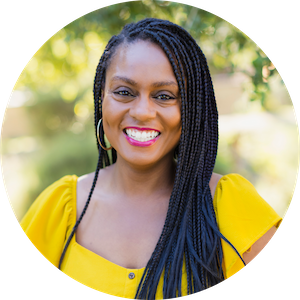
Ryann Blackshere Vargas is an award-winning journalist and host. She has reported for media outlets including Spectrum News and NBC News. Ryann currently serves as a media consultant for the Back From The Brink campaign. She is an alumna of the Columbia University Graduate School of Journalism.
Production Team
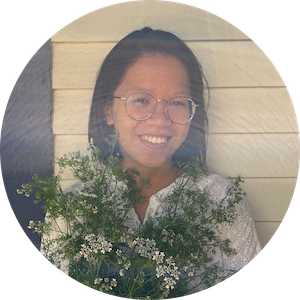
Jiayu Liang is a writer and communications professional in the Greater Boston area. In addition to supporting public education initiatives at Back from the Brink, she has also worked in higher education and nonprofit environments covering topics including climate science, public health, and environmental conservation. She has a B.A. in science communications from Vanderbilt University and an M.S. in journalism from Columbia University.
Anthony Eyring (they/them) is the audio producer and creative lead for The Back from the Brink Podcast. Alongside their work on nuclear abolition, they've been active in climate change activism, illustrating children's books, producing billboards, videos, and creative marketing. They live just outside Cambridge, Massachusetts with their spouse, cat, and slightly overweight dog.
Follow us on social media
This podcast was made possible in part by a grant from the Andrew Carnegie Foundation, formerly Carnegie Corporation of New York. The statements made and views expressed are solely the responsibility of the author.
Nuclear abolition: There’s no other option
Listen to this ep. on Apple Podcasts or Spotify
The threat of nuclear war has loomed over us since the first nuclear explosion in 1945, known as the Trinity Test. Decades later, communities are still contending with the impacts of that test and all the nuclear weapons that have been built since then. As Tina Cordova and Molly McGinty work to address these harms and build a safer world, host Ryann Blackshere Vargas explores why this issue matters so much to them.
Guests on this episode
Tina Cordova is co-founder of the Tularosa Basin Downwinders Consortium. She is a seventh-generation native New Mexican seeking justice for the unknowing, unwilling and uncompensated, innocent victims of the Trinity Test.
Molly McGinty is the Program Director at the International Physicians for the Prevention of Nuclear War (IPPNW). She highlights the humanitarian and environmental impacts of nuclear weapons and advocates for their total abolition.
Resources mentioned in this episode
- Molly McGinty’s organization, IPPNW: https://www.ippnw.org/
- Molly’s work with medical students: https://www.ippnw.org/home/medical-students
- Tina Cordova’s group, Tularosa Basin Downwinders Consortium: https://www.trinitydownwinders.com/
- The documentary “First We Bombed New Mexico”: https://www.firstwebombednewmexico.com/
View Episode Transcript
Tina Cordova: I often say to people, you may survive the testing of a nuclear device. You may survive the limited use of a nuclear device, but it will be the beginning of the end for you because that's what it's been for us.
Ryann Blackshere Vargas: That was Tina Cordova. Powerful, isn't she? She grew up near a nuclear weapons testing site in New Mexico and has dedicated her life to fighting for a safer, healthier world. She and Molly McGinty are our two guests today.
You're listening to the Back From the Brink podcast, a limited series where we explore why a world free of nuclear weapons is both necessary and possible. I'm your host, Ryann Blackshere Vargas. I'm a journalist, and like you, always learning how we can make this world a better place.
So I have a question for you. What kind of world do you want to live in?
We recorded this in early 2026, and as we prepared for this episode, the world started to feel a lot colder. The last arms control treaty between the U.S. and Russia has expired. It's been
looking like the U.S. might actually resume testing nuclear weapons again. And traditional diplomatic routes are starting to break down. I'm sure you remember, as I do, learning about nuclear weapons in school. I remember being horrified that world leaders have the power to kill millions of people in a matter of minutes. But that always seemed to be a threat of the past, a relic of the Cold War.
Today, nuclear weapons aren't even at the top of most people's priorities. But the more I learn, the more I'm certain that needs to change as global tensions rise. In fact, experts at the Bulletin of Atomic Scientists say we're closer to nuclear war now than we have ever been in the past.
That's truly terrifying. Can we change that? How do we keep our families safe? Could we really get rid of nukes?
All I have are questions. So I spoke with people who have the answers. Because I want to better understand what a world free of nuclear weapons looks like, and more importantly, how we can get there.
Today, I'm wondering what the modern threat of nuclear war looks like. So I wanted to speak with the activists and people who work on abolishing nuclear weapons every day. Why does this issue matter when there's so much else going on? So much going on. And what's motivating younger activists to get involved?
Our first guest, Molly McGinty, is the perfect person to answer these questions. She's the program director at IPPNW. That's the International Physicians for the Prevention of Nuclear War. Like so many young people, she cares deeply about building a happier, healthier, and more just world. And she started seeing connections between nuclear weapons and other issues she cares about. So she decided there was only one possible course of action. I'll let her tell you that story.
Ryann Blackshere Vargas: All right. Well, Molly, thank you so much for joining the Back From the Brink podcast. It's an honor to speak with you today.
Molly McGinty: Yeah. Thank you so much for having me. I'm so excited to be here.
Ryann Blackshere Vargas: Well, I'm excited you're here. The more I learn about you, the more I admire your passion for nuclear disarmament. So I was reading a little more about
your academic background. I know you have a degree in social work and gender and sexuality studies. Tell me how you got to that. What led you to those interests? And how does that inform your work and your activism?
Molly McGinty: Yeah. So I, like many people in teen years, was deeply unsure of what I wanted to do. I didn't really feel like I had much of a path. I knew I wanted to go to school, and I knew I wanted to do something that helped people in the broadest way possible. And when I was in high school Mike Brown was murdered by the police here in the States, and it really awoke a conversation in my community about police violence, and police violence against people of color. And from, really that was, I think, 2013 maybe or 2014. So a few years after Trayvon Martin's death. Really awoke a passion for me to kind of learn about what was really going on around the world and what role folks can play, myself included, in pushing back against all of these deadly norms that have just kind of existed parallel to me my whole life. That's a long way to say that I went into school hoping to help people and trying to figure out a way to do it.
Ryann Blackshere Vargas: So from my understanding, you eventually started working in nuclear disarmament in 2019 as a Quaker Voluntary Service fellow. So how did you learn of that opportunity, and what was that like? What was that experience like getting your toes wet into this space, nuclear disarmament space?
Molly McGinty: Yeah. So I learned about Quaker Voluntary Service, or QVS, through the Friends Committee on National Legislation, which is a DC-based lobby group. My senior year of college, I had a fellowship program with FCNL where I was working on police demilitarization advocacy in my local community in Salisbury, Maryland, where I went to school. That was the first time I'd ever engaged with Quakers before and really valued – again, I grew up Catholic – but really, really valued kind of the Quaker model of, just a basis of care for one another and a basis of justice as a form of care for one another, kind of fighting for one another to show love and community.
My beginnings with advocacy started with the Black Lives Matter movement, but my work with FCNL on police demilitarization really broadened my perspective on militarism. I was really drawn to IPPNW, which is the International Physicians for the Prevention of Nuclear War, where I still work today. I was really drawn to IPPNW. At the time when I applied, I knew absolutely nothing about nuclear weapons. I, again, do not have a background in international relations. And then that led me, when I saw IPPNW, to say, "Oh my gosh, nuclear weapons are still around?" It was genuinely one of the first questions that came to mind, and this is a problem that actually matters. And then going through the website, learning about the humanitarian impacts, I was like,"Oh, okay, this sounds like something that I wanna be a part of," and something that, I'm really grateful that they were able to take me on for what was meant to be a year, and really educate me from the ground up about what we can do about this problem and why it matters for people to act today.
Ryann Blackshere Vargas: Can you talk a little bit about how you felt at that time? Like you said, you touched on it, which was, "Wow, nuclear weapons are still around?" You know, what was your feeling then? Was it like, is it a sense of hope – I can do something about it. Is it a little bit scary? You know, I wanna get your sense and your feeling as a young person kind of in the realities that you are now finding yourself learning about.
Molly McGinty: Yeah. I wish I could say that one of my first, second, or third thoughts was hope, but I would say my first 10 thoughts was fear and a sense of overwhelm. You know, kind of like a bubble bursting or popping or a dam opening. You know, just like, "Whoa, okay. Now here's another thing to worry about in addition to everything else that's going on."
I mean, by the time I came in in 2019 the Ban Treaty was already adopted by the UN General Assembly, the Treaty on the Prohibition of Nuclear Weapons, which was an easily accessible, ready-to-use tool for me. So, you know, I was coming in after not just two years, but after decades and decades and decades of activists working on this issue and trying to find ways, successfully finding ways to bring people in. So the fear was definitely there. But again, I came in at a very, very good time to just kind of grab on and figure out where I was most needed.
Ryann Blackshere Vargas: Much of your work has focused on the power of grassroots organizing and youth-led movements. Why do you think youth should be at the forefront of nuclear disarmament, particularly when there are so many other pressing concerns nationally and internationally?
Molly McGinty: You know, this is a question I get asked a lot and something that I consider frequently when I'm doing outreach to youth groups, whether that's medical students or other, you know, climate groups that are youth-focused, or other youth-led and youth-centered groups, because it is inherently a terrifying thing to learn about and a terrifying thing to share. So the question often comes up in my mind of, is this the right thing to do? Is it the right thing to scare people and to kind of have the dam burst for them as it did for me?
And I come back over and over again to yes, it's a duty of care to share this information with, young people because, you know, at the end of the day, we're inheriting the world that's being created today, whether or not we know about each and every one of the horrors that we are going to face. And you know, it is a privilege to not just know about this information, but to be able to act.
Not everybody is going to have this as their number one top social issue that they want to care about and push back against. But nuclear weapons are here. We're under their threat every single second of every single day, and they need to be part of the conversation and at kind of the top of our consciousness. Yeah.
Ryann Blackshere Vargas: You've advocated for nuclear abolition at local, state, and national levels. What makes you believe abolition is possible, and what would you say to those who don't think it is?
Molly McGinty: Hmm. I would say that there's no other option, that things are so dire right now. Countries around the world are threatening to build their own nuclear arsenal. What's happening right now is not sustainable. It's clearly not working. We're lucky that we've made it this far.
I think the other piece to this is that nuclear weapons are not some sort of natural phenomenon. They're not out of our control. It's not like a storm is coming and we just have to wait for it to pass. We have control over the weapons. We built them over decades, but we have the ability to dismantle them just as, if not more easily.
Ryann Blackshere Vargas: Why is it important that women be part of these conversations surrounding nuclear abolition and people of color as well?
Molly McGinty: I think like every other issue, every single person needs to be in the conversation. You know, without everybody in the conversation, we're not going to have the bold actions required, the bold ideas, the new ideas to make change. You know, for much of the 20th century when these weapons were being built, it was men in charge of both building the weapons, creating the weapons, and in charge of arms control, risk reduction, other types of measures. And at that point in time, all of the nuclear arm states were northern western states, so you think of the U.S., Russia, France, and Britain, while states primarily in the Global South, were non-nuclear weapon states.
So today, those non-nuclear weapon states are taking back that power through the Treaty on the Prohibition of Nuclear Weapons and saying, "We're no longer willing to accept this as a reality." That includes people of color. That includes women. You know, women have really been at the forefront of ICAN, the International Campaign to Abolish Nuclear Weapons, saying, "We're not accepting this anymore. We're not waiting for somebody to ask us to have a seat at the table. We're building something new here." So I think having people that haven't always been a part of the conversation, you come in and you can see it in a whole new light, and you can have new ideas about how to do it.
There's also studies from the UN that peace talks are more successful when women are at the table. So whether we're looking at peace, whether we're looking at disarmament, women generally, are incredible communicators, and have an ability to connect with one another and not have some of those barriers that I think have always existed in these spaces.
Ryann Blackshere Vargas: Yeah, I really appreciate you talking about that because I do think that's important that there is, like you said, this is the world that we'll all inherit, and so it is so important to amplify youth voice, but really feeling, you know, identifying with the folks that are part of the community, so you yourself. So I hope there's, you know, folks that are listening and watch this who can see themselves in you and say, like, "There's a place for me, too. " Because that, that is so important. If you can talk a little bit about what you are doing with medical students and why, you know, grabbing and getting the attention of young people is so important right now.
Molly McGinty: So yeah, our work with our medical students is the forefront of IPPNW's work. And they do a number of essential advocacy activities. One of the really exciting things that they're working on that I get to support is looking at the connection between nuclear weapons and the climate crisis. So obviously many young people, you know, grew up concerned about the climate crisis. That's been kind of front of mind for generations now. But knowing that the climate crisis is accelerating and is getting further and further out of our control as red lines are crossed time and time again with the fossil fuel industry. They're looking at the connections between the climate crisis and nuclear weapons, which many people in this space talk about, and it's exciting to have our medical students play a role in that.
Ryann Blackshere Vargas: There's folks who are doing so much, you're doing so much personally, to advance this cause. Did you ever feel, though, a little fatigued or distraught by what's going on? And what do you do when you, when you have those feelings?
Molly McGinty: Yeah. I definitely feel fatigue. And I have 100% at times felt hopeless. At times it does feel like you're kind of spinning on a hamster wheel and the wins can feel, and can truly be, far and few between. So I think one piece to that is when you can, celebrating your wins when you have them. I found that that can be as small as I had a really good conversation with a medical student and they left our meeting planning to do X, Y, and Z. And then I talk to them in a month and they've done X and Y. That's huge. You know? That means that people are doing things and that the work is continuing on.
The other element to it is, that change can happen at any time, and historically does happen when things seem the most bleak. And I think we've learned through history that when things seem most dire and are most dire, something has to break. And I think right now, my hope and belief is that the thing that's going to break is the continued existence of nuclear weapons. But whenever we can, reminding ourselves that we have to keep moving.
Ryann Blackshere Vargas: What does a world free of nuclear weapons look like to you?
Molly McGinty: I might get on my, my cliches and I might get on a soapbox, but, um, it's one that, A I think is possible, and B, is a world that's based on cooperation, mutual understanding. Not a world based on threats of violence and threats of mass death, which is what we're living under right now. You know, one of the things that we often talk about in this climate nuclear nexus space is that as we build a world of nuclear weapons, it's going to require multilateral diplomacy. It's going to require trust through verification and through other processes. It's going to require trust and investment in the UN, through the IAEA, and through other bodies which we're really not seeing right now. And I think through that process, we will also learn how we can better respond to the climate crisis, how we can shift our priorities and shift our needs.
You know, without $10 billion annual investments in nuclear weapons, which is what we spent in 2024 alone on nuclear weapons, we'll be able to spend money on a just transition from fossil fuels to renewables. We can spend more money on public goods like transportation, education, healthcare, you name it. You know, we'll be able to completely shift where our priorities lie and what goods are seen as essential.
Ryann Blackshere Vargas: Molly, what brings you hope?
Molly McGinty: What brings me hope are the incredible people in the disarmament space. I'm frequently blown away by the great work of people around the world. That includes the United States and in every corner of our globe that are spending their precious minimal free time to work towards the abolition of nuclear weapons. I think I see a special side of this working with doctors. You know, there are physicians in IPPNW who, for example, our board chair, Dr. Ruth Mitchell, is a pediatric neurosurgeon that goes into surgery multiple times a week. And then in her very, very limited free time, joins IPPNW board meetings, speaks to the press, and publishes articles on the humanitarian impacts of nuclear weapons and the need to get rid of them. My hope comes from people that are willing to dedicate so much of themselves to this work. And they too see that a world without nuclear weapons is necessary and is possible. So, I will too.
Ryann Blackshere Vargas [NARRATION]: That was my conversation with Molly McGinty. More information about her work at IPPNW is in the show notes. This podcast is part of the Back From the Brink campaign, which has been working for years across the United States to bring communities together and prevent the growing threat that nuclear weapons pose to our health, environment, and all we hold dear. Information about how you can get involved is at the end of the episode and in the show notes.
In our next interview, we're going to go back to the beginning of the nuclear era. It's 1945 in South Central New Mexico, and the U.S. has just conducted the Trinity test. That's the first ever detonation of a nuclear weapon. The resulting radiation creates generations of Downwinders, or people who became ill from living downwind of the sites. And no, they were not informed of or protected from this massive exposure to radiation. It's a chilling history that may be repeating itself. For the first time in decades, a U.S. president is threatening to restart nuclear weapons testing.
To understand what this means, I reached out to our next guest, Tina Cordova. She's a seventh generation native New Mexican who grew up in the aftermath of the Trinity test. This background inspired her to found the Tularosa Basin Downwinders Consortium. And if you're trying to decide where you stand on the issue of nuclear disarmament and abolition, well, Tina has a message for you. So stay tuned for that.
Ryann Blackshere Vargas: Well, Tina, hello. Thank you so much for joining the Back from the Brink podcast. It's an honor to speak with you today, and the more I learn about you, I've been doing a lot of research about you, and I see that you've spoken out about nuclear weapons for decades. There's a lot of information about you. But I'd like to start with little Tina. Where did she grow up? Where was home? And what, who was around to watch her grow?
Tina Cordova: I grew up in a small village in southern New Mexico called Tularosa, and Tularosa was a town of about 3,500 people. And I grew up being raised in a family with a father whose name was Anastasio Cordova and a mother named Rosalie Cordova. I have three siblings. I'm the oldest, and we actually lived in a very idyllic place. I couldn't walk, you know, [chuckles] away from my home and not run into either somebody I was related to or somebody that I knew very well. The whole, the whole village raised the entire group of kids growing up when I was growing up. And I always tell everybody, I felt like I grew up in an Eden. We had a garden and grew almost all the vegetables that we ate, and so it was very, it was very idyllic. Everybody took care of each other. It was wonderful. I felt very blessed. It was really very, very simple, but very full.
Ryann Blackshere Vargas: Simple but full. I love that, and I love the idea of... It sounds like the neighbors and the village was part of your upbringing. Like, everyone was together. Is that right?
Tina Cordova: Oh, that's absolutely true. Everybody lived within walking distance, so if I was out and about and I got hungry, I could stop at one of my grandmothers’ house and grab a sandwich.
Ryann Blackshere Vargas: Did you guys ever hear stories of what had happened near your town as you were growing up, or is that something that you came to realize later?
Tina Cordova: I'll never forget this. There was a woman, and everybody knew who she was. She was such a strikingly beautiful woman. She had a young family, and she got brain cancer. And I remember the ladies talking, I'll never forget this, because somebody said it was probably because of the bomb. And it was really kind of one of those moments where when I heard “the bomb,” then I started thinking, "What are they talking about?" I can remember a lot of that stuff, and I do remember people clearly talking about the reason people were so sick was because of the bomb.
Ryann Blackshere Vargas: Can you talk about when you realized that there was something happening, there was a sickness happening within your family?
Tina Cordova: In his early 60s, my dad developed cancer at the base of his tongue, and he didn't have risk factors for that. He didn't have... You know, my dad wasn't a smoker, rarely drank alcohol. And I remember speaking to the surgeon that did this, the eight-hour surgery that he went through, and the surgeon told me, "This just doesn't happen, but we see it all the time in New Mexico."
When I went to college and started studying the sciences, it became crystal clear to me that this is why people are so sick, and this is why people are dying. We were very likely overexposed to radiation, uh, living adjacent to the Trinity site.
Ryann Blackshere Vargas: I just wanna pause, you know, in remembrance of your father and those who, you know, had to suffer the consequences of the cancer and the horrible reaction to that test. So I just wanna pause there and, and, you know, give my sincere condolences to that. [pause] So Tina, this is obviously very personal for you. Obviously, there's your personal story, but then there is a journey for you to become an activist and to speak out on behalf of your family and your community. What is that journey that led you to say, "I will be a voice for this. I won't just be, you know, someone that watches this happen in my community, but I will speak out"?
Tina Cordova: So I co-founded the organization 21 years ago with a gentleman named Fred Tyler. He has since passed away. Fred had a career away from Tularosa and had returned, and he wrote a letter to the local newspaper, a letter to the editor, and basically what he said was, "I've been away for 25 years. I'm back now. My mother just died after having multiple cancers. And when are we gonna hold the government accountable for the harm they did to us when they detonated the bomb here?"
And I called him up and I said, "Fred, I don't live in Tularosa any longer. You're there. My family's been through the same thing your family has been through." And I said, "We have got to do something. We've got to start an organization. We have to start giving people a safe place to come forward with their histories so that we can learn more about whether indeed what we believe is true is true."
And within a week of that phone call, I made a trip down, we sat down at his kitchen table, and we started to sort of chart out what we thought would be a process. And we scheduled a town hall meeting, and we asked people to come forward and let's have a discussion, and I was pleasantly surprised because 50 people, about 50 people showed up, which I thought, you know, if we can get 50 people or so, that'd be great, and sure enough, we did. And I think I thought I understood this, but it wasn't until I heard all those stories, and I remember at the end, because by this time I had already been diagnosed with my cancer, I'd already been through my treatment, and then I asked the question, "How many of you either have thyroid disease or have had thyroid cancer?" And I imagine about 75% of the people in the room raised their hand. And it was that confirmation I needed. And then I really did start to, um, explore all of this.
First of all, I learned, you know, about the test itself and that there had not been any warning to the public before or afterwards. I learned very quickly that they had counted on the people
in New Mexico to be unsophisticated, uneducated, unable to stand up for themselves, and that aggravated me in a way that I can't even describe because I thought, you know, they came here, they invaded our lands and our lives, they destroyed everything that we depended on because we truly did live off the land.
In 1945, when they detonated the bomb, we didn't have running water. We had cisterns, we had holding ponds, we had ditches, rivers, lakes, streams. We counted on the rain that fell from the sky. A cistern basically was a catch basin. The water was directed off the roof of your house into this catch basin. That water was precious. It was only used for drinking and cooking, and, you know, everybody planned on other methods for gathering water to be used for cleaning and bathing. And of course, our water supply was then completely contaminated. And we also didn't have electricity readily available, so nobody had refrigeration, which meant you couldn't go to a grocery store and buy things like, you know, dairy, meat, or produce. You could buy sugar, flour, coffee, rice, cereal, but you could not buy anything that was refrigerated, so all of the food that we ate was basically produced by our own means in our own home.
When I started to consider all these things, I thought it's the perfect storm. You know, the bomb was detonated in a way that created massive fallout. It was tremendously over-packed with plutonium. Only three pounds of plutonium were necessary for the fission process, but because they had to make sure that it was a go, they packed it with 13 pounds of plutonium, so 10 pounds of plutonium went up in that fireball and dispersed plutonium only God knows where, and it has a half-life of 24,000 years.
The more I explored, the more I learned, the more aggravated I became with the whole idea that we were just collateral damage. You know, I can only say this much. It was so hard for me to process that they thought so little of us. And when I thought about all the sacrifice and the suffering I had seen people do, I became so angry and so unable to let go of any part of this. I just decided that it had to become my life's work. It had to be what I would focus my time and energy on.
Ryann Blackshere Vargas: Obviously, you have your personal story, but there's so much going on in the world, so many issues that people could be focused on, that you could be focused on. Why is it important for you to continue to talk about this now and in the future?
Tina Cordova: I firmly believe that we are in a very dangerous time as it relates to the nuclear history of our country right now. We have no treaties in place that effectively control the way that nuclear devices are developed, tested, or used, and, you know, we're gonna enter a new... We are [laughs] already into a new nuclear arms race. They're building plutonium pits at Los Alamos labs, and we have not taken care of the environment that they basically destroyed the first go around.
I often say to people, "You may survive the testing of a nuclear device. You may survive the limited use of a nuclear device, but it will be the beginning of the end for you, because that's what it's been for us." And everybody needs to understand that there are real human
consequences to all of these things. I can't even fathom that we would start to test again when we've never taken, adequately taken care of the mess we made when we were testing nuclear devices at the rate that we were. I can't even imagine somebody thinking that the limited use of a nuclear device is okay. There are no winners. There's just losers.
Ryann Blackshere Vargas: What would you say to those that believe in nuclear deterrence, that, you know, well, one, we already have nuclear weapons, so it's too hard to remove them or get rid of them and not do that again, and that nuclear weapons keep us safe? I mean, how do you feel? What is your response to that, Tina?
Tina Cordova: It's insanity. I mean, I don't believe at all in the idea of deterrence, and I believe that the only thing that makes sense is complete abolition. The only thing that makes sense to me is not more guns, and certainly not more nuclear devices, and certainly not depending on everybody to play fair. You only have to have one madman with his finger on the, you know, the detonator to make this go really badly.
Ryann Blackshere Vargas: Doesn't that feel like an uphill battle sometimes, a huge battle? Have you ever felt that way, that it just feels overwhelming, the amount of work that has to be done in order to convince minds and hearts, and to get people aware of the need to get rid of these weapons?
Tina Cordova: Through all the years that I've been doing this work, I've lost count of the number of people who have told me they're never gonna acknowledge. They're never gonna offer us any kind of reparation. And I have said many times, "I will do this work until the time that they acknowledge and support us, or until the time they put me in the ground." And for those of us who truly believe that we can stand up and be heard, there comes a point of no return where you feel that way, where you start saying, "It's either gonna happen or they're gonna bury me trying." And for those of us who believe in abolition, for those of us who believe in disarmament, for those of us who believe in those processes, we have to believe that way. We have to believe that we're gonna do everything we can. It's how a movement works.
Ryann Blackshere Vargas: What is a successful result of your advocacy that you're most proud of?
Tina Cordova: In 1990, the U.S. government established a program called the Radiation Exposure Compensation Act, and that law existed for 31 years before New Mexico was included. And basically, RECA paid claimants in parts of Arizona, Utah, and Nevada, but never included the Downwinders of New Mexico although, you know, we were the first people exposed to radiation from an atomic bomb or test. And now, the people of New Mexico, the entire state, because our, our state was not only irradiated by Trinity, it was irradiated by the Nevada testing that took place, and that's a well-established fact because they had monitoring stations here that was, they were... Those monitoring stations showed that New Mexico received radiation from the Nevada testing.
So now people from throughout New Mexico that lived here for one year between 1944 and 1962 when they stopped doing above ground testing, if you lived here for one year and you have one of the 19 compensable cancers, you qualify for a one-time payment of $100,000. And you can also apply on behalf of a deceased spouse, a deceased child, a deceased parent, or a deceased grandparent.
So recently I received a call, and it was from a woman that I grew up with. She and her husband were high school sweethearts. They got married right out of high school, and about 15 years later, he died from brain cancer. She had to become the sole provider now for a family, not something she had intended or was expecting to do. And, you know, her family scraped by. And she was calling to tell me that the Department of Justice was asking her for her bank account information so they could make the deposit into her account, and she was crying, and she told me, "You have no idea what this means for me and my family." That does mean everything to me, that you're gonna get your money after all the years that you suffered as a single mom and without your spouse. I just... That means everything to me.
Ryann Blackshere Vargas: What brings you hope, Tina, in this work? What is your vision for the future that really keeps you excited and keeps you going?
Tina Cordova: 21 years ago when I first started doing this work, no one wanted to talk to me. No one wanted to hear this history. No one believed me, you know? And today I'm speaking with you, which is significant. You're interested in hearing about this. Last week I was interviewed by two architectural students from New York who are doing a thesis paper around building a permanent memorial to the Downwinders of New Mexico. I'm working with a graduate student from Amsterdam. She happens to be from New Mexico, but she studies in Amsterdam, and she's working on a project about what do adequate reparations look like for Downwinders across the world. You know, I work with organizations like ICAN to communicate the message of what it was like to be the first people exposed to radiation. More people now are reaching out to me because they wanna understand this history and because they cannot believe they don't know this history. That gives me hope.
It gives me hope when people want to engage with us, want to know more, and especially when young people are very, very interested in knowing more so that they can stand up for their own futures. And that's what I'm finding with the many young people that I interact with these days. That gives me hope because it is our job as the elders that work on these issues to make sure that we bring along our young folks who are gonna inherit this very pressing issue. And so I'm always impressed when I hear from somebody that's not from New Mexico, and they're young, and they wanna embrace this history as part of how they educate themselves around what to do relative to our current nuclear situation. And I mentioned earlier that we have this amazing award-winning documentary called First We Bombed New Mexico, and I think that if people are interested, they can go to the website firstwebombednewmexico.com, and they can actually see the trailer and learn more about the history of how the documentary was made.
Ryann Blackshere Vargas: Is there anything else that you wanted to mention or that I didn't ask you?
Tina Cordova: I just want to say probably in closing that this is not over for us. You know, one of the ladies on our steering committee said one time, this is our nuclear past, our nuclear present, and our nuclear future. For people who've been overexposed to radiation, it goes on and on. And, you know, I can only hope that people can embrace that idea as they decide where they stand on the issue of disarmament and abolition.
I mean, we absolutely cannot continue down this road. It's not sustainable. Imagine putting all this money. We spend 50 billion dollars annually just maintaining our nuclear arsenal in the United States, 50 billion dollars putting our nukes to bed at night. And can you imagine what we could do with all of the money we're spending now on building plutonium pits that we don't need and likely will never use? Trillions, trillions of dollars. And it just, until people stand up and say no more, this goes on. So everybody has an opportunity to stand up and say no more.
Ryann Blackshere Vargas: Well, I think one of the best ways to do that is to listen to survivors and families of survivors, listen to people's stories. So thank you for sharing the memory of your father, your mother, your story, your siblings, your community and the damage, but also the beauty of how you grew up and your concern for all of our communities.
Tina Cordova: Well, thank you, Ryann, and thanks to Back from the Brink for considering our voice as part of the podcast that you all produce. We really appreciate this opportunity.
Ryann Blackshere Vargas [NARRATION]: That was today's episode of the Back from the Brink podcast. Thank you again to our guests, Molly McGinty and Tina Cordova, for taking the time to share why this issue matters so much to them and is so personal. Check out the show notes for more information about Tina's work at the Tularosa Basin Downwinders Consortium and Molly's work at IPPNW. If you're feeling inspired by our conversations today and looking for tools to get involved, head to our website, preventnuclearwar.org.
Next time on the Back from the Brink podcast, we're going to dive deeper into what U.S. nuclear policy looks like to better understand why it needs to change. Spoiler alert, we're creating a lot of needless risk.
This podcast was written and produced by Jiayu Liang, Anthony Eyring, and me, Ryann Blackshere Vargas. Thank you also to the entire Back from the Brink team who helped out. It was made financially possible in part by a grant from the Andrew Carnegie Foundation, formerly Carnegie Corporation of New York. The statements made and views expressed are solely the responsibility of the author. If you're enjoying this limited series, please take a second to rate and leave a review on your listening platform. It really does help more people discover the show. Until next time, we wish you peace, joy, and a world free of nuclear weapons.
Is this what safety looks like?
Listen to this ep. on Apple Podcasts or Spotify
For as long as nuclear weapons have been around, we’ve been told that they keep us safe by deterring other countries from attacking us. This theory is known as nuclear deterrence. But is it actually keeping us safe? Guests Dr. Chuck Powell and Dr. Rebecca Gibbons have seen firsthand the impact of thinking this way, and they share what they learned with host Ryann Blackshere Vargas.
Guests on this episode
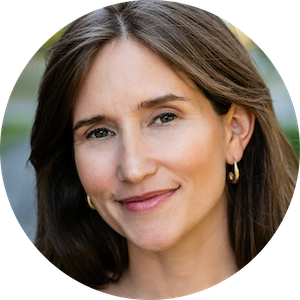
Dr. Rebecca Gibbons is an associate professor of political science at the University of Southern Maine and the author of The Hegemon's Toolkit. She was an academic co-chair of the Beyond Nuclear Deterrence Working Group, an initiative of the MacArthur Foundation and Harvard University’s Project on Managing the Atom.
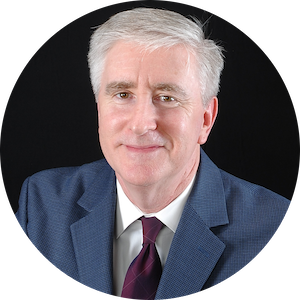
Dr. Chuck Powell serves on the Board of Directors at Daisy Alliance, a non-profit focused on broadening education and awareness on the risks posed by nuclear weapons. He is also a Professional Certified Coach, a former U.S. Air Force missile launch officer, and a retired Healthcare Executive. His new book, Unicursal, a speculative novel about nuclear war, comes out July 14, 2026.
Resources mentioned in this episode
- Rebecca's book The Hegemon’s Tool Kit: US Leadership and the Politics of the Nuclear Nonproliferation Regime: https://www.cornellpress.cornell.edu/book/9781501764851/the-hegemons-tool-kit/
- Rebecca's article "Getting beyond nuclear deterrence: a research agenda": https://doi.org/10.1080/10736700.2025.2575524
- Rebecca's article "After nuclear deterrence: insights and uncharted frontiers": https://doi.org/10.1080/10736700.2025.2588472
- Rebecca’s article “The humanitarian turn in nuclear disarmament and the Treaty on the Prohibition of Nuclear Weapons”: https://doi.org/10.1080/10736700.2018.1486960
- Daisy Alliance, where Chuck is a board member: https://www.daisyalliance.org/
- Chuck’s book Unicursal: Redemption in the Age of Nuclear Annihilation: https://www.barnesandnoble.com/w/unicursal-chuck-powell/1149852073
- Chuck’s coaching services at Encompassing Leadership Associates: https://www.allcanlead.com/
View Episode Transcript
Chuck Powell: I start getting into this training with the nuclear weapons and realize, you know, how much damage can be done, how much damage will be done to civilians, how much damage will be done to the environment and animals, and all... And I was just like, "What have I done?" [gentle music]
Ryann Blackshere Vargas: That was former US Air Force missile launch officer, Dr. Chuck Powell. His is one of two extraordinary conversations that highlight the human cost of nuclear deterrence and the fallacy of the current nuclear weapons policy. You're listening to the Back From the Brink Podcast, a limited series exploring why a world free of nuclear weapons is both necessary and possible. I'm your host, Ryann Blackshear Vargas.
Nuclear weapons keep us safe. Well, at least that's what we've been told and sold. We need nuclear weapons to deter other countries from dropping the bomb on us. Yeah, that's the basic logic of nuclear deterrence.
The idea that nuclear weapons prevent war by threatening overwhelming retaliation reminds me of my friend's dog, Lucy. All right, all right, just stay with me here. Like a lot of dogs, Lucy barks when she thinks someone or something is near the door. Now, it's usually a passing car or a bus or whatever, but she keeps barking until, in her mind, the crisis has been averted. So to Lucy, barking her face off has led to 100% security.
Now, of course, nuclear deterrence isn't literally a barking dog. The stakes are unimaginably higher, but the logic is similar, thinking that the absence of disaster is somehow proof that the system works. And that's why deterrence theory is just that. Theory. It points to wars that didn't happen, attacks that didn't launch, to justify threatening mass murder.
And the people making those judgments are a small, insular group, historically shaped by military institutions and Cold War thinking, not by the communities living under the shadow of those decisions. An even smaller group of people are actually tasked with launching those weapons if called to do so.
Today's guest is one of those people. Former US Air Force missile launch officer, Dr. Chuck Powell, was a young officer who once held the literal responsibility of launching nuclear weapons. He, too, was told nuclear weapons keep us safe, but from inside the system, he began to question the very idea that deterrence guarantees safety or even control.
Ryann Blackshere Vargas: Hello, Chuck. Thank you so much for joining the Back from the Brink Podcast. I'm really looking forward to speaking with you today.
Chuck Powell: Thank you, Ryann. I'm very much looking forward to talking with you as well.
Ryann Blackshere Vargas: Yeah, I've been reading a lot about you, and you have extensive military background. Where did your interest in the military come from? You can take me back to what interests you and what made you enter the military.
Chuck Powell: Yeah, it was kind of out of necessity. I was 18 years old and didn't have a lot of prospects, and so I joined the Air Force and it took really good care of me, taught me a couple, professional things healthcare-wise, and then I wanted to finish up and become an officer, and then I got into something completely different, which was a nuclear missile launch officer.
Ryann Blackshere Vargas: So what did you start off with? You said you were 18 when you entered. Were you interested in being a nuclear mission officer right away, or what was your journey through the military?
Chuck Powell: Oh, [laughs] no, I never dreamed. I was more about just stabilization, finding something that would employ me the rest of my life if needed. And so I went to X-ray technology school, and then I went to nuclear medicine technology school later on, and so I had those two professions which led me to a lot of different jobs, but helped me finish out my career as a VP of overall medical imaging at Emory University and Emory Healthcare in Atlanta.
Ryann Blackshere Vargas: So as you talked about, you wanted to work your way to officer, and from what I understand, you're a former US Air Force officer, right?
Chuck Powell: That is correct, yes.
Ryann Blackshere Vargas: Tell me your journey to becoming an officer and eventually a deputy missile combat crew commander. What made you interested in that role, and what were your responsibilities?
Chuck Powell: So I think back in those days, I was a very impatient man, young man, and trying to get to the place where I wanted to go to the fastest. And I was going to night school at the University of Maryland, finished up my degree, and I wanted to become an officer. Didn't care what type of officer, just wanted to become an officer. So the most expedient way to do that was to become a missile launch officer, which kind of sounded intriguing at the time.
And so I went to officer training school, and then I went to Malmstrom Air Force Base in Montana and served for two and a half years as a missile launch officer. Which was a rude awakening, because I had lived this life where I was always serving and caring for patients, and now I was in the operational war fighting side of things, and it was a completely different culture in the Air Force. Some people say that is the only real culture of the military, because that's their job is to fight. And in some respects, it was very good. It taught me a lot of self-discipline, a lot of attention to detail.
The Air Force, all the militaries after the first Gulf War offered an early retirement, and I wanted to get back into healthcare. It was just more natural for who I was. I was having a crisis of conscience. And so I got back into healthcare on the outside and got a little bit of a payout from the Air Force as well and got back on track. So once I got through officer training school, then I went to Santa Barbara to do the missile training.
Ryann Blackshere Vargas: Okay, so talk to me about going through this and being an officer during the Cold War.
Chuck Powell: Yeah, it was really serious stuff, and it still is serious, but you had that backdrop where you had all these nuclear weapons and you had the Cold War going on and a lot of uncertainty in Eastern Europe. So it was constant. And then you had things going on in the Gulf at the same time. So, it was a little intense. And it was… You had a front row seat to it because you got to go out on alert and you had briefings in the morning before you went out in the field. And so they would talk about the global situation. They would share intel of the global pic- And you're required to have the highest top secret clearance to be in nuclear missiles, so you got to see all this stuff. At the same time, and rightfully so, you were allowed no room for error. And so you had to take tests in war fighting. You had to take tests in codes which, the codes are what decide whether a missile can be launched or not. And then you had to go into a simulator every month and fight things like fires or nuclear wars or different things like that, or security incidents. So you're constantly training if you weren't out on alert with the missiles.
Ryann Blackshere Vargas: Wow. And so what is the message that you're being given from the military? Is it like, you know, you're saving the world? Is this a way, like, to protect the country? You know, how are you feeling when you're learning all this and, you know, giving this, the weight of this responsibility?
Chuck Powell: No, that's a really good question. On one level, I was a little surprised. When I first entered the Air Force, you had to take a mental health test, which kinda, in the end, it found some individuals that shouldn't be around weapons or anything like that. For us in nuclear weapons, we didn't take any tests like that. So I was always surprised by that aspect of things. That being said, everything else was just, from a safety standpoint, was just perfect. I could not figure out a way that you could do something, you know, make something happen accidentally. It was that safe. And in terms of, yeah, there was a lot of sternness, a lot of discipline in terms of, yes, you are, you have a very serious role. You have the responsibility to defend the country. You have the responsibility to deter global nuclear war or any other type of war. So yes, there was that constant message.
Ryann Blackshere Vargas: And so the responsibility is, from my understanding, for the role that you had is you had to know the codes because at any second you could get the briefing and you would, you would, and your fellow officers would be responsible for launching the weapon. Is that right?
Chuck Powell: Yeah. Basically, within your squadron, there's five launch centers out in the field, and there's two-man crews for each one of those. And each crew had responsibility for 10 nuclear weapons with three warheads on it, so actually 30 nuclear weapons, 'cause those warheads could split off. MIRVs, M-I-R-Vs, Multiple Re-Entry Vehicles. At other times, though, you might assume additional responsibility. So like, if, you know, your crew member would go to sleep for a while, another capsule would help you monitor your missiles. Or somebody, you know, in warfare, you could lose a bunch of missiles and you could have a bunch of launch centers, and the launch centers would actually do all 50 of those by themselves. So, which was 150 warheads. So dependent on the moment, but in the day-to-day, you had those 10 and just those 10.
Ryann Blackshere Vargas: And have you seen them before? You see the missiles? You've seen how small or big they are?
Chuck Powell: Yeah, you can actually go to some Air Force bases where they either, A, still have a missile program or they previously had a missile program, and they'll have an empty missile standing out front. I'm just estimating. To me, they were about 40 or 50 feet long, probably about six to eight feet in diameter with a cone on the top. So they're pretty big.
Ryann Blackshere Vargas: You also mentioned a crisis of consciousness. Can you talk about that? What was that feeling and what was the weight that you were carrying?
Chuck Powell: Again, I was an impulsive person in terms of my career, and all of a sudden I start getting into this training with the nuclear weapons and realize, you know, how much damage can be done, how much damage will be done to civilians, how much damage will be done to the environment and animals and all th- And I was just like, "What have I done?"
And so I even, I went and talked to-- And the Air Force has a great chaplain program. These are ministers of varying faith. You know, they could be Jewish. They could also be Muslim. They could be Christian. So they come at it from different angles. But you can talk to a chaplain and everything you talk about will be private, will be confidential. And the guy I talked to, I was very fortunate, he was very pragmatic, and he basically said, "Well, yeah, you could opt out of this now if you wanted to, but in the end you're gonna destroy your career. Your family's not gonna have this income, and somebody else is just gonna do the job.” And he wasn't discounting how I felt, but he was putting it in very practical measures for where I was in life. And, you know, I went ahead and did it, and I would've done my duty. I would've launched those weapons. I wouldn't have been happy about it.
And when I got the opportunity, when they offered the early retirement after the Gulf War, I was like, "Yes, take me." Because it, to me, it was just, it was heaven-sent to be able to get back to healthcare and caring for people.
Ryann Blackshere Vargas: Yeah, I just, I'm picturing that juxtaposition. Like you said, you had been learning to heal folks. You know, you were in healthcare. Then you have this experience of the weight of the responsibility of what could happen if these missiles are ever launched. And so you, you're kind of carrying both of these responsibilities in your hands. How did it feel then to go back to healthcare?
Chuck Powell: It was just such a breath. And, the more I have done healthcare and now I do leadership development, I feel it's so nice to be in a profession, and with a lot of the clients I work with now, I coach people to be better leaders. There's this reward when you care for people. So it's not just about that you're helping them, you get helped by helping them. And it's the same with leadership development. To me, it's the same with parenting, it's the same with teaching, which I've done as well. But I think it's also the same thing with trying to do, you know, what we're in now about trying to minimize nuclear weapons. It's a good feeling. It... You're not only bettering the world by trying to do that, you're being improved as well. You're being enriched.
Ryann Blackshere Vargas: And what made you take that journey, Chuck, from, not just getting out of being a missile officer and going back into healthcare, but actually being part of the effort to get rid of nuclear weapons? What made you become an activist in that sense?
Chuck Powell: So I think getting back into healthcare and really finding the meaning of caring for patients was a start. But in 2007, I went and decided to get my PhD, and my PhD was in leadership and change, because leadership is what I cared about. I had to go, "What do I care about that's gonna sustain me to getting my PhD and doing the dissertation and all that other stuff?" And so I went to Antioch University, and I think part of being there kind of started shifting my consciousness about being more caring about the planet and caring about people more deeply and, and what happens to people.
But I got to the point where it was time for me to choose my dissertation topic, and I really thought about it and I said, "You know, what's really meaningful?" And so I wanted to look at common purpose because I've seen the power of common purpose in healthcare and in education is a great way to lead people. And so I said, "What's a really strong common purpose that maybe I know something about?" And I said, "What about getting rid of nuclear weapons? What, what could be a greater common purpose than that?"
And so my methodology was interviewing activists who were working to get rid of nuclear weapons. And I wanted to see, did the common purpose of getting rid of nuclear weapons enrich those people who were involved in it? And these people were from around the world, different organizations. Some of them were students, some of them were doctors. Some of them were hardcore activists, the kind of people that lie down in the road and get arrested, you know? And so, it was just so cool to see all those different people coming at the same problem. And in the end, I feel like it did help them grow, and then it also sustained them. These people that have been doing this have been involved in this work for 20, 30 years. So it's been a lifelong thing for them.
And so after that, I remember I was interviewing one of them who was a lawyer, and he said, "What if you do this type of work someday?" And I was like, "I don't know. Maybe I will." But then I did get into it and became a board member for Daisy Alliance, and done some stuff with Back from the Brink, your organization. And so it did happen, and there's more that I want to happen because I have a book coming out in July that is about this exact topic, getting rid of nuclear weapons or preventing nuclear war.
Ryann Blackshere Vargas: Oh, okay. We gotta get back to that, Chuck. I didn't know about that. I just wanna ask you though, since you talked about your dissertation, I was actually gonna ask you about that and how you interviewed a number of leaders. Did anyone say anything that really stood out to you?
Chuck Powell: I think the thing that stuck with me and sticks with me to this day, and I absolutely think it's the only way for us to make a difference, is we have to get back to the 1980s in terms of consciousness. You know, there was 70,000 plus nuclear weapons back then, and people just said, "Enough." And they got out and they took to the streets.
I don't know how we do it with all the competing attention-grabbing things that are out there nowadays, but somehow we've gotta elicit that type of anger, caring, worry for people to wake up and say, "Hey, what is... [chuckles] What are we doing?" And it's even more dangerous now than it was then. Maybe not from the standpoint, we don't have so many nuclear weapons, but they're more lethal. The leadership over them is more erratic. We virtually have no treaties now governing these things. Somehow I think it's gotta be a grassroots thing where people are standing up and just saying, "We gotta stop this. We gotta reduce these things." And I kinda look at this differently, 'cause I don't know. I'm gonna say I don't know. This is such a complex subject. I believe in the end we have to get rid of all the nuclear weapons, but there's a lot of things that need to happen before that. We have to talk about how do we deal with conventional wars in the absence of nuclear weapons, or how do we deal with chemical, or how do we deal with bio? How do we deal with cyber? So it's a really complex topic. And the other way it's a complex topic is you have communities throughout the United States that are relying on this industry.
You know, the bad name for it is military industrial complex. But in reality, it's just people trying to live, you know? Trying to improve their lives, and this is their profession. And so how do you, how do you deal with that? So to me, those two topics have to be dealt with as you're dealing with reducing nuclear weapons.
Ryann Blackshere Vargas: That's wonderful. So tell me about your book. You said you're writing about this topic.
Chuck Powell: Yeah. I wanted a different way to, again, make people aware of this issue, that we got all these nukes laying around. We got this uncertain leadership of nuclear weapons. And that's the thing. We are not age appropriate for nuclear weapons. We are not ethically developed enough to have nuclear weapons. And you can see a similar thing starting to happen with AI as well. And so I just think it's so important that we have good leadership in place to help us get through this.
And so I wrote a speculative novel. It's a novel of impossibility, knowing what we know. But basically, it's about a very flawed individual, because I wanted to show the individual being able to grow while he went through this as well. A very flawed individual preventing a nuclear war that has already happened, and so that's the speculation part. There's some science fiction aspects to this, which I won't go into yet. Somebody's gonna have to buy it or, or read it.
Ryann Blackshere Vargas: Well, we'll have to read it in July you said, right, when it comes out?
Chuck Powell: Yeah, July it'll come out. It's called Unicursal, U-N-I-C-U-R-S-A-L. It's kind of like an Escher print, where you're just in this loop and you can't get out of it. That's what Unicursal is.
Ryann Blackshere Vargas: Unicursal. All right. Chuck, what gives you hope?
Chuck Powell: I'm gonna be a little hard on my generation right now. It amazes me, my generation, and there's a lot of exceptions to what I'm gonna say, but in general, we've created these issues, and it's like we're just handing them off. And so what gives me hope is the youth of today, or anybody younger than me. I think if we can get people to wake up in the generations after mine, and unfortunately we've left them with this mess. And I think people within my generation as well, but I don't think they're gonna be the ones that make the difference. I think it's really younger folk. And there's just a great organization that is allied with Back From the Brink, and that's Students for Nuclear Disarmament. And I just... You know, right there, if that could just mushroom and grow, I think it would be incredible.
Ryann Blackshere Vargas: I know that now you're an executive coach, right, who provides leadership and organizational development across the globe.
Chuck Powell: Yes.
Ryann Blackshere Vargas: How would you coach a world leader through the process of deciding whether to launch a nuclear weapon?
Chuck Powell: What's cool about coaching is you're not telling people what to do. You're actually... You establish rapport, and you listen to them. And you have to ask them really good questions. And you do this without any judgment of that person either, right? So, and then you listen for cues of what they're saying and try to understand, you know, what maybe the trigger points for them are, or the barriers. And so, I'd be very attentive listening on the front end to try to understand.
There's this great quote I read the other day by John Steinbeck. He wrote, "Armed with mass murder, our silly only way of deterring mass murder," which was speaking of nuclear weapons. We're using mass murder [laughs] to stop mass murder. And so you look for inconsistencies like that, and you dig in on those. "Hey, what's going on here? Let's unpack that."
So without getting too political, you have somebody in charge who says he wants to be the peace president. What greater way to be the peace president than to deal with this? 'Cause nobody, absolutely nobody, is immune from these things. None.
Ryann Blackshere Vargas: Maybe you'll be his coach one day and you can tell him that. [laughs]
Chuck Powell: As they say, that's above my pay grade. [laughs]
Ryann Blackshere Vargas [NARRATION]: That was my conversation with Chuck Powell. We'll link to his book in the show notes. The policy of nuclear deterrence can sow doubt in military officers just like Chuck, and also people whose land and life are threatened by the existence of nuclear weapons. In 1946, entire communities living on the Marshall Islands were forced to relocate so the United States could test their nuclear weapons there. US officials told the Marshallese it was, quote, "For the good of mankind." They ended up conducting 67 nuclear tests there, the equivalent of more than 7,000 Hiroshima bombs. This would permanently contaminate the land and reshape the futures of the people who lived there and hoped to return. Now that logic, that for the good of mankind you should sacrifice now for supposed security later, is the same flawed logic that still underpins nuclear policy today.
As a young teacher in the Marshall Islands, University of Southern Maine professor and our next guest, Dr. Rebecca Gibbons, taught children whose families were uprooted by US nuclear testing. She saw firsthand what acceptable risk looks like when it's ridden onto other people's bodies, their land, and their culture. That experience would shape her career interrogating the assumptions behind nuclear strategy itself.
Ryann Blackshere Vargas: Professor Gibbons, I'm really excited for you to join the Back from the Brink podcast, so thank you for joining us today.
Rebecca Gibbons: Thank you for having me.
Ryann Blackshere Vargas: I'm really interested in learning more about your background and how you ended up in this work. I know you're in academia now, but before that you were an elementary school teacher in the Marshall Islands, correct?
Rebecca Gibbons: Yes, that's correct. For a short amount of time.
Ryann Blackshere Vargas: Wow. So what led you there, and what was it like to teach there?
Rebecca Gibbons: When I was graduating from college, I knew I wanted to try to be abroad for a period of time before I figured out exactly what I wanted to do. And I was lucky in that there was a professor in the education department where I went to undergrad, and he somehow formed a relationship with the minister of education in the Marshall Islands, and he had started this program where he'd send recent graduates to different places in the Marshall Islands to teach for a year or sometimes two after graduation.
I wanna mention his name 'cause he did recently pass away, and he did so much in this space and was really attached to the Marshall Islands. He used to go and teach there in the winters. He put on musicals with the high school students. His name was Andrew Garrod. He was in the education department at Dartmouth College.
And so I went in September after I graduated, and I taught on the very small island of Kili. It's a 200-acre coral island, had not been inhabited by humans previously. I taught elementary school, a variety of subjects, during that time. And one of the subjects I taught was social studies. And so part of that was teaching, you know, sometimes eight-year-olds, nine-year-olds, 10-year-olds about how they came, their community came to live on that island, right? Because the community I was teaching in was part of the Bikini community. Kili was one of the places where the displaced Bikini population was sent eventually after being removed from Bikini Atoll in 1946 so the US could conduct the nuclear tests there.
And so, you know, I'm trying to explain to these young children who speak Marshallese and are learning English, but you know, I don't know Marshallese, they don't... They're learning English. And I'm trying to teach about the Cold War and why the US felt like it needed to develop these weapons, and not just the initial atomic weapons, but hydrogen bombs, you know, these thermonuclear weapons. And so it got me thinking a lot about the implications of nuclear testing and how we might not think as Americans about nuclear tests that we did in the '40s and '50s. And here, the legacy is forever with this community of people. And so I had a lot of time to think about what I wanted to do, and just thinking about the history of the nuclear testing, it got me thinking a lot about nuclear weapons. And then I went on to get a master's and then a PhD where I could study this issue more.
Ryann Blackshere Vargas: And this history that you're talking about, did you know the history before you went to the Marshall Islands? Were you also reading this from a textbook and then telling it to your students or...? And I'm thinking about you being on the island, having to look in the faces of children who learned about how, you know, they themselves, their families, their communities have been impacted by all of this is really heavy. I'm curious, did you hear any stories from the students or their families about how nuclear testing had affected them? And how did their stories, the history that you were teaching, that you were learning yourself impact the work that you do now? Did it influence you to go into the work that you do now?
Rebecca Gibbons: Yeah. For sure it did. I mean, I think what I took from the students is they heard from mostly their grandparents about this other place that they were supposed to live. And again, remember I said it was supposed to be a temporary move, and obviously it is not temporary, right? We're, you know, decades later and no one is moving back there. And so, I think that's kind of the legacy. It's like they live on this small place. The schooling only went to eighth grade, so if students want to pursue their education, they are leaving, right? They're gonna go to Majuro, the capital, and then a lot of people come to Hawaii or other places in the US.
And so I think that stuck with me as, like, how do you provide reparations for that kind of loss of history and culture? In terms of how it affects my work, I have done work looking at the ways that people are affected by nuclear testing around the world, right? So Aboriginal populations in Australia, people in Western China, obviously looking at the effects of the bombings of Nagasaki and Hiroshima, other Pacific Islands, Algeria. I did a report for UNIDIR at one point just looking at what it would mean to address the survivors, like to adequately address what survivors would want in terms of the countries that did this damage. Looking at, you know, whether it's financial reparations, apologies, information. Sometimes the countries that now have people, like in Japan or in Kazakhstan, those countries, you know, pay people and help people or provide healthcare, but not necessarily the capital where the decisions were being made to either use nuclear weapons or to do this testing.
Ryann Blackshere Vargas: You're the academic co-chair of the Beyond Nuclear Deterrence Working Group from the MacArthur Foundation and Harvard University. It feels like deterrence has been taken as a given for as long as nuclear weapons have been around. Can you define deterrence for our listeners?
Rebecca Gibbons: So just briefly, to deter is to stop another actor from taking an action because of a threat of some kind of punishment or retaliation for taking that action. So then when we think of nuclear deterrence, it means you're stopping an action, like an attack, you know, on your territory by using the threat that you might use nuclear weapons if a country does take that action, right? And so nuclear deterrence has been sort of the dominant theory of the use, of the utility of nuclear weapons for a long time by the states that possess them or are part of a nuclear alliance, right? Extended nuclear deterrence.
Ryann Blackshere Vargas: Something you said that is staying in my mind is that the Marshallese were told that moving was for the good of mankind
Rebecca Gibbons: Mm-hmm
Ryann Blackshere Vargas: And we spoke earlier with Chuck Powell, who was a US missile officer during the Cold War. And he explained that while deterrence was heralded in the military, he began to feel that deterrence didn't keep us safe, right? Him, someone who was responsible and tasked with launching these weapons if necessary. Why do you think that so many people still believe in deterrence? And what are some historical examples or evidence to suggest deterrence may not be what it's advertised to be?
Rebecca Gibbons: Yeah. So that is a really hard and a really good question. I think that this idea of nuclear deterrence has a long, relatively long and embedded history and strategic thinking in the nuclear age. And it went unquestioned for quite a long time. I also think those that are responsible for strategizing about what we do with our nuclear weapons are a relatively small group of people. And so even during the Cold War, when this was a salient issue, like nuclear weapons, nuclear deterrence, it still was a small group of people, mostly men, you know, who were engaged in thinking about this. So I think more recently, the kind of the lack of questioning comes from just the public doesn't think about this very much. And I would say, I mean, there is such a thing as conventional deterrence. I do think military deterrence is something that works.
And so I think the way that I question nuclear deterrence is not as much to say, "Well, nuclear deterrence has never worked," right? It's actually something that's very difficult to study, and to say it works or doesn't work, I think is quite difficult, right? Because you're studying cases of things that didn't happen if you're saying that deterrence worked. Saying that nuclear weapons kept the peace since 1945, and I think we have to be very careful about when we say kept the peace here, I'm talking about we haven't seen World War III, right? We haven't seen great powers attack each other as they did in World War I and World War II. There have been many conflicts in that time, right? The world has seen war. Even in the Cold War, there was over 70 proxy wars, so it's not like we've all been safe in this period, even if you buy into nuclear deterrence, right?
And so I guess where my kind of concern with nuclear deterrence comes from is more that there seems to be this, like, strong confidence that just because nuclear weapons haven't been used in war since 1945, that's how it's going to continue into the future. I do ascribe to some of the arguments that suggest there's many cases where we've been lucky, you know, and will that luck run out? I think the reason when you asked before why it stuck around so long, this idea, and why people have confidence in it, I think they're taking kind of what's happened in the past and saying, "We've managed it before, we'll continue to manage it," and that the history is one of them not being used in warfare, and that will continue. And I just, I wonder if that's, if we should have that kind of confidence.
Ryann Blackshere Vargas: What risks are we taking by betting that deterrence works?
Rebecca Gibbons: We're betting that nuclear war could happen, right? Nuclear war could escalate. I do think there's people who have some confidence that even if a "small nuclear weapon," you know, what we might call a tactical or theater nuclear weapon, was used in a conflict, that we could keep it from escalating from another one or another one or another one being used, you know, and increasing the size or the yield of these weapons. I'm not confident about that. We haven't tested that. We don't know. And I also just think it's really important to highlight when we talk about this idea of low yield or theater-based or tactical nuclear weapons, that we're talking about weapons that are... could be the same size as ones that were dropped on Hiroshima and Nagasaki, that those are relatively small yields compared to what's available now with thermonuclear, with modern nuclear weapons, which we can measure in megatons versus kilotons.
Ryann Blackshere Vargas: What are some alternatives that you would recommend to the deterrence-based nuclear policies that the US has right now?
Rebecca Gibbons: What I would love to see in the US is just any sort of public discussion about our nuclear policies, right? So we're in the middle of this modernization program. We're getting new subs. We're getting new intercontinental ballistic missiles. There is a new bomber that, you know, has capabilities for conventional payloads, but also will have, you know, some dual-capable aircraft that can drop nuclear weapons, you know. And that's... You see different estimates of what that would cost. Some people think by the end it will be $2 trillion to do all of this, right? This is expensive. And yet there's really no debate about it at all, really, in the public sphere. You know, I do think in a democracy that people should have a better sense of what's being done in their name, right? What we're threatening, what it means to have the nuclear arsenal that we have in the United States.
I think if you get to a place where nuclear weapons are only for deterring other nuclear weapons, then the logical, one logical conclusion of that is that you can get rid of them together, you know, as long as your adversary is doing it, whether it's some, like, slow phase down approach where you, you know, increase in trust, and obviously verification is gonna be a part of that. But we don't have that policy of sole purpose. We say that our nuclear weapons, that there are some contingencies, whether it's some future technology we don't know or biological weapons or, you know, our nuclear postures have not gone to the place of saying the sole purpose of nuclear weapons is to deter nuclear weapons. If you got to that place, then it's not a hard logical jump to say, "Well, if we all could come down."
But I do think arms control is broader than just treaties, right? There's confidence-building measures. There's communication tactics. There's risk reduction measures that can be taken to make the world safer while nuclear weapons exist. So that is something that, you know, hopefully future administrations will work on.
Ryann Blackshere Vargas: How do we get folks to talk about not just nuclear when we're just talking about Russia or Iran, but how do we talk about nuclear disarmament, bringing, you know, the amount of weapons down so that eventually we can abolish them? And how can the everyday person support that work that you all have done and continue the narrative?
Rebecca Gibbons: You know, humans on this planet need to know about this, and the question is how, right? And I think my concern is it's gonna take something really big for people to pay attention, and that we need to get ahead of that.
And so I do appreciate that in recent years... I mean, I'm teaching a class actually right now called WMD in the Movies, and we spend a lot of time looking at pop culture and how nuclear weapons and other, you know, chemical and biological, but I spend a lot of time on nuclear weapons, how they've been portrayed in films. And that happened a lot during the Cold War, and then it kind of fell off. But we're seeing a little bit, you know, with the movie Oppenheimer, which most of my students have seen. There was House of Dynamite, which I had all my students watch last year, and I think really got people talking about nuclear weapons. I mean, in that movie particularly, like, just losing an American city one day out of the blue, and could that actually happen? Well, it could actually happen. And missile defense, and how confident are we in missile defense? So I do think there's a role for pop culture. I think Annie Jacobsen's book [Nuclear War: A Scenario] has been helpful for people to learn more, but people chat about it, and then it goes away, right? And so I do think our leaders should talk more about that, and just foreign affairs in general. I mean, it's just not, it's not given a lot of attention.
Ryann Blackshere Vargas: Recently, I mean, the last few months, there have been some kind of close call moments that have put nuclear weapons on the minds of folks, more popularly, like when President Trump talked about possibly blowing up a whole civilization. Does this feel like a scary time to be thinking about nuclear weapons? And what brings you hope?
Rebecca Gibbons: I do think it is a scary time. I mean, I think the areas of hope are, I mean, my students who every semester learn about this topic and seem really interested and wanna know more. It is a fascinating topic. As negative as it can be, I find it sort of the paradox of the best of humanity in terms of thinking about harnessing this technology and nuclear technology can be used, you know, peacefully for agricultural, medical, other uses. Energy, of course. And so it's like, it's our curiosity and our quest for knowledge on one hand, and then it led to this thing that we can destroy ourselves with. And so that paradox I find to be really fascinating.
Ryann Blackshere Vargas: I just have one more question for you, and that is if you can talk a little bit more about nuclear weapons being an intersectional issue.
Rebecca Gibbons: Yeah, I mean, I think the big two that I mentioned, I think it's an intersectional issue with anyone who cares about the environment because of the damage that these weapons do. I mean, one of the reasons why they are a weapon of mass destruction, why we categorize them differently, why they are not conventional weapons, is because of the radiation and the lasting damage that they can do, both to bodies, but also the environment. And so, you know, if you care about the environment, you do not want these weapons being used.
I mean, I'd also say it's not just use, actually. You don't want them to be tested. Even the development processes, uranium mining is a really dirty process, right? So some of the, you know, survivors of the nuclear age are not just in the testing space. They're people who worked in uranium mines or have worked in uranium mines, or the wastewater that comes out that's then contaminated, right, has also harmed many people. So it's, I think I should point out that, you know, from cradle to grave, the nuclear weapons enterprise is negatively impacting the environment so, clear environmental connection.
And I think in terms of kind of human rights, racial justice, justice for Indigenous people, those are the people that have been disproportionately affected by testing. So the Uyghurs in China, the Indigenous people in Algeria who were living when the French tested, Pacific Islanders, many different Pacific islands, people in Kazakhstan during the Cold War, you know, which is present-day Kazakhstan, you know, were not... You know, it was seen as a periphery, right? The Aboriginal Indigenous people in Australia, and then of course the people in the Western United States, I think, who were not treated adequately. And, you know, our compensation, RECA, has expanded, but I think it needs to expand more. I mean, there's some just artificial boundaries, and that's the thing about radiation, it doesn't respect boundaries. So, like, putting up an artificial, like, "This county is protected," but that's not, it just doesn't make any sense.
Ryann Blackshere Vargas: And like you said, it's easy to be removed from the human toll of this all and to see, you know, we obviously have so many, unfortunately, so many examples of the destruction that nuclear weapons can cause to communities across the country. So it's really important that folks learn about this and be involved in raising their voice and making it part of public discourse so that, you know, this doesn't continue to happen. So thank you, Professor Gibbons, for speaking with us. This is really, really powerful stuff.
Rebecca Gibbons: Thank you for your questions. It's good to talk with you.
Radio Broadcast: In a few moments, we shall take you to Bikini for the first controlled test of an atomic bomb against naval power. Mutual correspondents, along with other radio reporters, are now standing by waiting to give you their story from ship and plane as they follow the atom bomb plane to the target, the dropping of the bomb, and the explosion that follows. There are too many factors regarding the atom bomb and its effects which are still classified secret. These may or may not be answered. Remote from the bomb itself and today's test will be many other scientists who hope that someday atomic power will be the answer to many of the questions they've been trying to solve for the good of mankind. Right now, the B29 carrying the atom bomb is high over Bikini, climbing to a point six miles [...]
Ryann Blackshere Vargas [NARRATION]: That audio broadcast is from Operation Crossroads in 1946, the first of America's many nuclear tests in the Marshall Islands. It's courtesy of the Hoover Institution Library and Archives. Thank you again to Dr. Chuck Powell and Dr. Rebecca Gibbons for joining us today on this episode of the Back From the Brink podcast. More information about their work with Daisy Alliance and the Beyond Nuclear Deterrence Working Group respectively is in the show notes.
This podcast is part of the Back From the Brink campaign, which has been working for years across the United States to bring communities together and prevent the growing threat that nuclear weapons pose to our health, environment, and all we hold dear. If you're feeling inspired by our conversations today and looking for tools to get involved, check out our show notes and head to our website, preventnuclearwar.org.
This podcast was written and produced by Jiayu Liang, Anthony Eyring, and me, Ryan Blackshere Vargas. It was made financially possible in part by a grant from the Andrew Carnegie Foundation, formerly Carnegie Corporation of New York. The statements made and views expressed are solely the responsibility of the author. Until next time, everyone, we wish you peace, joy, and a world free of nuclear weapons. [outro music]
The nuclear house of cards
Listen to this ep. on Apple Podcasts or Spotify
Next ep. drops July 2nd >
U.S. nuclear weapons policies are based on many faulty assumptions, creating a lot of unnecessary risk. In fact, we’ve already had numerous close calls with nuclear war. Guest Dr. Lisbeth Gronlund and host Ryann Blackshere Vargas discuss who has the authority to launch nuclear weapons, whether missile defense could protect us from incoming attacks, and whether nuclear war is really a possibility today.
Guests on this episode
Dr. Lisbeth Gronlund is a physicist working with the Laboratory for Nuclear Security and Policy in the Department of Nuclear Science and Engineering at MIT. Previously, she spent nearly three decades with the Union of Concerned Scientists’ Global Security Program, including serving as co-director.
Resources mentioned in this episode
- Lisbeth’s writing for The Bulletin of Atomic Scientists: https://thebulletin.org/biography/lisbeth-gronlund/
- Lisbeth’s writing for The Union of Concerned Scientists: https://blog.ucs.org/author/lisbeth-gronlund/
View Episode Transcript
Dr. Lisbeth Gronlund: People and equipment make mistakes, and you don't want that to turn into a, "Oh, wow, we, we have to launch our weapons right now." You know, it's so dangerous, and it's so unnecessary. That's why it's a problem.
[Intro music]
Ryann Blackshere Vargas: That was today's guest, Dr. Lisbeth Gronlund, a theoretical physicist and longtime expert on nuclear weapons policy, missile defense, and global security. As you'll hear later, she's recounting an actual incident where a nuclear missile, a live warhead, was almost launched by mistake. It's one of the many, many flaws baked into our nuclear weapons system.
You're listening to the Back From the Brink podcast, a limited series where we explore why a world free of nuclear weapons is both necessary and possible. I'm your host, Ryann Blackshere Vargas. I'm a journalist, and like you, always learning how we can make this world a better place. When we recorded this episode in early 2026, the Trump administration was continuing to escalate its war in Iran.
WHITE HOUSE CLIP (President Trump): We have a plan, because of the power of our military, where every bridge in Iran will be decimated by 12:00 tomorrow night, where every power plant in Iran will be out of business, burning, exploding, and never to be used again. It will take them 100 years to rebuild.
Ryann Blackshere Vargas: Some of the president's most violent and aggressive threats were still yet to come, but things were already feeling pretty scary. We knew it was an unstable situation made even more volatile by nuclear weapons. That's why in our last episode, we challenged the idea that nuclear weapons keep us safe through deterrence. Our guests were Dr. Rebecca Gibbons, a political science professor, and Chuck Powell, a former nuclear missile launch officer. Both of them said, no, the only thing that will keep us safe from nuclear weapons is getting rid of them completely. It was a really eye-opening conversation, to say the least, so make sure you give that a listen if you haven't already.
Since then, I've been thinking more about this whole system we've built around the gamble that nuclear deterrence works. Everything from how the weapons are built, how they get launched, and who gets to make those decisions. But deterrence assumes we always have perfect information, and perfect judgment, and perfect execution every time. Perfect, perfect, perfect. Which, you know nothing is perfect. So what does that mean for the system built on top of it? I decided to ask an expert.
Today's guest, Dr. Lisbeth Gronlund, was a student studying physics during the Cold War. She was there during the nuclear freeze movement of the '80s, when everyday people signed petitions and took to the streets, calling on the US and Soviet Union to stop testing, producing, and deploying nuclear weapons. Since then, she spent nearly three decades with the Union of Concerned Scientists’ Global Security Program, including as co-director. She helped establish the International Summer Symposiums on Science and World Affairs, mentoring generations of scientists working on arms control and nuclear policy. She's a fellow of both the American Association for the Advancement of Science and the American Physical Society. So safe to say, she knows her stuff.
Now, we may not see as many people protesting nuclear weapons out in the streets today, but the movement is still very much alive and growing, particularly at Back From the Brink. In addition to people organizing protests and talking to their elected officials, there are also scientists like Dr. Lisbeth Gronlund, who use their expertise to point out why things need to change.
Lisbeth has spent decades analyzing and improving US nuclear weapons and missile defense programs, so you know I had to ask her about the Golden Dome. Introduced by President Trump, the Golden Dome's intended purpose is to protect the US from missiles that might deliver a nuclear weapon. But this is something that Ronald Reagan also tried to do decades ago with his Star Wars program. It didn't succeed. So is there any chance Golden Dome might work now?
Dr. Lisbeth Gronlund: Uh, I wonder how it got called that, given Trump's desire to make everything gold. [laughs] [laughs] So there have been proposals, which really underestimate the cost, but to put up a system that could maybe shoot down a handful of weapons would be in the tens of billions. But here's the, here's the catch. These satellites start... Their orbit starts to degrade over time, and eventually they spin through the atmosphere and hopefully burn up. So you have to replace them every four years.
Ryann Blackshere Vargas: Wow.
Dr. Lisbeth Gronlund: So that cost comes due again, and again, and again. It's like rent. [laughs]
Ryann Blackshere Vargas: Like rent. [laughs] And how effective are they?
Dr. Lisbeth Gronlund: Well, there you go. Probably not at all. Yeah. So, the idea is that you would shoot the missile while it was still burning. So time is of the essence. And current missiles, like current Russian missiles, it’d be very iffy, but there's no reason they couldn't make it burn even quicker, and then it would just be hopeless. So the whole system is kind of pointless, but it is part of what Trump demanded for Golden Dome. So they're gonna put money in it, and it won't, you know, it won't happen.
Ryann Blackshere Vargas: So it's like spending a lot of money on shoes you don't need, that don't work, that are impractical for your feet.
Dr. Lisbeth Gronlund: Yeah. [laughs]
Ryann Blackshere Vargas: Where did your interest in science come from?
Dr. Lisbeth Gronlund: Well, I think initially I was really interested in math. I really like math. I loved the, you know, the certainty of it, like something equals something else. And I was a math major when I first went to college, and I took a intro physics class, and I decided I wanted to do physics instead. You know, my physics class in high school was dreadful. [laughs] So that was certainly not what inspired me. [laughs]
Ryann Blackshere Vargas: What physics class in high school is not dreadful?
Dr. Lisbeth Gronlund: Yeah. Well, yeah. Well, this one was extra dreadful. So I was at the University of California Santa Barbara, and in the middle of my stay there, they opened an institute that brought these young hotshots, you know, post-docs, and they started a group. This was at the end of the Cold War. They started a group to sort of talk about these things, and I joined it, which was great. And so I have always felt that this is really a topic that's appropriate for physicists to be engaged in. I mean, you know, there's this historical reason for that, but I think that... And many are. So I, you know, I felt like this was just kind of who I was, that I was gonna keep working on these things. It was the time of the freeze.
And then when I went to graduate school, somebody had told me if I wanted to keep working on these issues, I should look up David Wright, which I did. And there was... He sort of was the head of a group of mainly physics graduate students. You know, they were older than I was and more sophisticated, and I think they had a feeling that they could make a difference, which would not have occurred to me, frankly. [laughs] So it was, it was that they were very serious about it, and they thought there was something they could do. And so they got on radio programs, and they wrote things. And so I, eyes wide open, you know, took that in, and I think, came to believe that as well. So it was a very formative experience for my future career. It became a really important thing to me.
Ryann Blackshere Vargas: Hmm, yeah.
Dr. Lisbeth Gronlund: And then, President Reagan gave his Star Wars speech, and I just turned a corner.
Ryann Blackshere Vargas: Mm.
Dr. Lisbeth Gronlund: It was so much more relevant to me than physics was. And I did get my physics PhD 'cause I think that's really important. It has been really important, but I spent a lot of my time doing organizing and writing, and then I kept doing that after I got my PhD.
Ryann Blackshere Vargas: What are some misconceptions people have about nuclear weapons?
Dr. Lisbeth Gronlund: Well, I think, first of all, they don't really know how many the US has or the world has. So the US has about 1,800 deployed. It has more in storage. Same with Russia. And the other countries have anywhere from, like, 100 to 300, 400, and those are France, Britain, China, Israel, India, Pakistan, North Korea. So they have relative-- They have smaller numbers. So it's about 5,000 total.
And there was this fascinating video somebody did a few years ago when they were in Washington, and they just went in and asked people, "Do you know how many weapons the US has?" And they asked a member of Congress, and he was like, "Oh, you know, I don't know, 200?"
Ryann Blackshere Vargas: Wow.
Dr. Lisbeth Gronlund: Right? People don't even know!
Ryann Blackshere Vargas: A sitting member of Congress?
Dr. Lisbeth Gronlund: Yeah. Yeah. Yeah. So, you know, I think if you understand how many weapons there are, you start to think about, well, wow, what's that about, you know? How could we even use that many? So I, yeah, I think there is a, you know, a lack of understanding, a lack of knowledge, really.
Ryann Blackshere Vargas: I think part of that may be, too, that people think nuclear weapons were used in the past. Obviously they learned about the Cold War, but that was something in the past, right?
Dr. Lisbeth Gronlund: Yes.
Ryann Blackshere Vargas: And we don't really have a need for them.
Dr. Lisbeth Gronlund: Yes.
Ryann Blackshere Vargas: They're kind of there, we kind of figure, but no one's gonna use them. So maybe that's why, you know, folks are not as concerned about it or not as knowledgeable about it. But from your perspective, is nuclear war really a possibility in today's day and age?
Dr. Lisbeth Gronlund: Well, I think it's unlikely, but it's definitely a possibility. So the US policy, which has gotten better over the years, is it will not use or threaten to use nuclear weapons against almost all countries except Russia, China, and North Korea. And it would use nuclear weapons first in response to maybe a conventional attack or chemical attack or maybe even an AI attack. And so that possibility really opens the door to starting a nuclear war. I mean, the US has quite a lot of conventional weapons. And I think it understands that, you know, crossing that line would make the whole world different. So it's definitely possible. I don't think it's likely. And so that's what there's been an effort to get the US to say no first use. We're not gonna use them first against anybody. Which I think would take off the table that possibility.
Ryann Blackshere Vargas: But you talked about these statements and these policies, which makes me think about treaties that we no longer have in place, that we had in place for many years with countries like Russia that you're talking about, and they've been rolled back. You know, there's the threat of starting nuclear testing, explosive nuclear testing again. So from your perspective, how... You know, factoring that stuff in, do you still feel like it's, you know, a possibility but unlikely?
Dr. Lisbeth Gronlund: I think a possibility is an arms race, which makes war more likely, not necessarily because there are more weapons, but because it increases tension and distrust, and then it's so easy to kind of misunderstand something and, you know. So in and of itself, an arms race makes things worse. It makes things worse in terms of trusting each other.
The nuclear testing is interesting. So the limit, there's a zero limit on testing. Like, not even a tiny, tiny, tiny. And the accusation is that both China and Russia have done a little tiny, tiny test, and I believe what the US is talking about is, "Okay, fine, we'll do a little tiny test," which is very hard to detect, so it's not gonna be a big explosion, I don't think. It'll be awful anyways. And they don't need it for all the work they're doing on making a new weapon. They don't need it. You know, so maybe China and Russia felt like they really needed it, but the US doesn't need it.
It would just be, "Oh, yeah? Well, watch me." You know, the two-year-old on the playground.
Ryann Blackshere Vargas: Yeah, there's a lot of toddlers with weapons these days, huh? [laughs] Your work has been published in several leading outlets during your career, your long career, which is really amazing. The titles of academic publications are usually quite boring, I must say, Lisbeth, but I was really intrigued by several of yours. So I have questions about you, questions for you about a few of your titles, okay? So one of your past titles was Memo to Congress: America Already Has Low-Yield Nuclear Warheads. That was published in 2019. What would your memo to Congress be today?
Dr. Lisbeth Gronlund: Golden Dome Missile Defense Still Doesn't Work. [laughs] Like, it could be pretty short and sweet. [laughs]
Ryann Blackshere Vargas: That's a good one. Another publication was called Finger Off the Trigger: The US and Russia Need to Defuse the Possibility of Accidental Nuclear War. That was published in 2015. Is accidental war still a concern?
Dr. Lisbeth Gronlund: Well, so the US and Russia both have a policy that they could, not that they have to, that if there were, say, an incoming attack, if the US sensors and computers detected an incoming attack from Russia aimed at US missile silos, that it might choose to launch those missiles before there was absolute verification that there really was an attack, which requires that they land. And so, you can just imagine the kinds of mistakes that come up, and there have been in the past false alarms due to, like, the sensor. There's a glint off a cloud. There was, there were some geese flying, and one time they saw this attack that looked exactly like the one they'd been practicing for. Oh my God. And it turns out it was. Somebody had put the training tape in the computer.
Ryann Blackshere Vargas: Yikes!
Dr. Lisbeth Gronlund: Right? And so I do believe things have gotten better, but there is nothing like zero risk when you're talking about sensors and computers. People and equipment make mistakes, and you don't want that to turn into a, "Oh, wow, we have to launch our weapons right now." You know, it's so dangerous, and it's so unnecessary. That's why it's a problem. And so you could just have a mistaken assumption and decide to go for it.
Ryann Blackshere Vargas: I wanna talk about sole authority and why is it not a good idea for the president of the United States to have the sole authority to launch a nuclear weapon, and now that that person has the authority, how can we ever change that?
Dr. Lisbeth Gronlund: It's a really good idea. Really good question. So there are two ways that the US might use nuclear weapons. The first, if the military gets wind that there's an attack coming, and they decide, "Okay, it's real. We think we should use… launch nuclear weapons," and meanwhile, the missile is coming. It only has 30 minutes to get there. And it takes a while for the sensors and the computers, and then the military confers, and then they have to get approval from the president.
Ryann Blackshere Vargas: Mm.
Dr. Lisbeth Gronlund: And it... There's about 10 minutes right there, okay? 10 minutes. And they present the president with options, probably not including no use, and then the president has to choose. Now, I mean, the good thing is the president has to get in the loop. It's not just the military. But one person, it's too much of a decision for one person to make. So FEMA tracks the president and several people in the line of succession. So the vice president would be next. The Speaker of the House is third. President of the Senate is fourth. So they know where they are. At all times, they can communicate with them like that. And so when they need the president, they have to get him on the phone.
So we actually have a proposal, and they could at the same time get the vice president and the Speaker of the House on the phone. And our idea is that the president would choose one of these options, but the other two would have veto power.
Ryann Blackshere Vargas: Ooh.
Dr. Lisbeth Gronlund: Yes. So three people have to agree in order for there to be a launch. Now, you know, the military doesn't like anything that might slow things down, which, you know, it's important to realize this doesn't slow things down. You know, does the president wanna give up their sole authority? Probably not. But, you know, having these conversations is important because it does show that there are alternatives. And I kind of imagine that some presidents don't want that responsibility, right?
Ryann Blackshere Vargas: I can't, I can't imagine it.
Dr. Lisbeth Gronlund: Yeah. Yeah. Yeah.
Ryann Blackshere Vargas: How have current policies gotten us dangerously close to nuclear war in the past?
Dr. Lisbeth Gronlund: I think, you know, what the US is now talking about is increasing its arsenal. I think any time that starts to happen is very dangerous. You know, that occurred during the Cold War. It was nuts. Now it looks like maybe it's gonna be an arms race again, and an arms race is inherently dangerous. You know, people don't trust each other.
Ryann Blackshere Vargas: Yeah, it's very concerning for all of us. So how can we get rid of nuclear weapons? Like, you know, how do we convince folks that deterrence doesn't work? How do we get rid of them all and make sure they don't come back? [laughs]
Dr. Lisbeth Gronlund: Well, it's a tough problem because I think right now, the countries that have them are sort of even more attached to them. And, you know, France is increasing its arsenal because now it wants to put an umbrella over NATO because they can't trust the US anymore, and China's increasing its arsenal. I mean, I used to think that it would just kind of wither on the vine. Well, that's not happening right now. I mean, one thing the US does care about actually is the opinion of other countries. You know, there was a nuclear ban treaty.
Ryann Blackshere Vargas: Mm-hmm.
Dr. Lisbeth Gronlund: It lobbied like crazy for its allies not to sign. It cares. Weird, but it does care about its image. Well, maybe Trump doesn't. [laughs] You know, historically, the US really, really has cared a lot about that. I think you just keep pushing. Now, I know this is not top of mind for the public, and I'm not even sure it should be. My God, there's so many other things right now. There's climate change. There's unemployment. There are things that really matter more, and I don't begrudge people that at all. So long as there are some people, you know, still doing this work and still harassing Congress and still writing letters to kind of keep it alive. And then, you know, I think things will turn again. I hope things will turn before they go really bad.
Ryann Blackshere Vargas: I wanna go back to something else you said, which was, of course, the purpose of and the mission of Back from the Brink, which is to will, get the public will, you know, along with leaders to push for the end of, the abolishment of nuclear weapons.
Dr. Lisbeth Gronlund: Yes.
Ryann Blackshere Vargas: And you said the public will, right? They're writing the letters. They're getting folks to raise their voice and say, "We don't want these, get rid of them."
Dr. Lisbeth Gronlund: Yeah.
Ryann Blackshere Vargas: "They don't... We don't feel that they make us safe." Why do you think it is important for scientists to be part of that public will and that public conversation?
Dr. Lisbeth Gronlund: Well, for better or worse, I think scientists have more credibility, especially physicists when it comes to nuclear weapons, which I, I'm not even sure is justified, but there you have it. You have a tool. [laughs] Bash them over the head with it. [laughs] And I think particularly powerful is when scientists and citizens work together and have visits with their members of Congress or their, you know, staff on the House Armed Services Committee.
I think the combination of scientists and citizens is also really powerful because, I mean, the one thing I've done and my physics colleagues have done is because we know some basic science, we're able to analyze these programs in more detail and demonstrate they don't work. And so that's something that adds to the ammunition, let's say, in trying to stop these programs.
Ryann Blackshere Vargas: You know obviously a lot about this issue. You've dedicated your professional career to this. Do you ever feel like the weight of the world in terms of, you know, how much could go wrong, the catastrophes that could happen? And then what do you do when you feel that way? What brings you hope? What helps you continue and keep going?
Dr. Lisbeth Gronlund: Yeah. I mean, for much of the time that I worked on these issues, things seemed to be getting better. They were bad, but they seemed to be getting better, and I felt like I could help that. In the last several years, I don't feel that way anymore, and I have to say it's pretty, I'm pretty despairing.
Ryann Blackshere Vargas: Hmm. Yeah.
Dr. Lisbeth Gronlund: It's pretty despairing. I feel like it- all that good stuff has just been thrown out the window, and I don't really know where things are headed. Situation with Iran is horrible. Yeah, so I, I do. I... Well, so I've started maybe just skimming the headlines, reading the headlines, and maybe skimming the article. [laughs] And I try to do other things more than I used to. More than I used to. I used to pretty much, you know, do a lot of work. I am actually officially retired, so I don't have to. [laughs] But I do, 'cause I think it's important, and I feel committed to it, and I'm interested in it. But I read more books. When the spring comes, I'll do more gardening. Just kind of try to ground myself and realize that this is not everything. It's a lot, but it's not everything.
Ryann Blackshere Vargas: That was today's episode of the Back from the Brink Podcast. Thank you again to our guest, Dr. Lisbeth Gronlund. If you want to keep learning, we've put some of her research and analysis in the show notes for you. This podcast is part of the Back from the Brink campaign, which has been working for years across the United States to bring communities together and prevent the growing threat that nuclear weapons pose to our health, environment, and all we hold dear. If you're feeling inspired by our conversations today and looking for tools to get involved, check out our show notes and head to our website, preventnuclearwar.org.
Next time on the Back from the Brink Podcast, we're going to focus on how we can change things. We'll have Ambassador Bonnie Jenkins sharing how she builds international cooperation on complex challenges like nuclear weapons. You won't wanna miss it.
This podcast was written and produced by Jiayu Liang, Anthony Eyering, and me, Ryann Blackshere Vargas. It was made financially possible in part by a grant from the Andrew Carnegie Foundation, formerly Carnegie Corporation of New York. The statements made and views expressed are solely the responsibility of the author. The clip you heard in our intro was courtesy of the White House. If you're enjoying this limited series, please take a second to rate and leave a review on your listening platform. It really does help more people discover the show. Until next time, everyone, we wish you peace, joy, and a world free of nuclear weapons.
[outro music]